I digress. The night I made my way back to my amazing hotel at the Biltmore, a day of flights that seems to had taken me what seems worlds away, to an amazing tour of gardens that contained worlds that seemed to keep open up like a movie, to being able to stand in front of the most amazing library after having read the most AMAZING BOOK to date as a bibliophile and Librarian – The Library Book –
seeing the Los Angeles Public Library in front of me after that read- it just literally was a day I could not imagine – and yes, my body was breaking down from the INSANE schedule I had found myself in –
I wanted to eat here every day of my life as I witnessed the freshest ingredients I had ever laid my eyes on in a lineup of what was a mix of salad, vegetables, EVERY SINGLE THING you could smell and taste with your eyes, and I cannot recall, before leaving Mexico City, where I would EVER find such such a oasis of health, freshness and quality – I was the luckiest person on the earth to have found this only about 300 feet away from my hotel. And after a schedule that most would just look at and consider just plain insane.
The manager on duty (of course I had his card in my portfolio that was taken or would be taken in two days from now) was A M A Z I N G and answered every single aspect of anything you might be considering to order. The lineup of ingredients looked as if it has been offered on a cruise ship – the whole demeanor of this establishment, from EVERY SINGLE THING being offered that would and could be recycled, to the very lusciousness of taste that was offered – it made everything – just absolutely perfect.
Many of you know that I am grateful for the time and detail put into food – it is not just eating, you learn about the culture and beliefs of a country, you learn about the values of individuals, you learn about priorities over the way people prepare and serve food. I learned that from day 1 when I began investigating restaurants and profiling them weekly in Mexico City. This was one of the most amazing saves of my experience in Los Angeles, and it sounds insane that making the trip to Los Angeles- and one of the highest moments was finding a corner restaurant, and yet, it was, and still is. Thanks to the quality of the service, the quality of the food and freshness, and the detail the manager did not mind giving me as a customer that late evening – it set the tone for what would be an amazing discovery process at the Humanities Conference in Los Angeles.
Welcome to New Conference Attendees 11/10/22, 8:15 PM – 11/10/22, 8:45 PM
It seemed at first like a large room, full of wat you might expect, newbies and more awaiting to see and hear what this Humanities Conference and experience is all about.
What I do recall – (no thanks to my notes and complete portfolio of business cards that little did I know would be stolen on my way home in 2 days), I DO remember meeting a member from the Alaska Humanities Council, I DO remember, learning about a name of a specific type of bear that I had never heard of – and being able to discuss the experiences of others that had been a part of the Humanities Board and Council longer than I had. This conversation among familiar members and newer members – helped more than can be expressed.
We were asked as a group to stand in the line, and move along that long long long long line of members in this group, to move far right, or far left, or in the middle based on various questions given to us. Questions ranged from types of books we liked to read – types of weather we liked to read those types of books in, and a small range of other questions that were in the area of the level of how much we craved dessert, and being a morning or night person.
Yes this all sounds pretty run of the mill right? Typical, ice breaker dread kind of experiences you would think, and yet, it was not. the conversations that were had in between these moments of where we found ourselves in the line, as well as just realizing how many people from around the world were beside us, endeared the moments we are in this together among all of us.
Coming before the opening speaker after this event, I do have to say, this was a spectacular experience and helped me realize how completely surrounded I was by individuals from literally all around the globe, and how we each shared the power to bring change, creativity, and progress to each of our corners of the globe.
It was a LONG Day traveling from the eastern coast to the western coast without ever making it to the hotel and jumping right into a tour, but as the above post indicated, THAT was an amazing start to the Delaware Humanities Conference. So, what would day 1 hold in store?
I will be honest, I had LOTS of questions about what the Delaware Humanities was, did, and would do for our state. When you hear the word Humanities, you think (I think) plays, literacy, the arts, etc.. But this first workshop – Museum on Main Street Forum – a preconference event really broke it down.
Museum on Main Street, this in itself is an amazing concept. It allows a pop up, and a very extensive pop up interaction of an idea, and pathways that can lead to creative representation of a whole host of possiblities, like the one that is in Harrington right now until January 28th – called Crossroads.
These programs, Museums on Main Street, sponsored by the Smithsonian, are crucial to being able to represent so much about cultural aspects around us.
The concept, and the idea of Museums on Main Street redefines areas and information to all generations we might not be quite familiar with – this in itself was a great way to start the Humanities Conference off to understand HOW Delaware Humanities uses and utilizies specific programs to reach audiences to inform them of displays like this.
One of the most beneficial aspcts of this workshops was also to provide feedback on potential upcoming Museuems on Main Street ideas to see what would possibly have the ability to reach wide swaths of audiences.
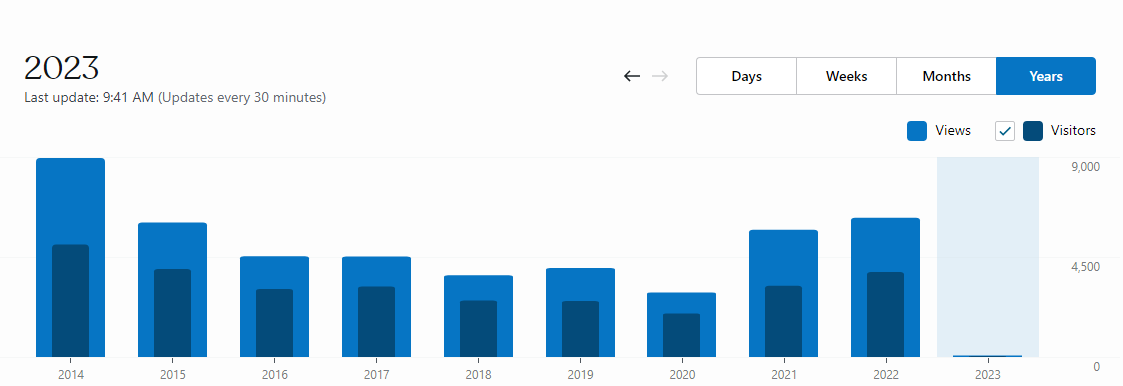
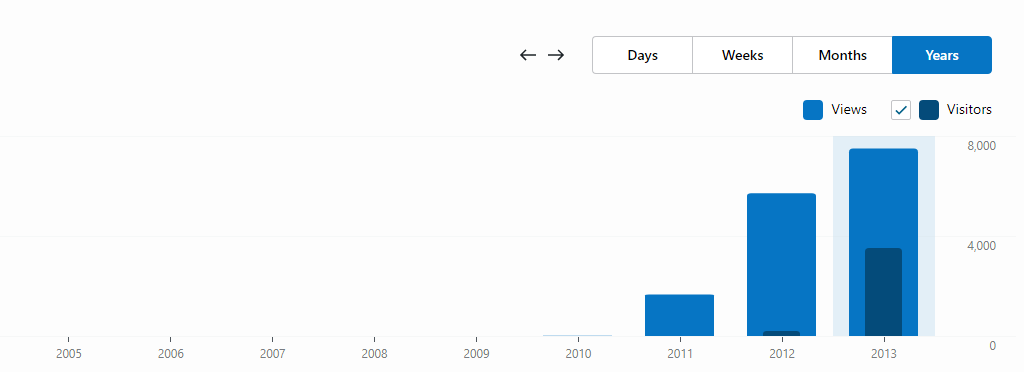
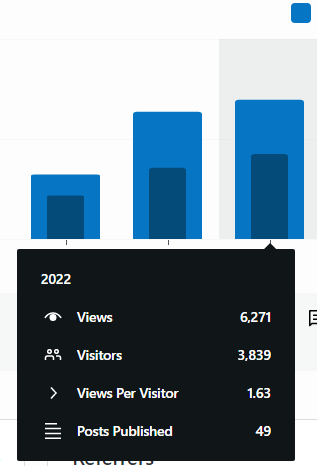
Since 2011, the blogging has been an amazing experience to keep me grounded, thanks to all of you. In 2022, the second highest number of readers ever were logged of 6271 views.
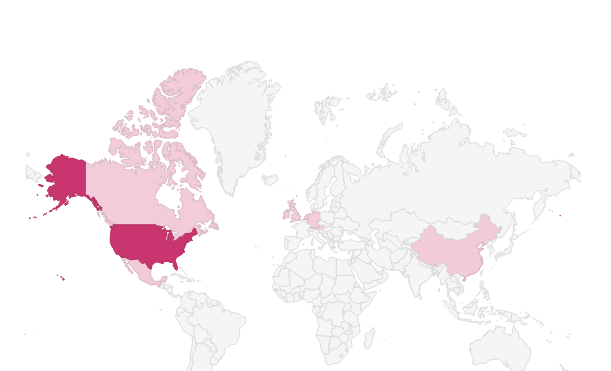
A total of 651,567 views have been logged from all over the world, – thank you for your support as we tackle and discover new areas in the future!
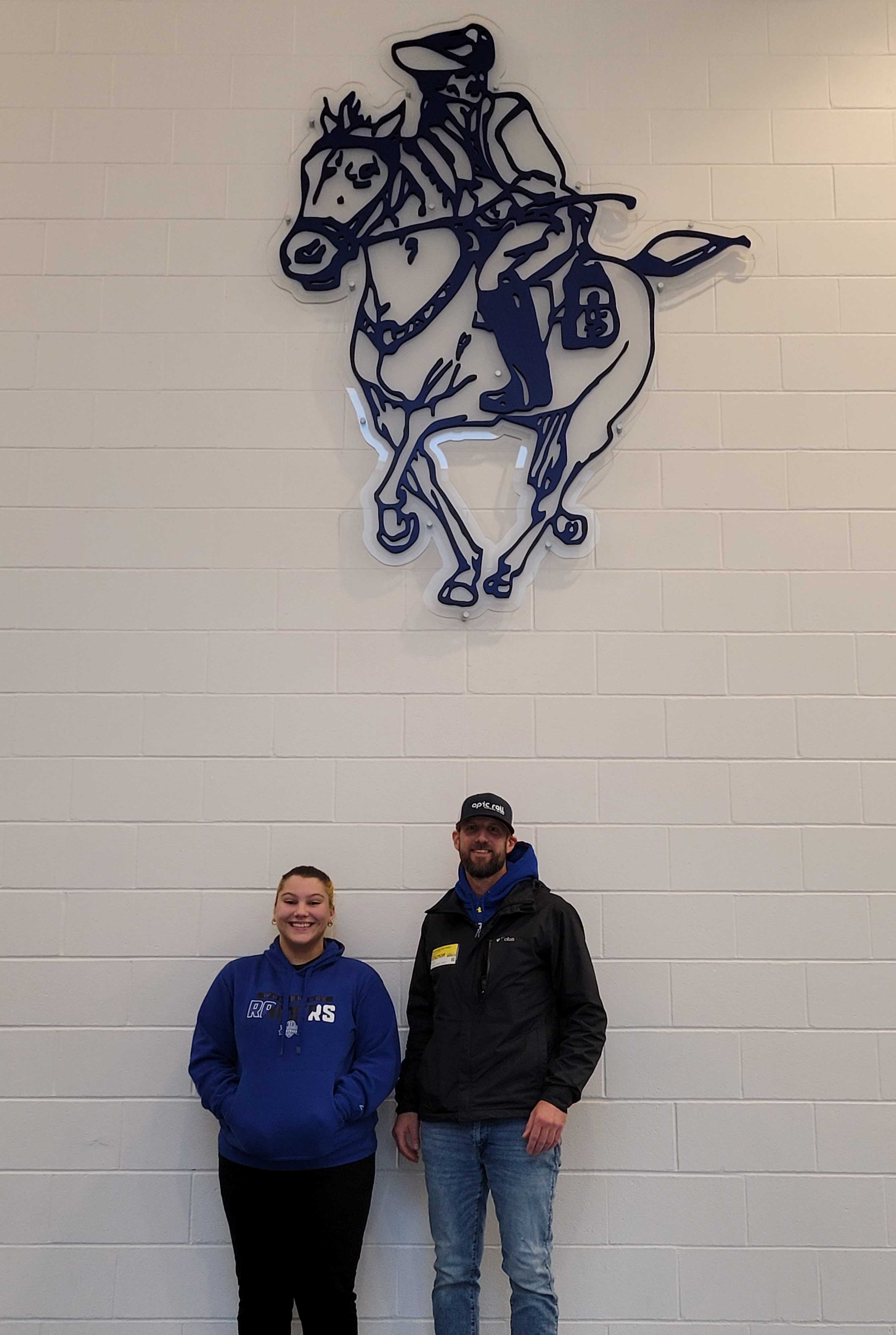
We did a thing. With the brainstorming of Woodbridge School District Board member, Elaine Gallant, and thanks to local business owners that are Woodbridge alumni, AND the rising educator students at WHS, we have started the spotlight on alumni business owners through the Alumni Speaker series.
This was a SPECTACULAR first podcast, and student Isabella, who was NOT planning on being the interviewer, filling in for an ill student, was amazing in making this look easy.
We welcomed Mr. Josh Miller, General Manager of Operations at All Span, Inc., Mr. Miller and All Span Inc. was one of many sponsors of our athetic training hill as well, so this first interview in this new series is insightful, motivating, rewarding, and refreshing.
We think you will love this 🙂
I have to say this session left me speechless, with so much wisdom, reflection, and value that came out of this first session.
In providing the AASL Standards to the above representatives of all things education in Delaware, made possible by a generous grant from AASL member Marina “Marney” Welmers, I wanted to make sure as librarians we are represented more than just a handoff of materials. The AASL Standards are pretty daunting by themselves, and the need to delve into them critically, is vital to applying better approaches to libarianship in Delaware.
There are the takeaways that seems most vital, when I looked into the Delaware School Libraries Master Plan, from 2016, keeping the current AASL Standards in mind:
page 7 -10 of the 2016 study – aspects of English Arts Performance that improve with school librarians:
Areas of Reading, Writing, Research Skills, Math & Science, Information Literacy Skills, as well as Graduation Rates are directly related with the presence of a librarian in the immediate building of a school. The SB 195 that directly required students to receive Media Literacy Skills as part of their education complements what school librarians can do to facilitate this at every grade, with the time and presence of a school librarian for students.
Page 11 outlines the very 7 points that even in 2016, and still today, will create a better impact among students, all involving librarianship. The flexible versus fixed scheduling is one of the many characteristics that directly impacts the effectiveness of a librarian among students. Freeing the library media specialist as state don page 12, and well as moving towards a certified full-tine librarian shows the trust and belief of the very impacts that are shown to occur with librarian specialists among students.
The mention of focus groups held throughout the state, with library/media center personnel, as stated on page 12 is another key component to increasing librarianship throughout our state.
The statistics presented on page 13, of the decline of the school librarian in districts was in 2016, to see a more recent picture, please take a look at Debra Kachel’s slide project HERE. The bottom of page 13 sums it up best, “Even more alarming is the fact that Delaware’s school libraries appear to be headed in an increasingly dire direction in regard to the number of schools with full-time, certified librarians.”
This was in 2016.
Again on page 14 – qualifications, erosion of time allotted to the profession of librarianship, how units need to be reconsidered in lieu of this situation on page 15, and the continuous justification of librarian positions being cut – all concerns that have remained unattended to for too long.
Page 17 delves into the insight of school-library catalogs, and with the possibility finally of schools being part of an consortium, whether you realized it or not, the call for librarians with a Master’s of Information Science, and experience with ALA certification, has never been more important as librarianship begins to turn a new corner in providing for needs of students that cannot be found in a standard job description of this position.
Addressing the fact that no paid staff are assigned to a council, as referred to on page 17, the fact that indeed, without formal staffing, change happening is not able to occur.
Recommendations, that are appearing starting on page 20 are relatively similar to what veteran librarians in schools have been askng for before, and after 2016’s report. School librarians in each school, a pilot project where is put in place, funding for a pilot of this nature, (the school library consortium can help this area as well), expanding access to E-content and expanding the Delaware Library Consortium (YES! Happening) as listed on page 22 – we are moving and need to continue to move in the directon of recommendations that were provided in 2016.
Establishing specific governance and helping coordinate school libraries is a huge factor. As DASL has been trying to remold the model of reaching out and bringing together all individuals (paraprofessionals, graduates, soon to be graduates of an MLIS program, public librarians, adminstrators, Technology Specialists) who are making strides in librarianship, we all need to meld together to help make the strides we need to see across the board, so to speak, for librarianship. Working with Everylibrary.org has also helped build a Delaware coalition to make changes and get out of the quicksand of inert activity that has been occurring long before 2016 with librarianship in Delaware.
Pages 24 focus on factors that inhibit the role of a librarian, be it inadequate staffing, resources, non-supportive administration, professional development freedom lacking for librarian development, flexible versus fixed scheduling, ongoing programs of data collection and management established, tracking student performance alongside contributions of librarian support to students (hard to do if many of the above factors do not exist to allow this!) – from pages 24-25, the recommendation and focus that needs t be taken, is just there waiting for us to bring to the forefront.
Staffing, as brought up on page 25 -is a whole realm that needs to be attended to. Be it from how a librarian is considered, and utilized to the actual role a librarian plays to a school (and we know this goes two ways, we need to expect anyone representing the librarianship role to be 100000% (that is alot!) proactive. This means willing to be adaptable at every turn, willing to be proactive and not ever, ever wait for anyone or any one activity to come to them, but always going out and reining in activities, opportunities, and discoveries for the student body at large – to represent the change we want and need to see in the support of librarians in Delaware.
As mentioned on page 29, moving towards a consortium is going to change the way people, students, and administration will view librarians, and it should. For the better, not for the worse. Legions of school librarians need to reappear to change the views of students and how they view education as a whole – which is desperately needed.
Without a doubt, the recommendation made in 2016, on page 30, of a full-time position at the Department of Education, focusing just on school-library programs, has and is a game change. The real power of what impact school librarians can have on the school communities in our state can emerge from this one major action – as well. In order to have a High Quality Library School Program, as mentioned on page 31, recommendations by specialists in the field of education in 2016, need to be enacted now and moving forward.
The details of the power of flexible versus fixed scheduling falls on page 32 and shows how this impacts accountability on page 33 to page 35 that shows a point system of effectiveness school librarians can have if supported and encouraged.
Take a look at pages 39, and see the areas of concern such as maintaining collections with shrinking budgets (page 42), access to resources students do not have at home (43)- ask students who we have enabled to provide free laptops to, thanks to the resources librarians can gather and pull together that others do not have, to the outcomes that occur with certified librarians among students, how reading is STILL relevant (yes, our circulation of books this year, is RIGHT NOW, higher than the year following COVID, and growing, so yes, GIVEN a chance, students can be interested in literacy – if school librarians are given the chance to do what they do best and are trained for.
Please look at the impact on students from certified librarians being in buildings on page 49, how the physical environment impacts a student’s overall performance in their experience as school (the famous “third space” that can be available and should be available to all students, and guess what?
The impact AASL Standards have on students is often underestimated and often unknown. Knowing the AASL Standards is vital to understanding what the potential of librarianship, education, and supporting students can have – AASL Standards are for the community to use as stepping stones to moving the education ladder to the bookshelves many do not know that exist. The competencies are spelled out on page 53, and any and every discipline, combined with librarianship, benefits from these competencies.
Librarians are the gatekeepers of these opportunities.
The barriers listed on page 55 are but a few items that hindered school librarianship in 2016- and need to be revisited immediately.
Teaching students how to use libraries and how to use resources- time needs to be prioritized from the top down, to allow the full potential of librarianship and the role that school librarianships can share, alongside life learners.
Positions that have been cut, are being cut, that will be cut is addressed on page 58, copyright and licensing policies on page 59 (trust me, these can be murky waters and moreso, if you do not have the education about these ever-changing policies), and how books and curriculum is developed as mentioned on page 60 – are ALL under the professional umbrella of librarianship and the certified librarian, and why this is essential.
From the many diverse examples of school libraries in other states (page 63) and WHY, we as a Delaware Association School Librarian group subscribe to the American Association of School Libraries, and their standards, to broaden the opportunity, vision, and possibility of our future generations.
The above was a fly by sky view of the 2016 Master Plan – and we can delve into so many of the sections above and dissect where we go from here to improve who we want to be as librarians in the future.
This is just the beginning as with the help of EveryLibrary.org, we have a taskforce to address the not so backdated issues of the 2016 study that still are lingering today – let’s get started with you !
We were lucky enough to have Secretary of Education Dr. Holodick visit December 13th with our WHS School Principal, Kelly Kirkland, and transferring a copy of the AASL Standards and summaries of the components of these to share with the Department of Education, and even more so – the point he made of librarians needed to be able to adapt, transform, and relay how and when they do this to educate the public, is part of the crux of the survival of librarianship and librarians today. Many and most do this on a daily basis, and communicating HOW and when we do this, to parents, stockholders in the education system, in mass numbers, is vital. Board members, administrators, parents, and students need to realize this is happening, when given a chance, every time education is brought up or encountered.
Giving the AASL standards to the individuals mentioned at the beginning of this essay is not enough, delving into the details and connecting these to specifics of what we need to do to move forward, to improve our educational plan involving school librarianship, has to be a part to, otherwise, we are just seeing pages and pages of information with no synthesis into the real life in which we live.
5:00 AM alarm, it doesn’t come easy, I know this. Many can confirm this 🙂
As I rose to ready for traveling to Festival of Words with Woodbridge students, I fell/stumbled into my routine- downstairs, rouse the dogs, put a load of clothes into the dryer, one load in the wash, latch the leashes to canines, out we go into the cold, lap around the neighborhood. Coming back in from the cold, grateful for the warmth of a wood burning smell. Lay out food for the canines, and let them out the back yard. Ten minutes go by, slide door in, two canines back – the third? – Dallying in the back yard? Nope – nowhere in sight – on the loose –
this changes the game a bit. With having to be at the high school to meet students at 7:00 AM, looking for a lost dog in the neighborhood is a liability at the very least regarding time – however, the larger worry is living close to a majorly travelled road, and having that same lost canine.
Spending 45 minutes circling the neighborhood, looking for the canine – and unusually, nothing. Whistling, clapping hands at 6:50ish AM in the morning, I am sure neighbors appreciates this (shaking my head). The last lap of the search, as I was pulling in, I opened the door of my vehicle, while still driving in slowly to the driveway, and my car alarm via loud loud horn sets off.
And does not stop.
Remember, this is about 6:10 AM now, and the car is deactivated, but the horn is very well alive, as the neighbors are becoming well familiar with. Sigh. Great GREAT opportune time for this to occur.
I run around and deactivate the cables from the battery- and despite everything, the alarm does not turn off, and I am stuck with no operating vehicle, missing dog, and – who knows what next. I call my Mom, she arrives so minutes later, we circle the neighborhood several times to no avail, letting my one awake neighbor (maybe more now due to the horn) aware of my missing canine, and as we drive back in, there is Dane, standing in the driveway- safe but anxious wondering, where I have been…
Getting the dog into the house, locking all up, I spy the hole he dug under the fence to get to the cats that he had discovered in the back yard, note to fix that immediately. I throw a tarp over the vehicle as the windows of my vehicle are open from my failed search and rescue mission, it is raining, so it is the best I could do in a time pinch.
I ask my Mom, with the only working vehicle now, to take me to the school, as I have only 20 minutes to meet students at 7:00 AM.
In my pajama flannels. GREAT.
I get to the school about 5 minutes late, calling ahead to let one student know to let others know I am on my way. I go car door to car door, explain my appearance, my dilemma, colleting permissions slips, and thinking, parents are thinking, I am letting my son/daughter go with him? ! – I inform all we will plan to stop back at my house, if okay with them, to grab loads of books we are taking as well as so I can change into something other than PJ’s- excellent morning, especially with the cold, drizzling rain.
We finally achieve all of the above, we are on the road and it is 8:10 AM – and we aim to not miss the first speaker at 9:30- in Middletown.
Some people had not had breakfast, so as a concession and thank you for their patience, I grab breakfast for all at McDonald’s. we are back off to our destination- amid the downpouring rain. I inform all, due to the way this morning has rolled out already, we are taking it slow, cautious, and careful – as this morning has been an indication of what can and will go wrong.
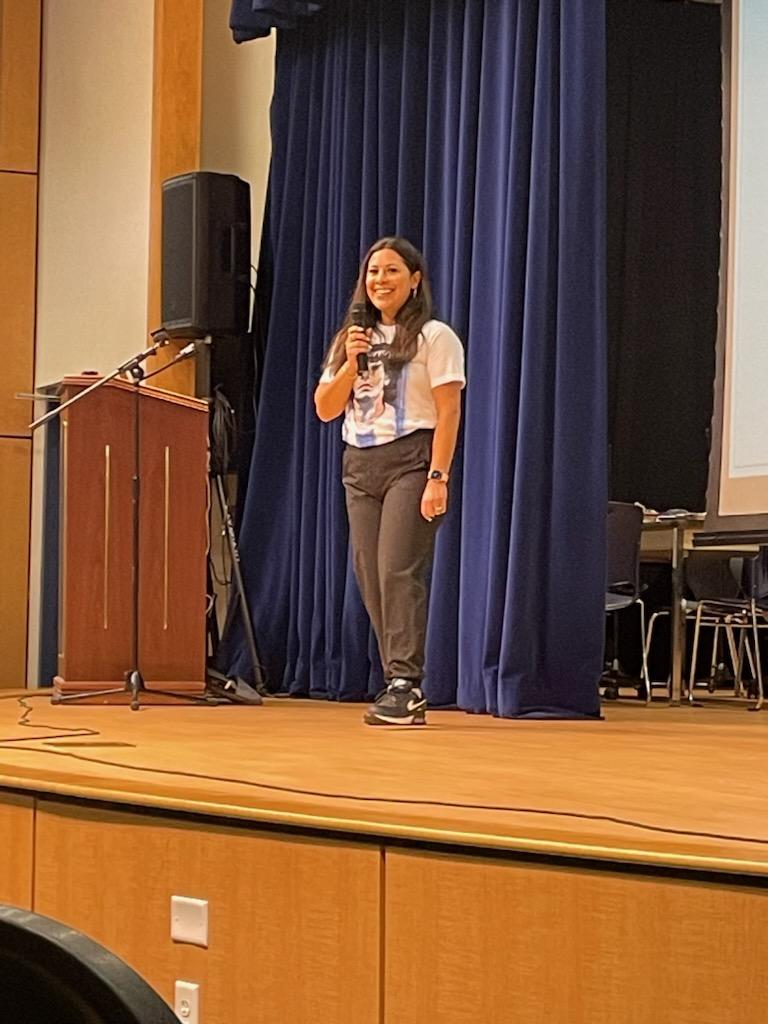
Despite all of the above, we arrive at 9:30, all are able to catch an amazing keynote by Yamile Saied Mendez,
and all is well with the world- for now. Soooo…how did Festival of Words go?
What happened? Stay tuned and we will fill you in on quite a day 🙂
One of the best realizations anyone can realize is recognizing holidays for a time to take in all the values that matter, and have the time to do so without rush.
As I listened to podcasts all month related to various social constructs, one remains with me, acknowleding National Native American Heritage Month all year long, not just in a token month of November. Here are many great podcasts, and articles, that I heard all month that are truly worth listenting to and celebrating National Native American Heritage, all year long AND the amazing chance to see featured films below.
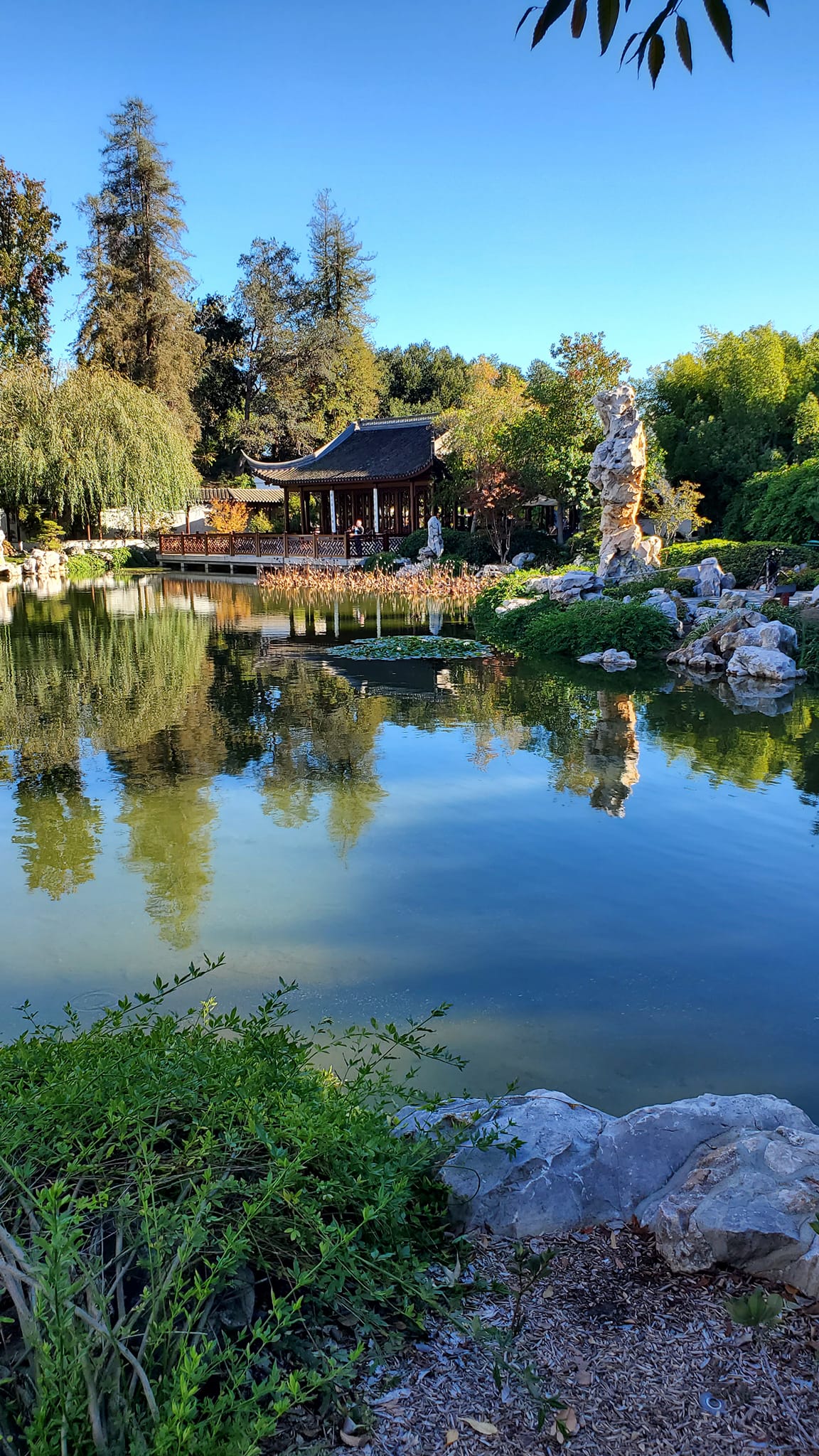
Imagine Longwood Gardens , 1,100 acres, and visiting a garden that seems to to triple that, but is only 130 acres, This will give you an idea of the overwhelming immensity and beauty that is the Huntington. Stepping off the bus you are hit with green weverywhere, a combination of flowers, trees, soil, bushes, ivy, shrubs, landscaping that simply is not familiar and this carries so much weight alone, in discovering something new. Peaking your interest, a bell ringer say in a lesson.
What draws you in further is the arrangement and depth of the whole layout. Imagine a Lord of the Rings set, where you can actually dive into paths, lose yourself in meditation, smells, and discoveries of education that want you to come back, and seeing individuals of all ages drawn in from amazing layouts of educational materials, fauna, flora, and the outdoors having everything to do with this.
If this same approach, was given in detail to lessons involving students and education, the whole idea of education and a little of Montessori changes, and stimulation of wanting more of an education is revealed. To do this, educators, not just teachers, need more time to enhance the material that will do just that, draw learners in. I thought this every step of the way as I walked and admired the beauty I came to know as Huntington. The borders did not exist in many cases, the blurring of growth and mad made structures became lost, you sense the metaphor here, correct? When the blurring of learning and fascination. interest occur, a heightened sense of wonder results.
As soon as I came onto the grounds from the bus, and aside from the painting-like views of trees, shrubs, flowers, what drew me in was the need for quenching my thirst after being what seemed forever on a bus from the airport. I immediately was drawn in to the Red Car café,
and probably had what was the best Chai tea latte I can remember, and the whole café just oozed welcome.
It was delicious and a wonderful welcome to Huntington. The first thought I had was immediately of parks like Parque Mexico and Parque Espana in Mexico City, were growth and parks, and businesses, and streets sometimes can get lost in each other. So was the landscape here.
Seeing the mountains of Los Angeles framing the landscape of paths that wandered every direction you could imagine, the amazing waterfalls and fountains providing the soundtrack of your walk, this was a living classroom. Strewn throughout the campus were amazing sculptures, the indoor Conservatory spaces teemed with fish, sprouts, interactive portals of learning, makeshift classrooms, kiosks that blended into the landscape. Libraries and classrooms mimicking this model would far out scale any learning environment that exists.
The style of the types of fountains, garden beds, and new types of plants amazed me and then, there was the children’s garden…and amazing bushes that seems straight out of Alice in Wonderland. I could have stayed all day in the Children’s Garden and so seemingly could the adults. I think the more elementary style skills combined with high school level constructs makes overall learning that much more appealing.
The ability to see the misting systems in place, the tunnels, the structures, the shadows, the secrets of the Japanese and Chinese gardens, the models of the overall grounds on display, the amazing restaurants planted in the middle of the gardens (Jade Court café), how to craft a garden displays, and….the library…
I was lucky enough to stumble across Ms Wong, the docent in the exapanisve and amazing Japanse Garden – who explained the amazing library that existed, allowing members to try their hand on mimicking traditional writing on rice paper, seeing and interacting with the traditional instruments and learning some amazing insights – such as the fact that the wooden architcture seens around windows, trees, etc.. serves as an aeshetic border – framing a work of art. Looking at the curved nature of the roofs to imitate an expression of art as well as functionality, understanding that every rock placed was placed after careful inspection of its size, shape, etc, and the infusion of education and skill in all aspects of music, the alphabet, and much much more.
From the Japanese House, to the Tea House, to the Bonsai collection, to the Zen Court, all nine acres of the Japanese garden was breathtaking, and only one garden amid many as I took in the educational possiblities of the Huntington. We are lucky to have similar areas like Newton Woods, and the Vince Morris Nature Trail at Chapel Branch, all parts of our Nanticoke River Watershed Conservancy. Similar to the breathtaking discoveries found each step of the way at the Huntington, the similar discoveriers and A HA! moments occur when you personnaly will the opportunity to slow down, and take what is in frm around you.
The possiblities that existed from this outdoor classroom set the tone for the Humanities Conference what is possible in communities, and what Humanities means in the form of eduction, opporrtunity, and community. This was absolutely fitting and stunning to see the breadth, scope, and depth of so many exciting, living, eclectic avenues for learning contained in an environmental classroom – which is the connection I thought all along about what the Delaware Humanities and the environments around us can do together. Motivate, educate, learn, and create are just a few paths we can all walk on and contintue to discover partnerships together in meeting needs, understanding changing ecosystems, and facilitating growth in education and improving our environment around us.
Original sodafountain beverages, crabcakes, Scrapple fries, nostalgic, traditional farming tools, historical artifacts from the past, peach ice cream, why, we must be in Delaware!
You absolutely do NOT want to miss this exhibit for the next three months at the Greater Harrington Historical Society. On coming back from Los Angeles and seeing Carol Harsh’s workshop on the Museum on Main Street Forum I had no idea how impactful and meaningful exhibits such as Crossroads could reflect what many people take for granted when it comes to Delaware.
It was familiar and welcoming to see a familiar face from the conference such as Ms. Harsh’s, encouraging to see former students like Danielle Levredge take projects that we tackled at high school and turn them into real life changes – and yet, this is what small town rural creativty does, changes, grows, and still retains a sense of history.
As I took this exhibit all in this evening, enjoying the amazing taste of an original Old Fashioned Sods Drinks – originally from Burton’s Sports Shop- and taking in the amazing artifacts, this was everything the temporary exhibit Crossroads was meant to give back to visitors, keep what is a town’s legacy, and show a path forward of what the future will hold for community amid its changes.
Being a part of Delaware Humnaities, and coming back from the National Humanities Conference, I beagn to see, thanks to the CrossRoads opening exhibit, how all roads do indeed come through rural american stories. Do not hesitate for one minute. but visit this great exhibit thanks to Delaware Humanities, The Greater Harrington Historical Society Museum, The Smithsonian, and so many more- exhibits like this provide an opportunity for the value of stories, rural America, to be represented in its full light.
An interesting comments was made- that someone was grateful that this event put Harrington on the map. The response was Harrington was already on the map, it was just letting others be aware and surprised what is within that map that evades the overall glance most people will see. Absolute. This exhibit is one small example of how this is possible, and how change occurs in the perimter of retianing a rural community history.
Don’t miss it!
The next few days you will see posts that come from the Humanities Conference, as the previous post, that show paths to tie communities to the growth, while retaining the value of those locations n the first place.







 PAVEing a Blog