Advice from a librarian, someone who has been asked every type of assignment, project, and pointof view to finish something, – there are a few suggestions:
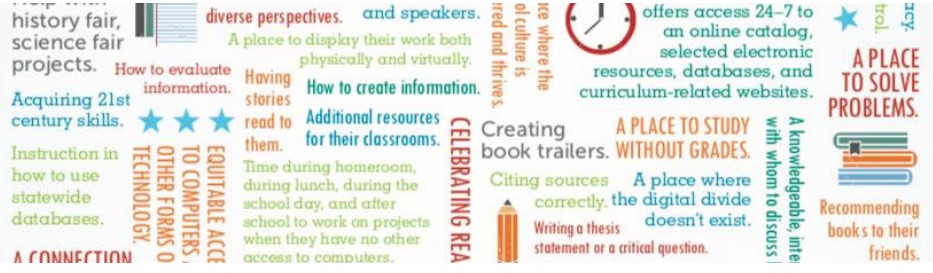
If you look closely, a certified librarian is quite capable of answering all of the above, and showing how to achieve all of the above – REMEMBER- I know this is a shocker to some, BUT- a librarian is NOT someone shushing, but someone guiding, making connections like bran synapses, and finding paths to lead everyone to safety and success.
It seems unfair that the rules and guidelines for what constitutes librarians in many a school are dictated by people that the remember what a librarians was when they were little – and often, that is not a realistic image in the 30 years since of how librarians have been trained to meet the changes needed to meet the needs of – well, students!
Many individuals not trained formally in Information Science are a godsend as well, without them,, kiss your school library away – and they do an amazing, daring, bold job of maintaining access to literacy. Think WHAT a team a certified librarian and that educated individual could do for the student body? They could cut the hard work of teachers in HALF and make the connections needs for students to make the connections THEY need to make.
Sure, you could be in a district that has NO librarian (many that I will not name) – or no certified librarian (certified meaning working through a rigorous degree of Information Science or the certification program Delaware offers for that path) – but wouldn’t you want to make sure your school would try to search ways to insure that would happen?
Many school have no choice as they do not have units for a certified librarian, only for certified nurses and counselors.
But someone to exercise thinking skills and coping skills through providing a place of solace, a place where someone can feel safe while learning in a “third space” safe setting – isn’t that just as important?
Often the answer is no – because many do not realize what a school librarian actually does (books is the #1 Family Feud answer that – is SUCH an outdated question) – it is pertinent for many to be aware of what a school librarian can and should do for every student.
A STUDENT pointed out to me today, many of the “leaders” proactively wanting to remove and censor items are the same individuals that do not want to address controversial issues with students.
Ignoring or trying to act as real world experiences don’t exist, well, I mean it just doesn’t work for long (you can try, I think we have all tried at some point).
then think about how is the best way to navigate the many sources of information- you could have someone that is navigating how to navigate without prior training or someone that has been trained to do so – I mean, heck, if I had a choice to go with a licensed doctor or go with someone who has explored surgery through some observations, what the heck – let’s wing it! (NOT!)
Let’s not “wing it” when it comes to making sure an individual licensed and trained to navigate through research, technology, bias, and futuristic opportunities – do the parent thing and find out where your school stands on valuing a certified librarian.
How are these chosen? –
Five Minute Methodology Overview
Lastly, YOUR interest, YOUR voice, and YOUR concern on wanting and being able to state, “We need a certified librarian in our school/district!” helps move the whole level of education to a higher position for EVERY stakeholder in education.
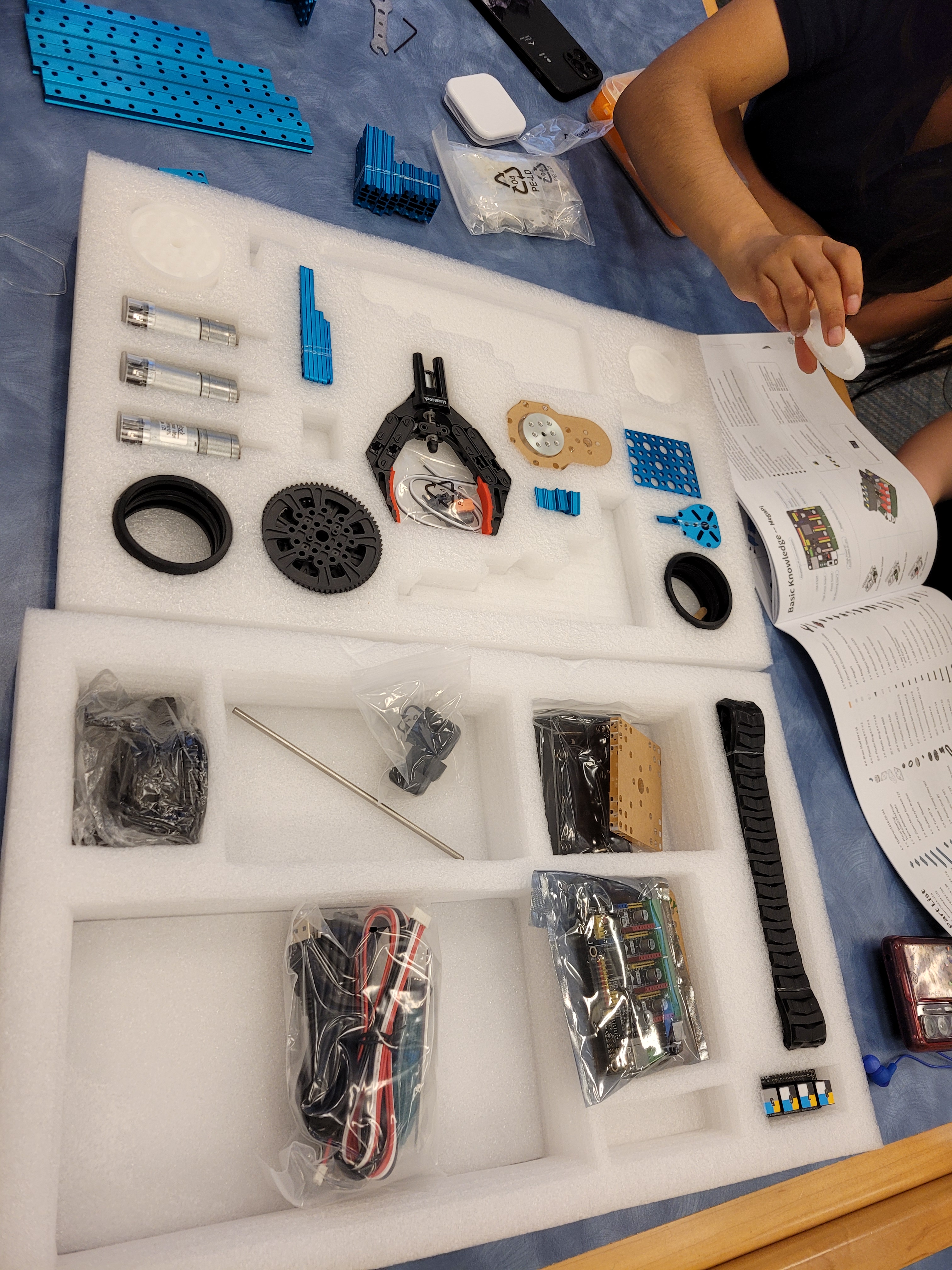
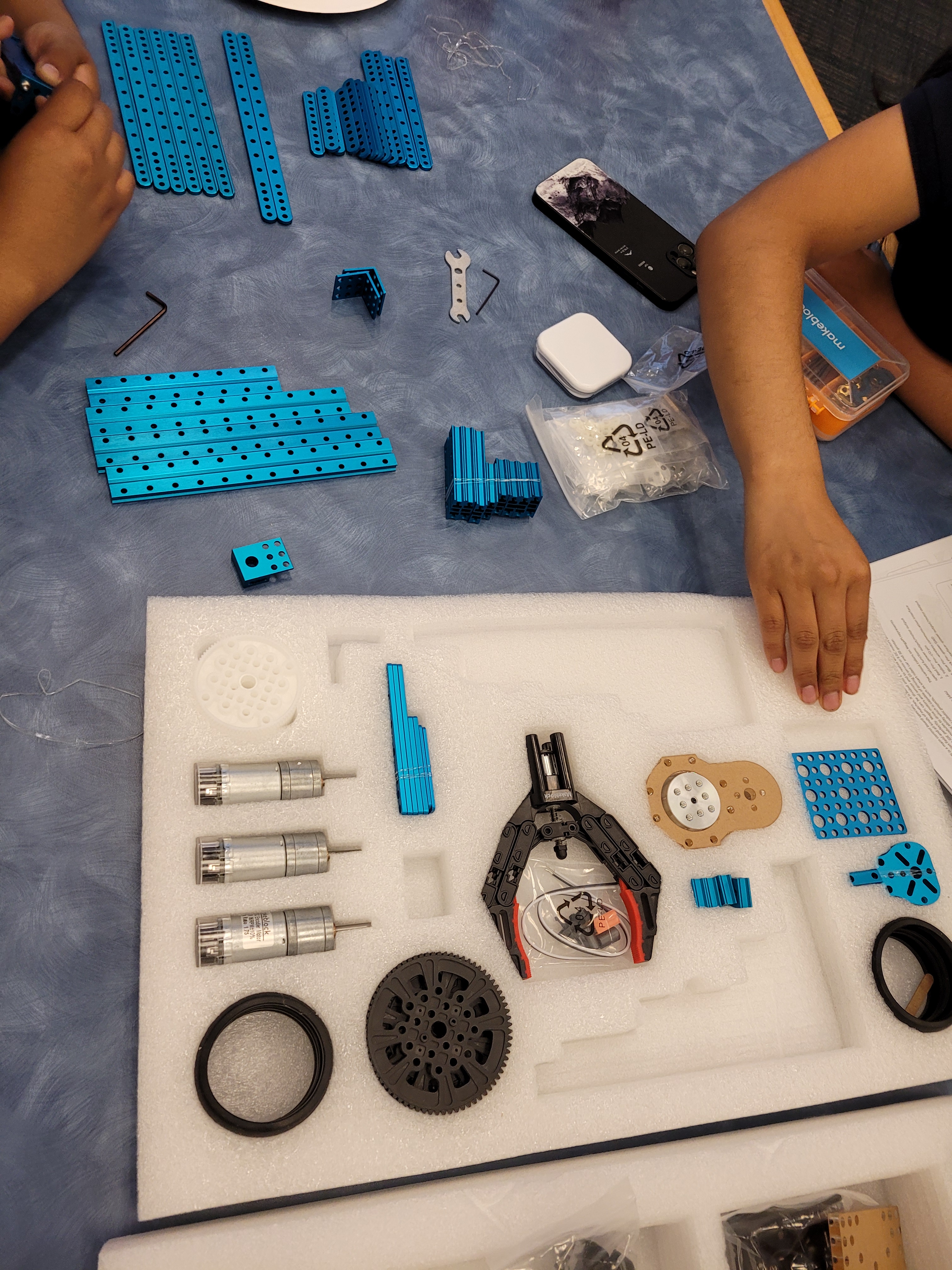
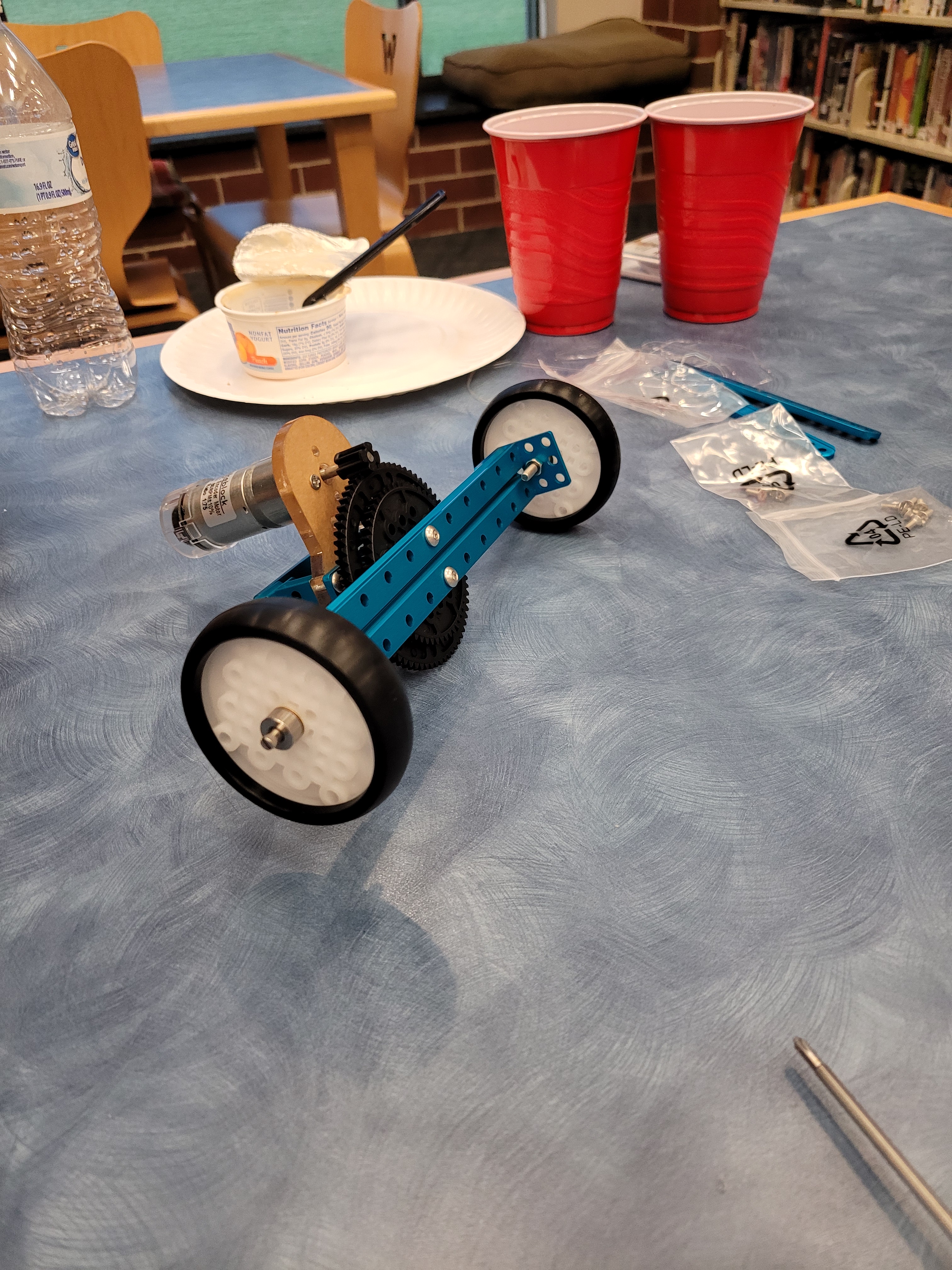
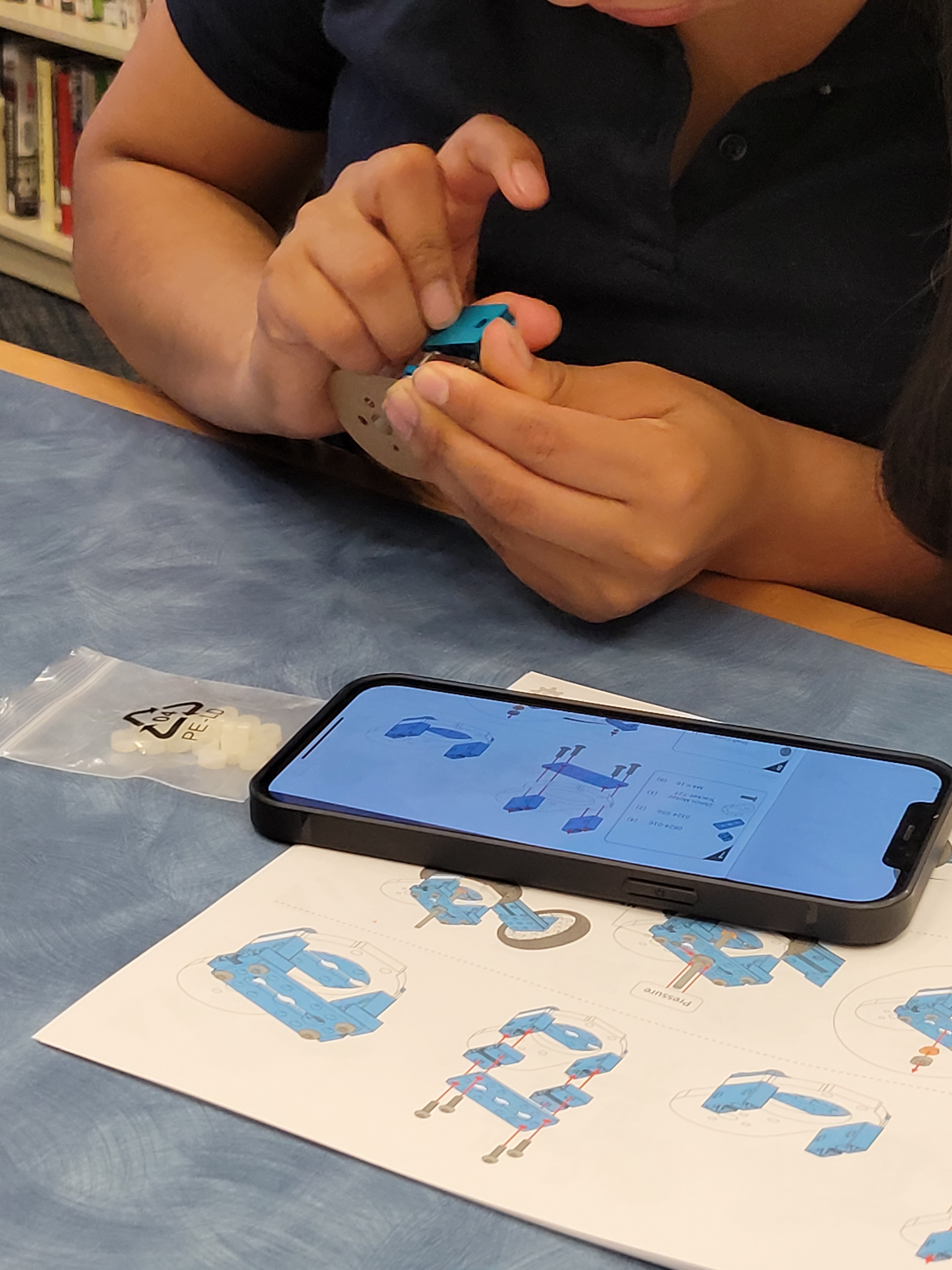
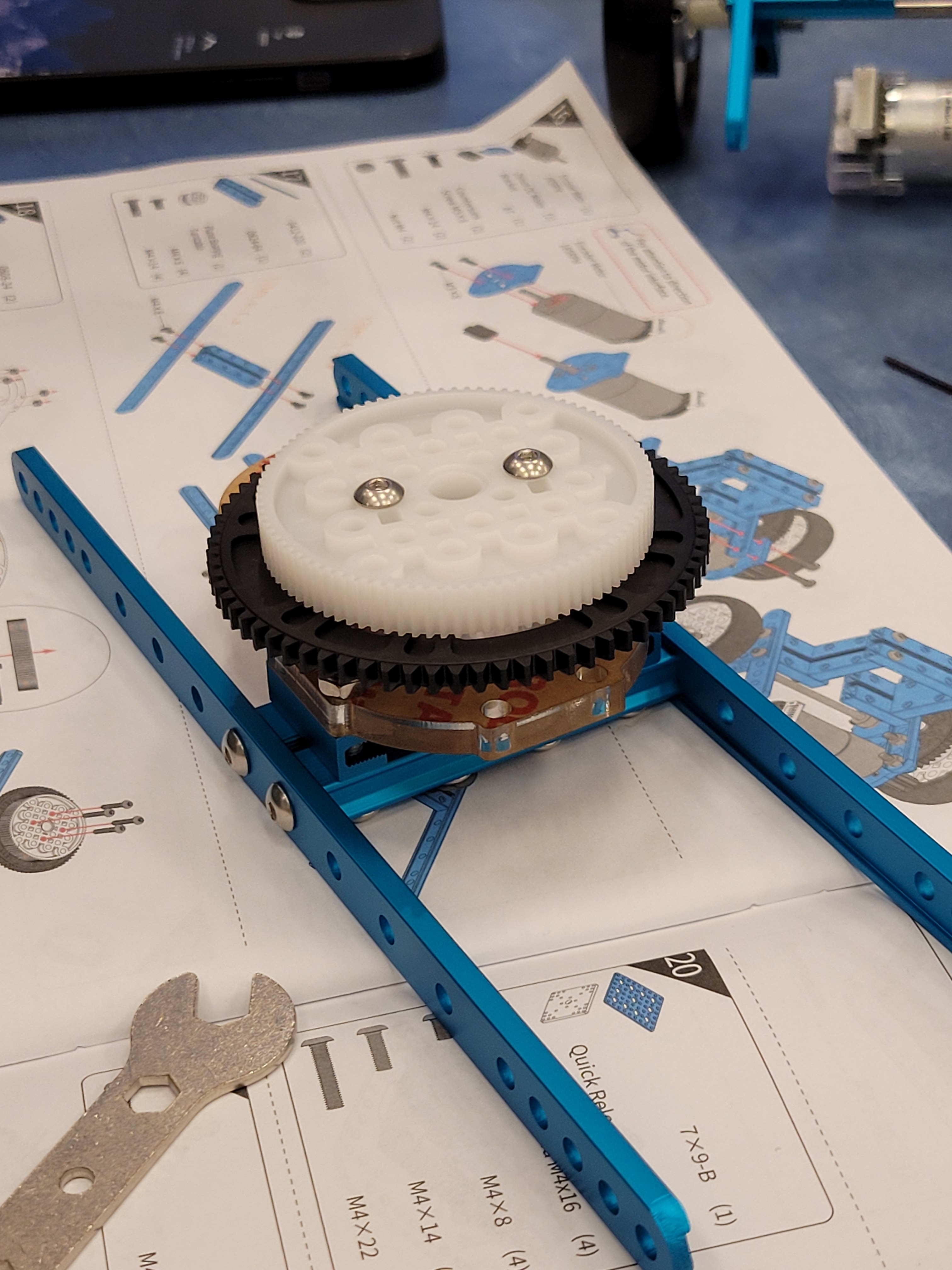
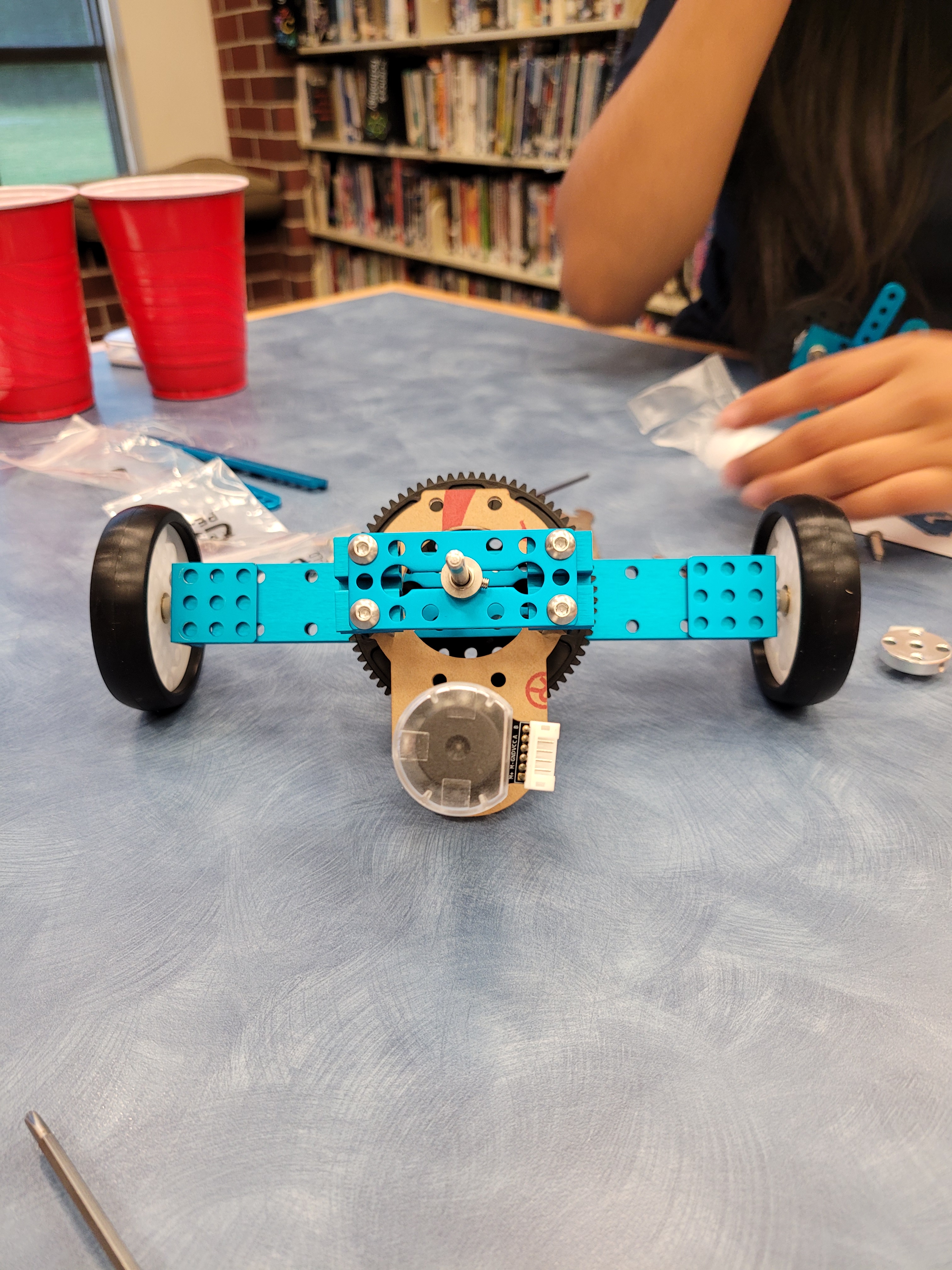
and mission – working robotic that we will employ on June 1st in its debut- and believe it or not, the ladies were itching after 2 hours for more time to continue – the mechanics of the process hooked them, it was AWESOME. Better than I would have predicted – and let me share the aspects that impressed me the most:
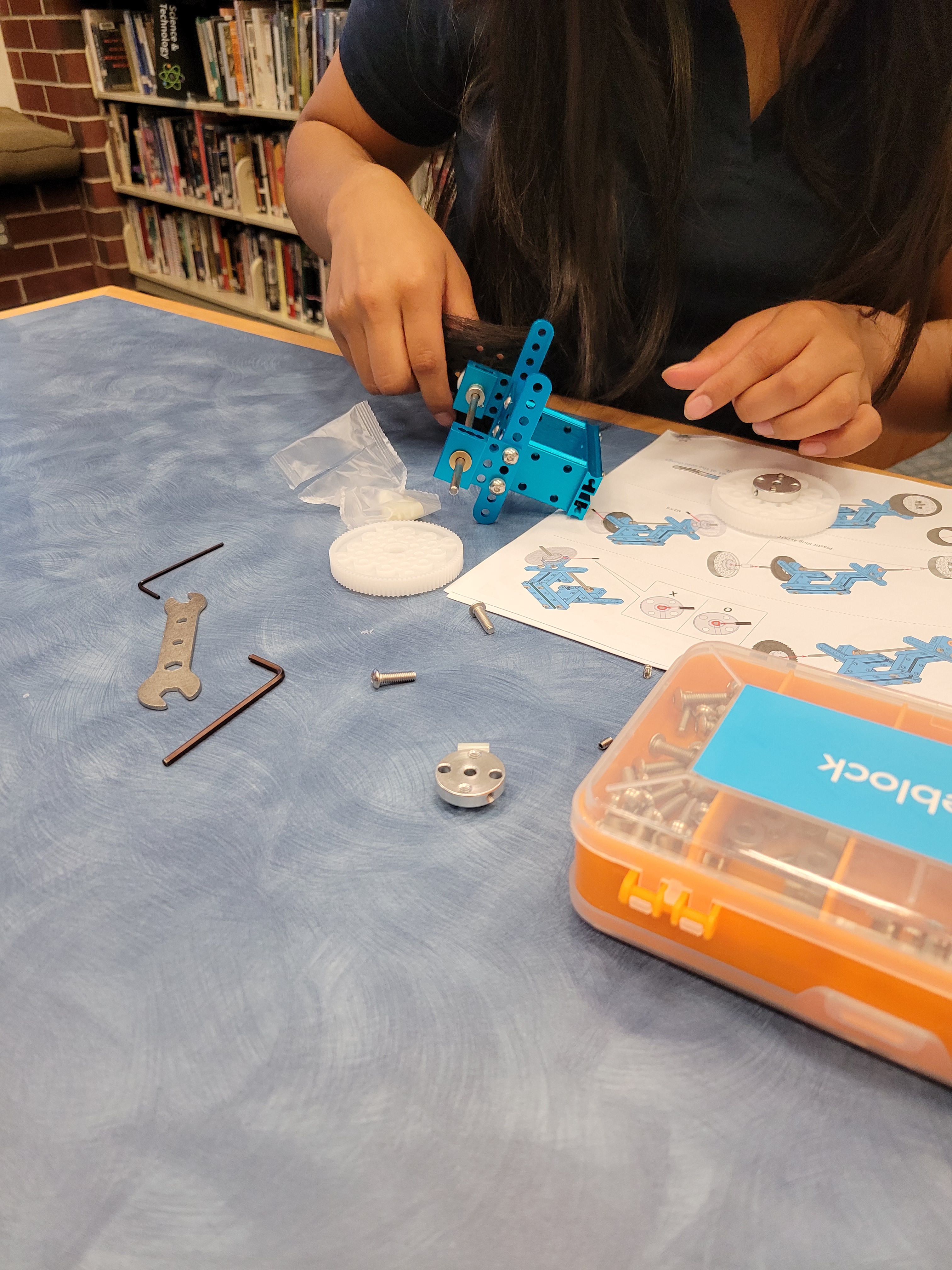
In 22 mechanical steps that should have taken two days, the ladies managed to get to step 20 in 2 and a half hours just because they were so intrigued with using tools and seeing something develop from THEIR own hands building it.
What impressed me more was not that they flew through the steps, in fact 5-6 of them they realized a bolt, fastener, gear, or part was not right and several times they backed up and redid a step or two- and they never became frustrated enough to give up – in fact, they learned EVEN MORE by figuring out their mistake ON THEIR OWN, AND seeing it click in their heads of what made it right. It was phenomenal seeing this play out in front of me.
Several, MANY times, the Girls Who Code members kept apologizing for making a mistake, not getting the process correct. and I kept emphasizing this point – NEVER apologize for doing it incorrect ESPECIALLY WHEN YOU figured out what was wrong – never EVER. Part of you becoming more intelligent in this mechanical sense is the mistake you made, and YOU realizing it and correcting it – you should not be apologizing for thinking you should have known the correct way first, because by not, you are becoming smarter through each lesson learned. BE PROUD of what YOU are doing and HOW you are figuring this all out, because I sure am!
It was amazing seeing how they began to work as an assembly line, one person predicting what the next step would be and beginning to put together the parts that would seamlessly work together after the current process being completed, their work and understanding each other as they worked together, was an amazing harmony. What they were learning without saying anything was outstanding.
It was super amazingly cool seeing them learn and apply the mechanical lesson of left loosey and righty tighty and other very mechanical concepts but honing them in on a central project they were all working on. Seeing the difference between flared and inset screws, the width and dimensions of some hardware and putting it into words why it would not work, what worked better and seeing these ladies handle the tools and math involved with so many different arts working together – it was nothing short of magic happening.
I am grateful I was seeing this all occur in the library media center and they understood what this area was, a place of learning, discovery, excitement, laughter, seriousness, solace, and experimentation. The fact that these ladies were becoming so excited about the hands on applications they were learning from Math, Science, reading detailed manual-driven directions instead of only reading from a test booklet and filling in bubbles – it all gelled together and they dove at it full speed.
Stay tuned in the next few days to what ends their abilities will take them and what they will use this first robotic project will be used for – we think you’ll love it!
Peeling back the pages of history that impacted her, and interwoven among her family history helped indeed show the power of storytelling to the wider public.
Representing parts of her past through the stories of Finding Junie Kim, she referred to the fact that at the time, it was emphasized that it was better to starve then to take rice from the communists. I am unclear if this was the Professor Hong that Ms. Oh referred to, but this is a question I will put in the “to ask” column. Seemingly this connects to the history of the Great Chinese Famine, which again, I am putting in my “to ask” column as I am curious if this is connected to the history of Korea.
As it is VERY easy to get lost in the MANY changes of rule between Korea/ Vietnam and China, many resources I have stumbled across help to clear some of these details up (The Best We Could Do). I think one of the most powerful aspects of storytelling is also showing how DIFFERENT countries can help tell the history of INDIVIDUAL countries, a wider perspective being opened.
Ms. Oh relating that her Dad was a storyteller, and she moved to relating historical events that are tied to the strength of youth and student uprisings:
1979- Park Chung Hee’s assassination preceded student protests occurred, under Chun Doo Hwan, 4000 special forces surprised protestors and used full force on youth and killing record numbers that protested.
In 1985 Ms. Oh related to us one of the most controversial books published about this event – Gwang Ju Diary Beyond Death: Beyond the Darkness of the Age “The author, Lee Jae-eui wrote the book in 1985 based upon many interviews and his concern was to tell the truth about what had happened in Gwangju in May of 1980. Lee was a junior at Gwangju’s Chonnam National University at that time. The detailed records rest on his experience and oral testimonies.” What a rabbit hole of information, from storytelling, I was never aware of! Especially for a book where all copies were being destroyed, those associated with contributing to the book were imprisoned, all over highlighting the atrocities against citizens. In 1987, President Chung stepped down, all this over a banned book.
Ms. Ellen Oh emphasizes the fact that gathering allies together, indeed is the key to addressing the issue of saving storytelling, supporting the long history of the power of youth voices and empowerment, and denying any power censorship seems to “protect.”
Ms. Ellen Oh was the perfect voice for these messages.
There are moments where my heart aches at the losses of some amazing people we have lost in our lives; it sounds out of context, but graduation is a bittersweet timeof the year for me, I am so blessed for the amazing people that I have built relationships with and I miss so much the people that have been stolen from us.
It took me back to the message I thought about in being recognized for an amazing honor, but knowing the others around me help me be who I am every day.
Starting at 27:51 I was asked about receiving this honor in 2021. In rewatching this, I simply cannot get over the amazing talent I have seen in youth leaders since I arrived in Delaware in 2011.
Nominations and Awards matter when they shed the light on where else we can improve conditions for others.
It has been that long, and yet, seeing graduates from the classes of 2005, 2006, 2007, 2008, 2009, 2010, 2011, 2017, 2018, 2019, 2020, 2021, 2022, and 2023, AND the classes of graduates from the American School Foundation in Mexico City,
a world away, from 2012, 2013, 2014, 2015, 2016-
it is necessary to write out to remove the take for granted-ness we have a tendency to do with numbers…
I hope communities realize what a difference it makes when guardians and parents work alongside faculty, schools, school libraries and programs that start in the schools, and extend into the community.
It is important to realize that writing out all of the years above helps bring the reality of how many students are affected when you make learning personal and are invested. In a time when school librarians are becoming obscure, when teacher positions are harder than ever due to lack of guardian and parent involvement from day one, it is now more important than ever that community members AND legislators, AND community leaders work together to continue to grow the numbers of students that will come back, and be leaders in their communities.
Do not take for granted that it is just another school year, just another graduating class, just another flock of students. Never take the years or the graduates of any particular school, year, or area for granted, and if you take a vested interest in the ways to increase school librarians, quality experiences for quality teachers, and support in creative ways for your schools, your community will improve.
You just need to keep asking questions, wanting more positions for the above professionals, and create community paths for youth, and things change before your eyes. It happens all over the world, and is not particular to any specific geographic area/ demographic area. It might take different approaches, but the tenets are still there 🙂
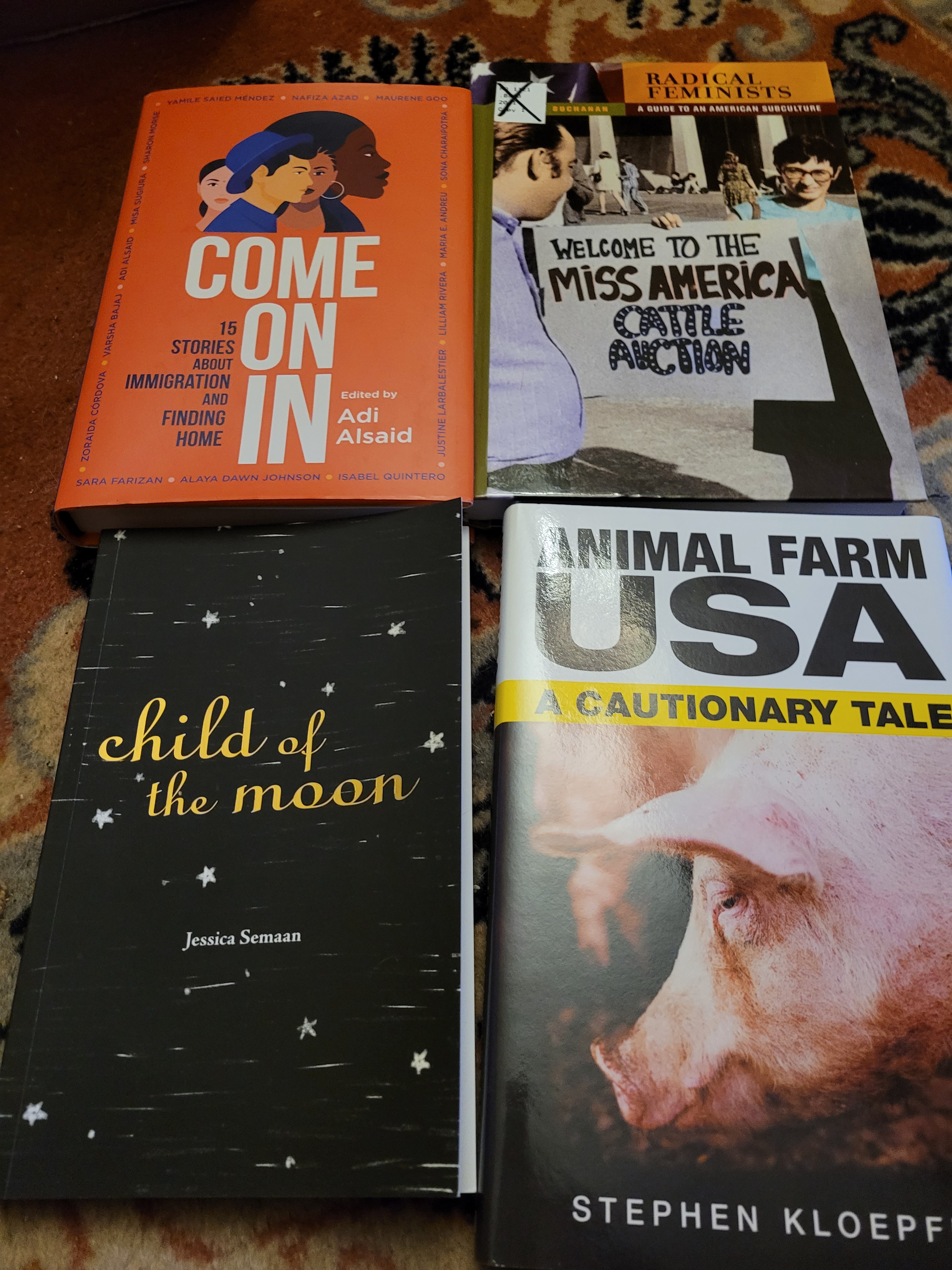
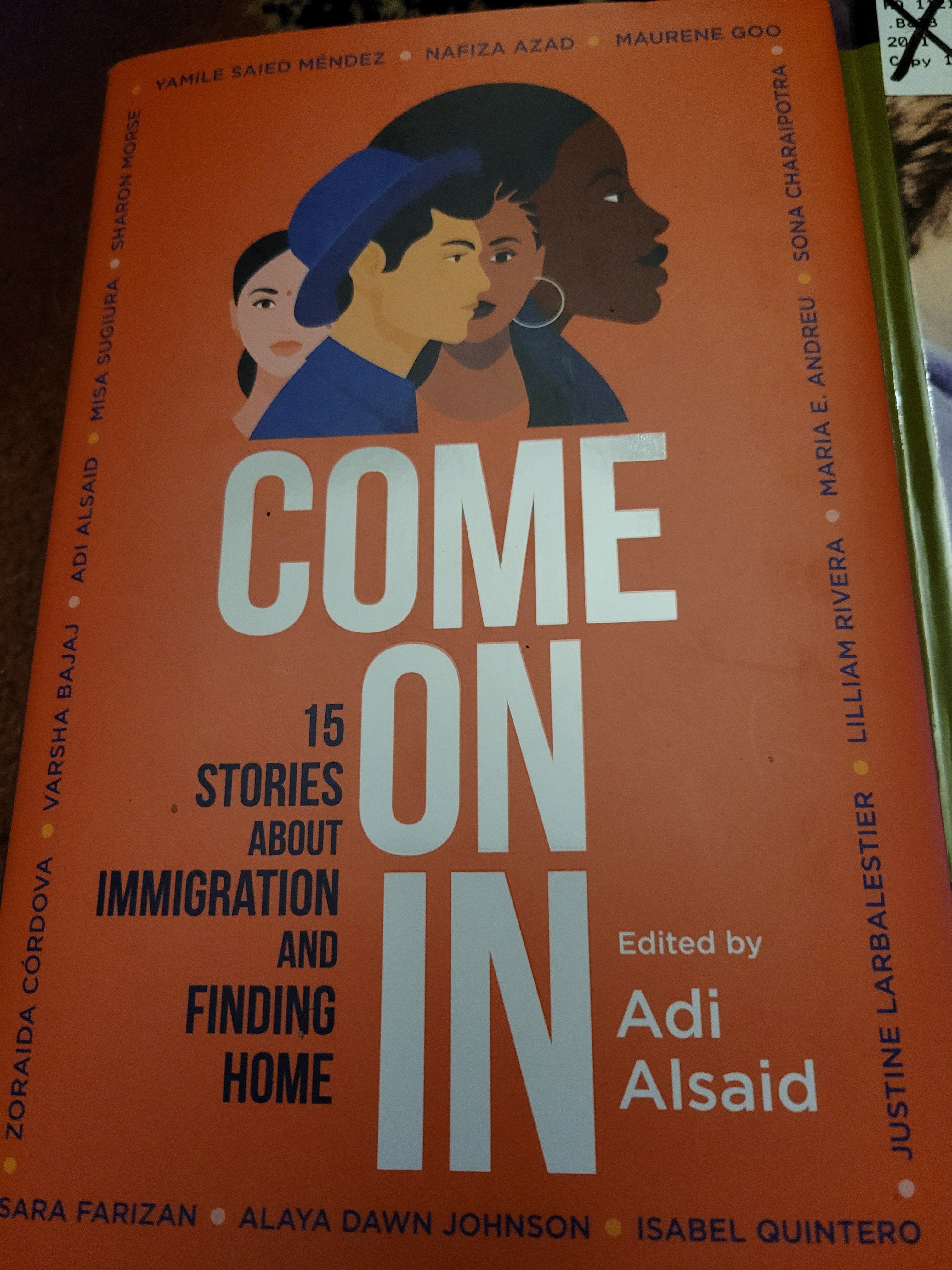
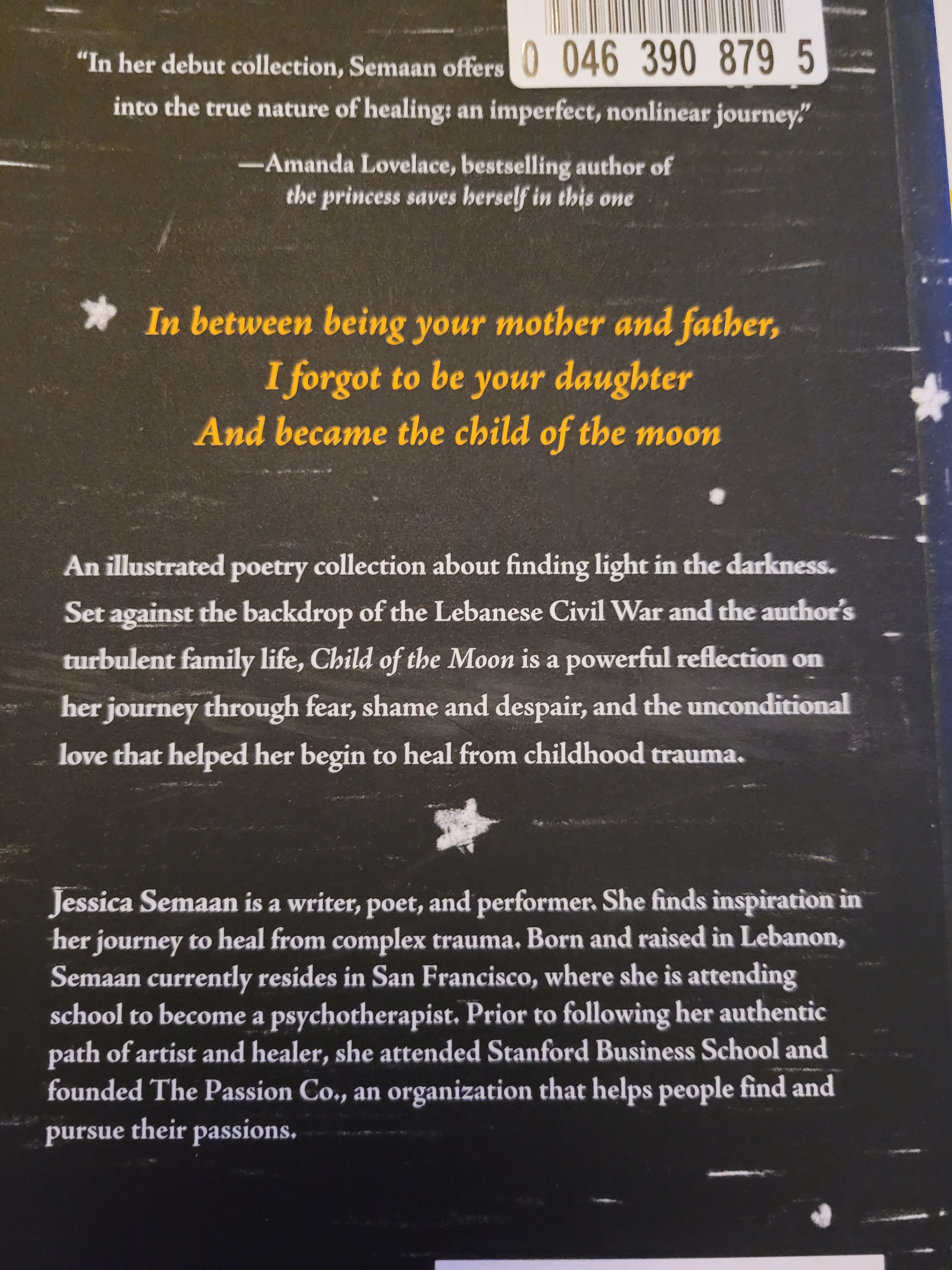
In obtaining some great collections of books from the Library of Congress Surplus Book Program, we stumbled upon some amazing discoveries that are new books to our collection:
We knew we were on to something when e invited Alaya Dawn Johnson, Adi Alsaid, and Zoraida Cordova to Authors Among US in Mexico City years ago, and here they are AGAIN together!
and are excited to see a way to discern, analyze and be informed about periods of our history in the 60’s and 70’s studying the origins of feminist movements.
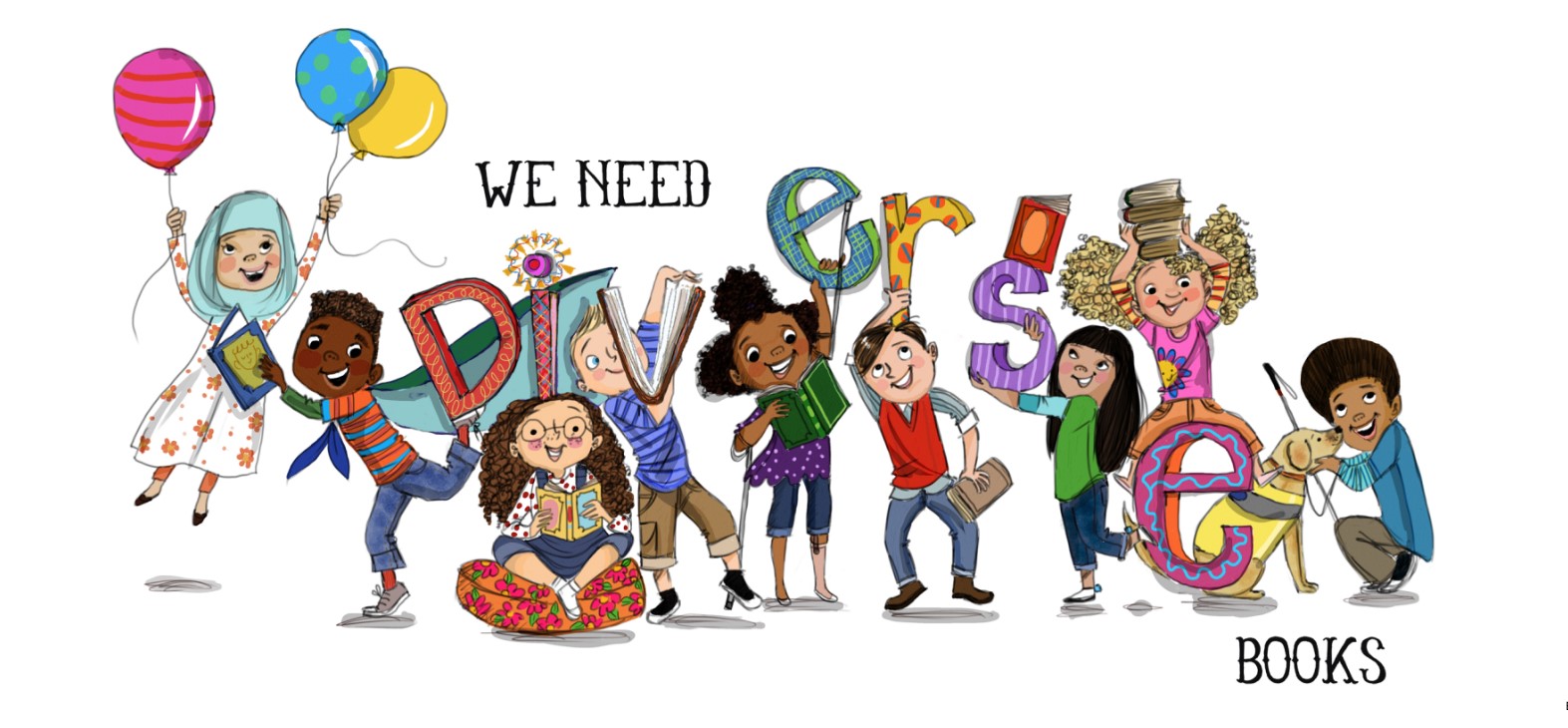
Coming off the cuff of the value of Books of Diversity, we were excited to see how closely related we are to connecting to Ellen Oh’s call for books of diversity.
Thursday’s 12:00 lunch speaker – Invigorating to say the least when opening the pages of a storyteller. Ellen Oh, the CEO of We need Diverse Books, was one of the best candidates to speak on the challenges facing all schools and librarians of their time today.
If you look closely at the Board of Directors, you will also see Zoraida Cordova, who was one of our amazing invited guest authors at the Authors Among Us event at the American School Foundation in Mexico City – APRIL 25, 2016! (Scroll down to see this amazing menu of authors – LOVED seeing Ms. Zoraida as a part of this as well -amazing!)
I do not recall the reference Ms. Oh made to the Grand Army Plaza Library, but in looking at this library it reminded me of the Public Library in Los Angeles, and from Susan Orlean’s book, The Library Book. when I visited there for the Humanities Conference, wow, I realized how much power the written word, and libraries have, even more than I knew already. An interesting connection to someone from that book is also found HERE.
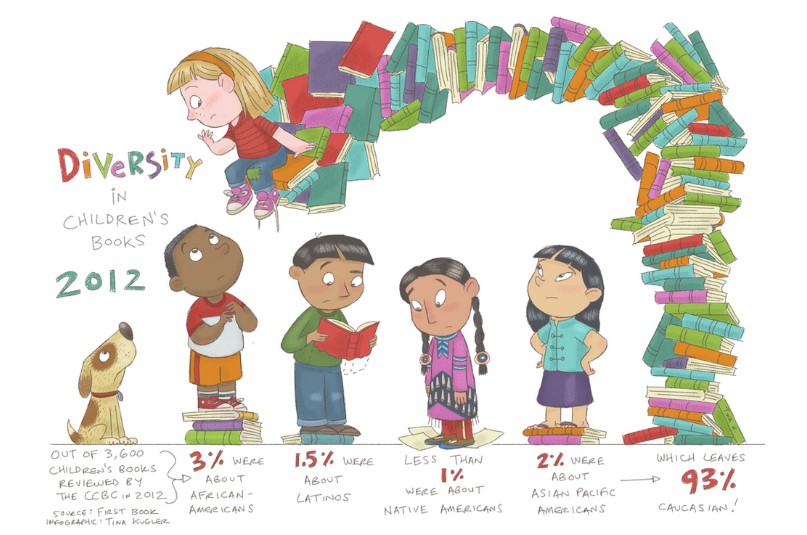
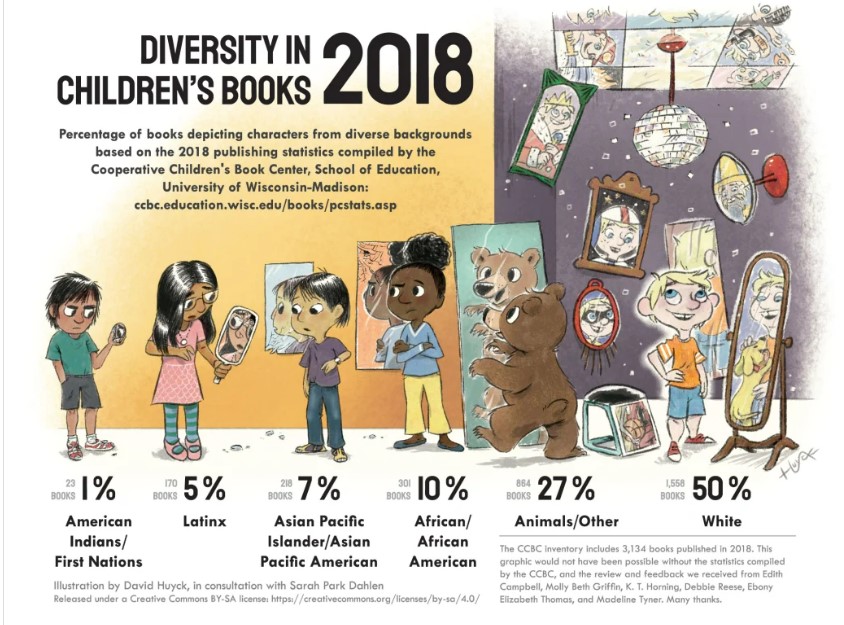
I loved this illustration from 2012 that Ms. Oh presented to demonstrate why, indeed, we need diverse books amid swirls of controversy against them.
In addressing the value of pushing back against censorship and banning, Ms. Oh often told of comments made to her about being told to return to her own country, often directed to China, and she proved the very point of being informed- she mentioned she was Korean, not Chinese!”
Her request to always have inclusion was no truer than when she stated how today children’s books are political where they never used to be at all. She as well offered a nod about how similar to Orwell’s Nineteen Eighty Four compared to today’s society’s norms, all has become.
Ms. Oh went on to tell a possible story titled, “Never Trust Billionaires” that could occur, which was HYSTERICAL and involved an image of Ex Lax causing havoc on the world. Her reference to the evils of money which equals power, and how power makes the law, it was no secret how her disdain of millionaires control the story of equity in the world. Her statement, “There are alot of jokes about rich people, but none of them work!” made her point about the realizations about how money can control the narrative. Knowing and realizing helps begin to understand how to make positive changes.
Lisa Oh began to delve into her familial backstory from Korea, was heartbreaking and can’t be replicated here, but had the attention of every single person in the room, you couldn’t hear a pin drop. Her inspiration for Finding Junie Kim obviously stemmed from this amazing bio of her family’s experience, breaking down democracy and communism.
This is only half of the power of Ellen Oh’s talk and the second half will be appearing in the next post in order to capture the importance of this amazing opportunity with Ellen Oh.
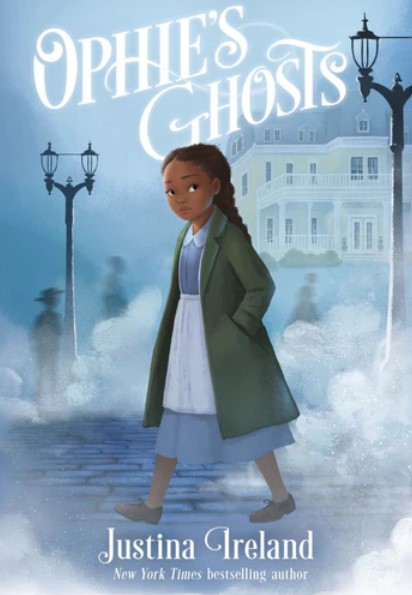
Before focusing on another amazing key note speaker from the MLA/DLA Conference, one detail is worth taking a look into that was brought up from Justina Ireland. Her 2021 book, Ophie’s Ghost stuck with me for one specific reason – the words Justina Ireland stated that the topic of Ophie’s Ghost was always there, but yet never had to be mentioned. Obviously this referred to topics, events, and themes that today are deemed controversial and too taboo to surface, let alone young readers.
When you actually get into the description of Chapter one, you realize the acts of kindness given by Ophie and her mother, rewarded by acts of hatred and events that mirror today’s evens – you realize, there need to be books, opportunities, and resources available to any individuals, of any age, to make sense of events that have happened in the past, are happening in the present, as well as with often despair of events that COULD happen, but need to be addressed to prevent from happening.
IN her powerful talk about how educators, librarians, and all those involved in education have an obligation to educate, advocate, and truly define what education means. Providing a path for everyone to make sense through all situations, and have a space at a table of discussion that many do not provide.
One of Ms. Ireland’s quotes- “It is harder being the worst of ourselves versus the best of ourselves.” sticks with me and reminds me that advocating for those that have their voice taken from them, is one of the responsibilities school librarians, as well as all librarians have to allow writers, storytellers, and authors to help others see issues, events, and identities of themselves and others that are often not represented.
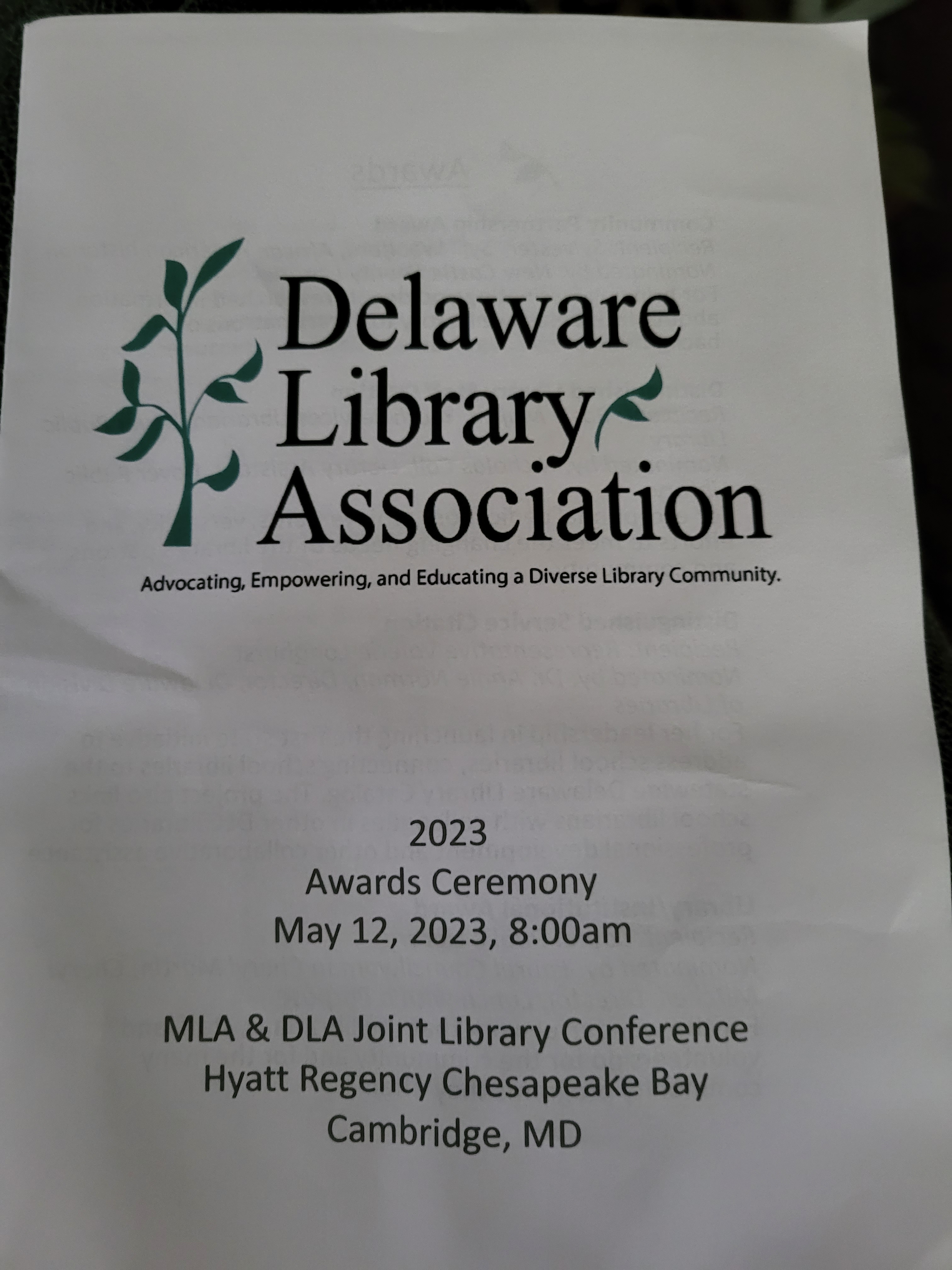
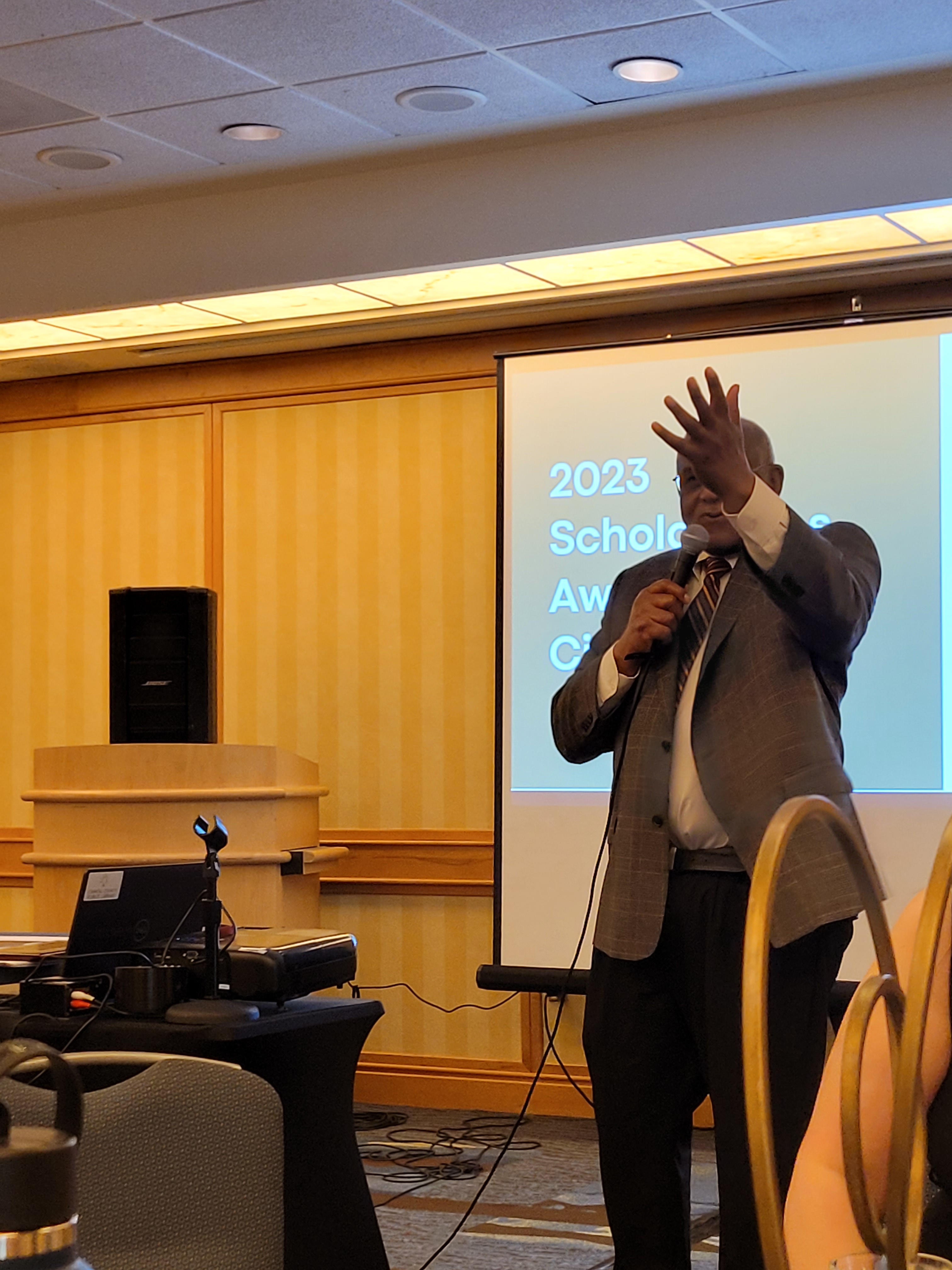
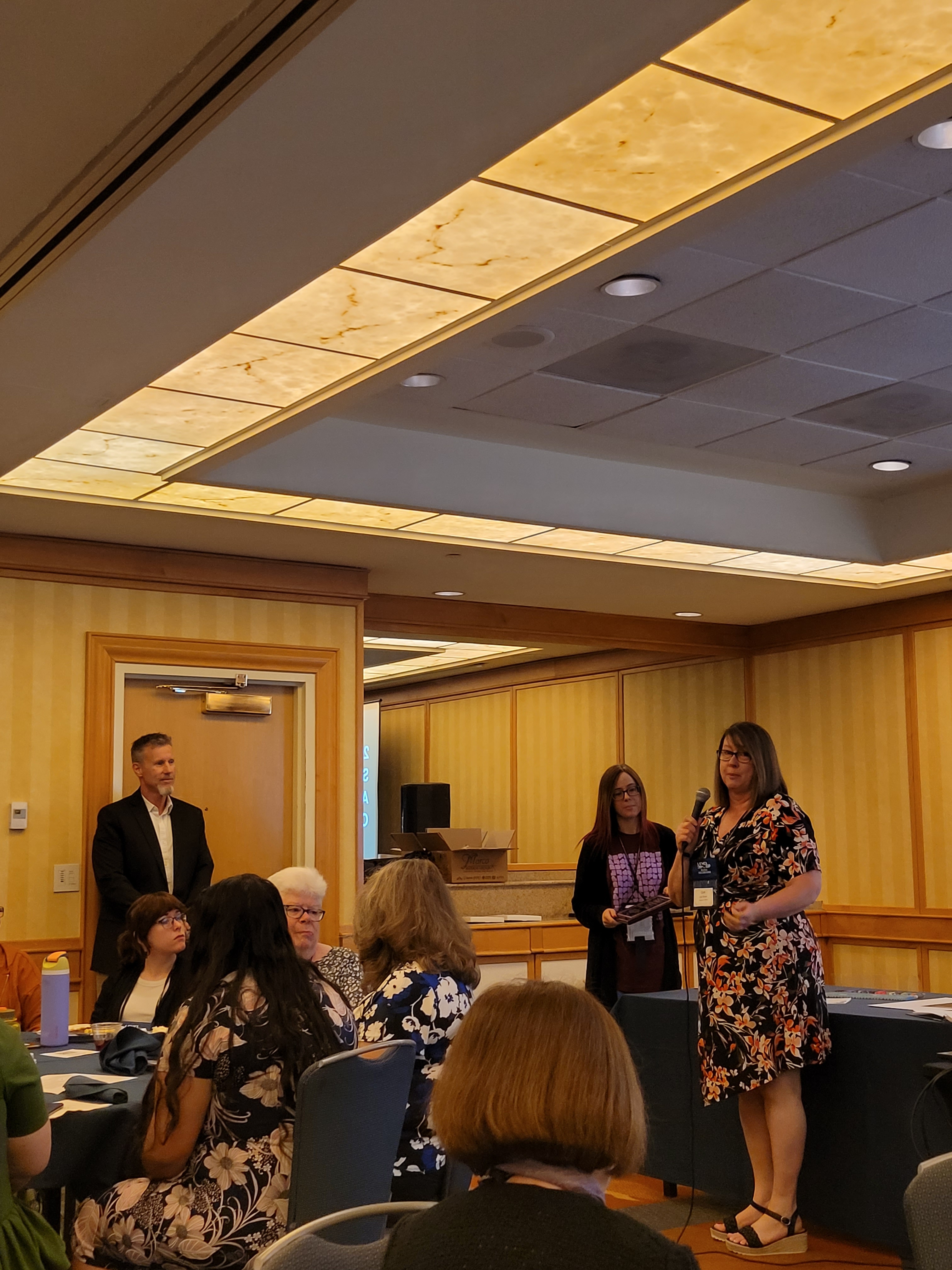
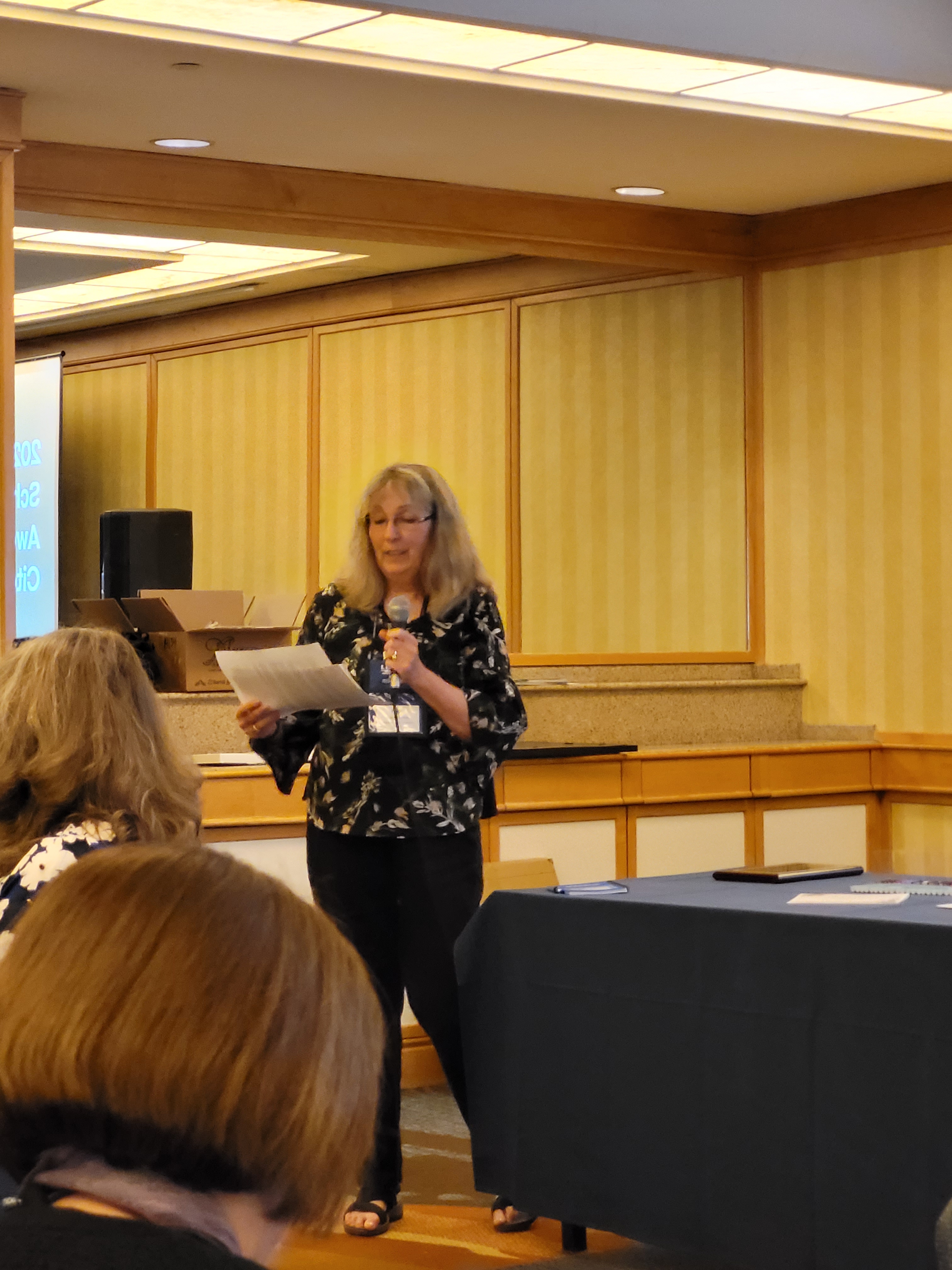
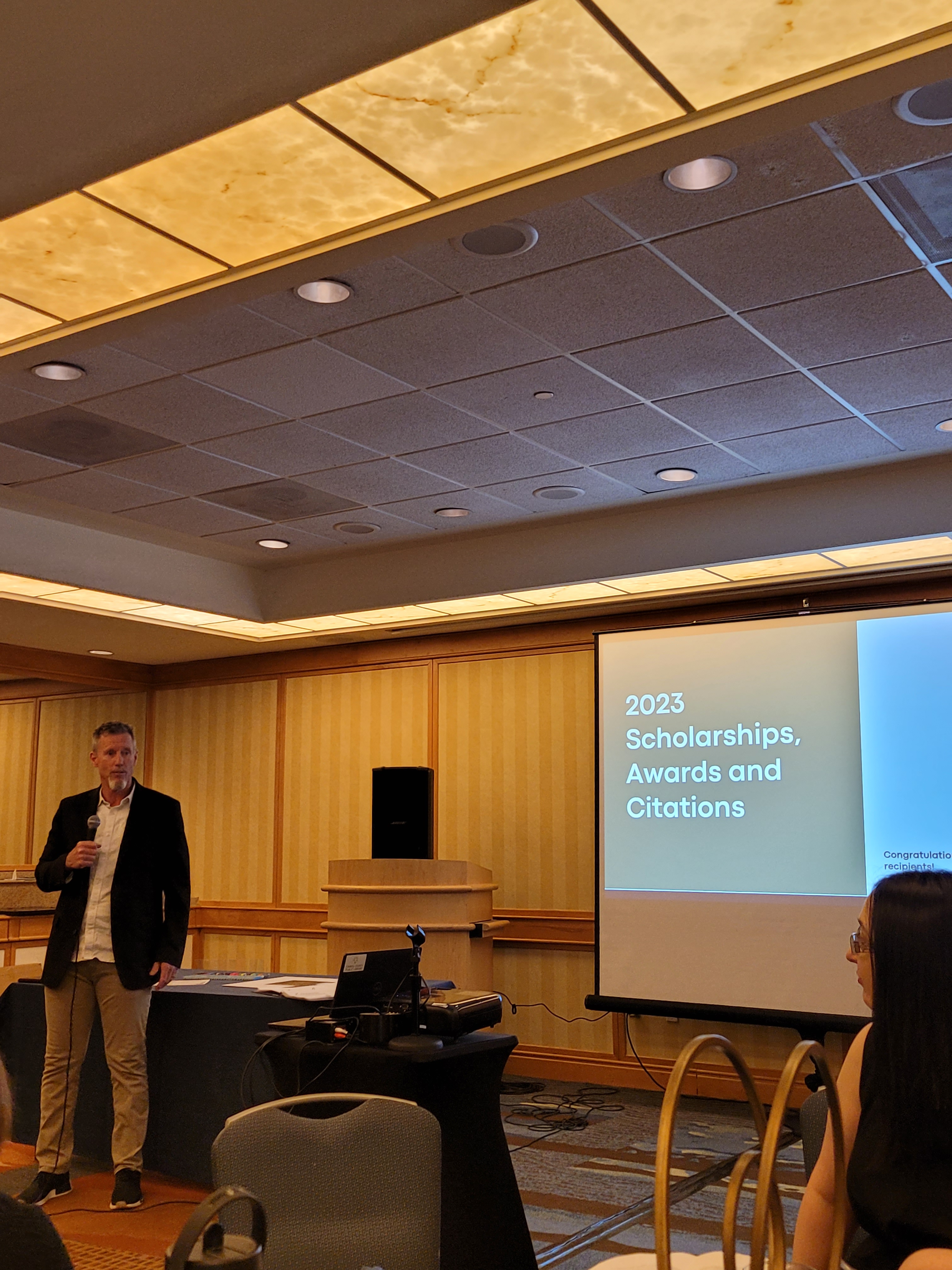
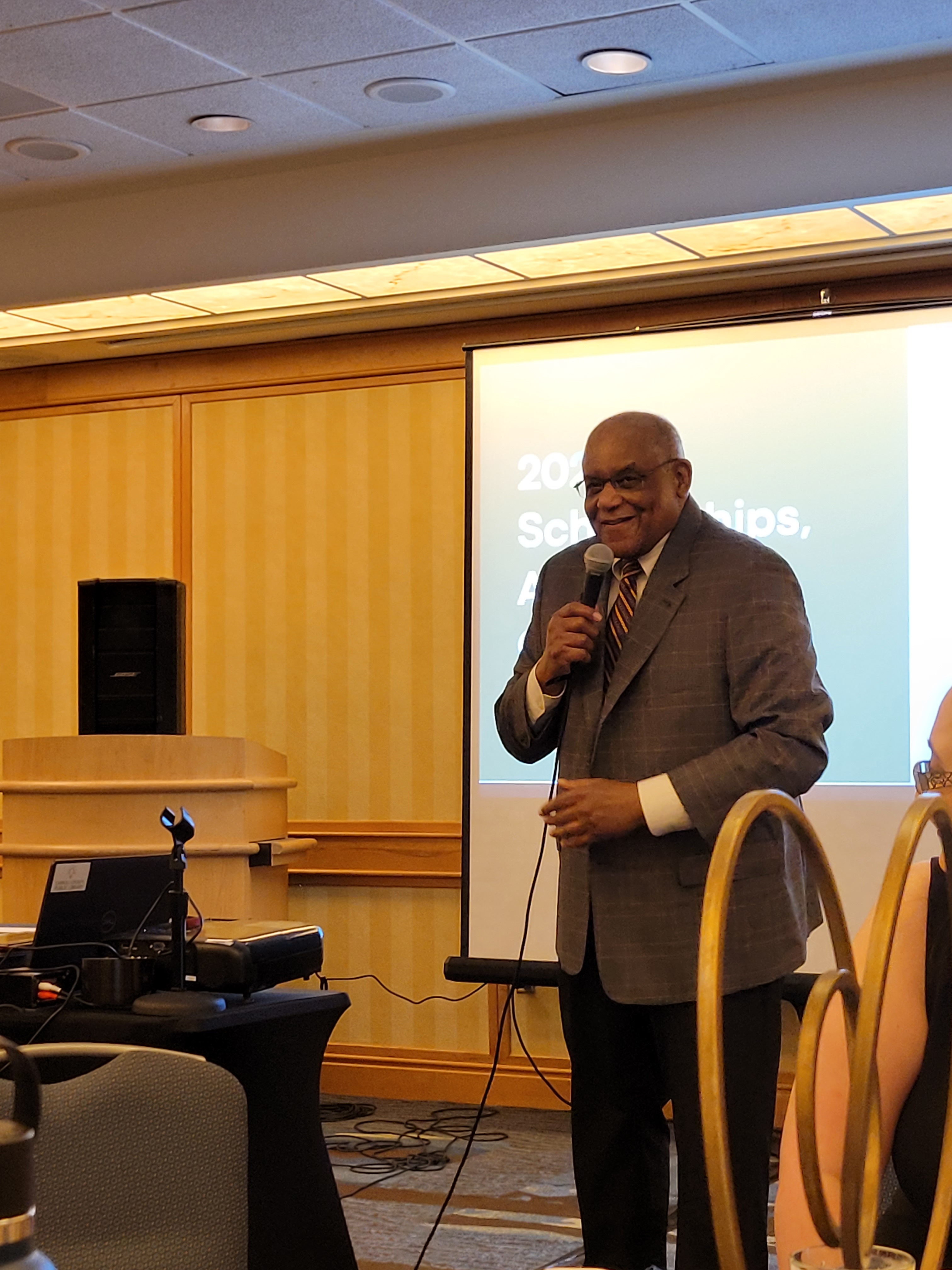
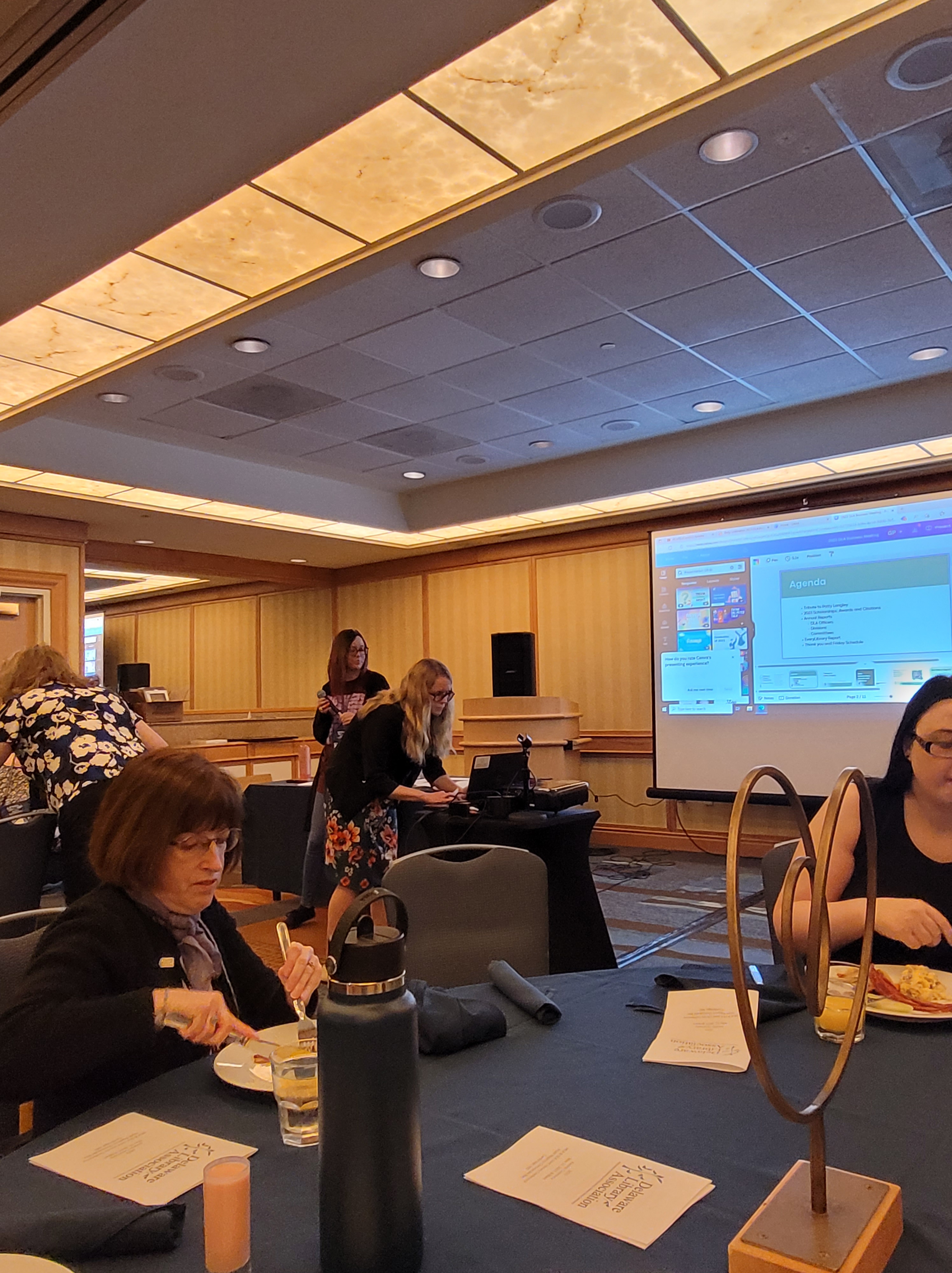
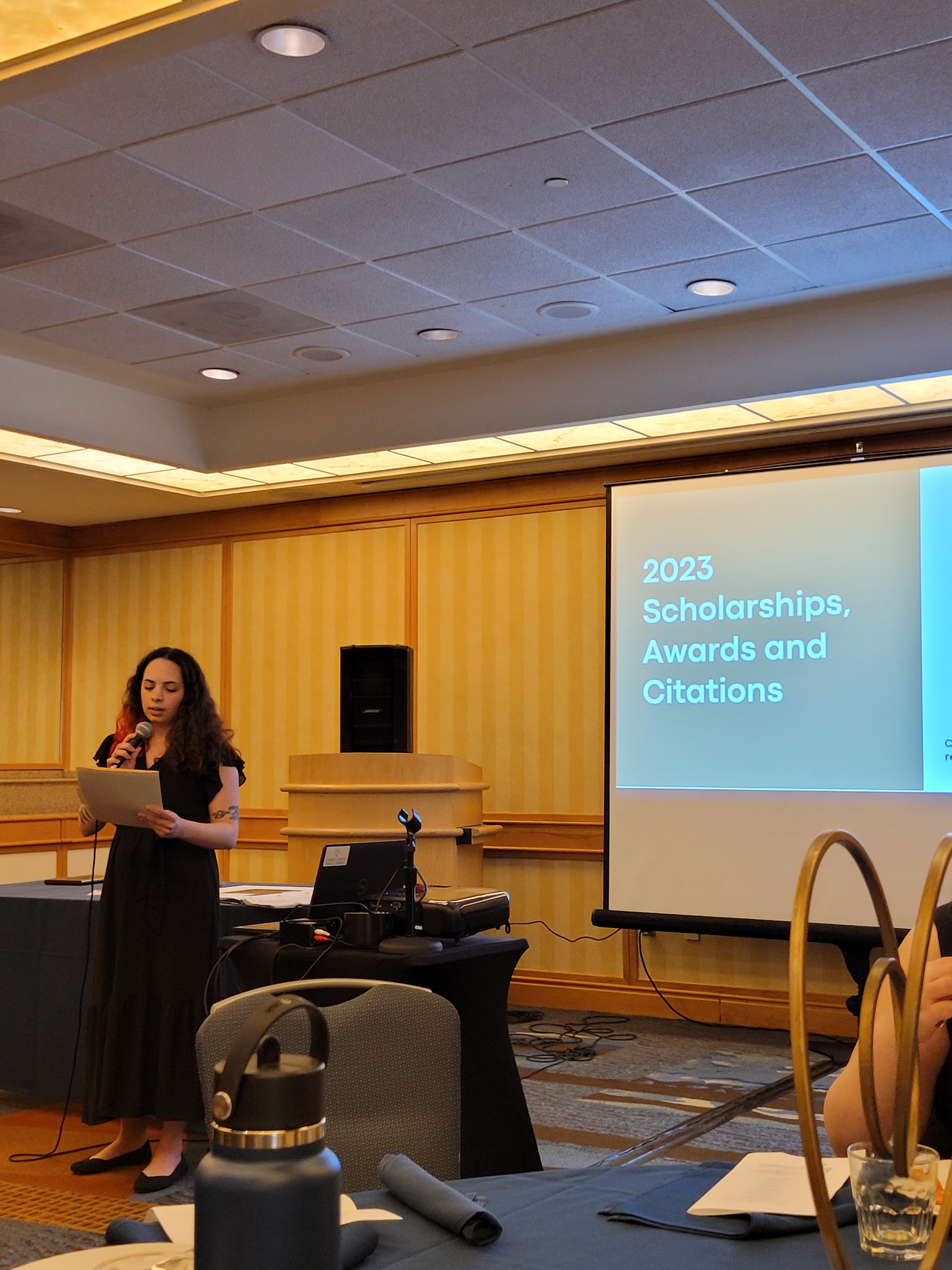
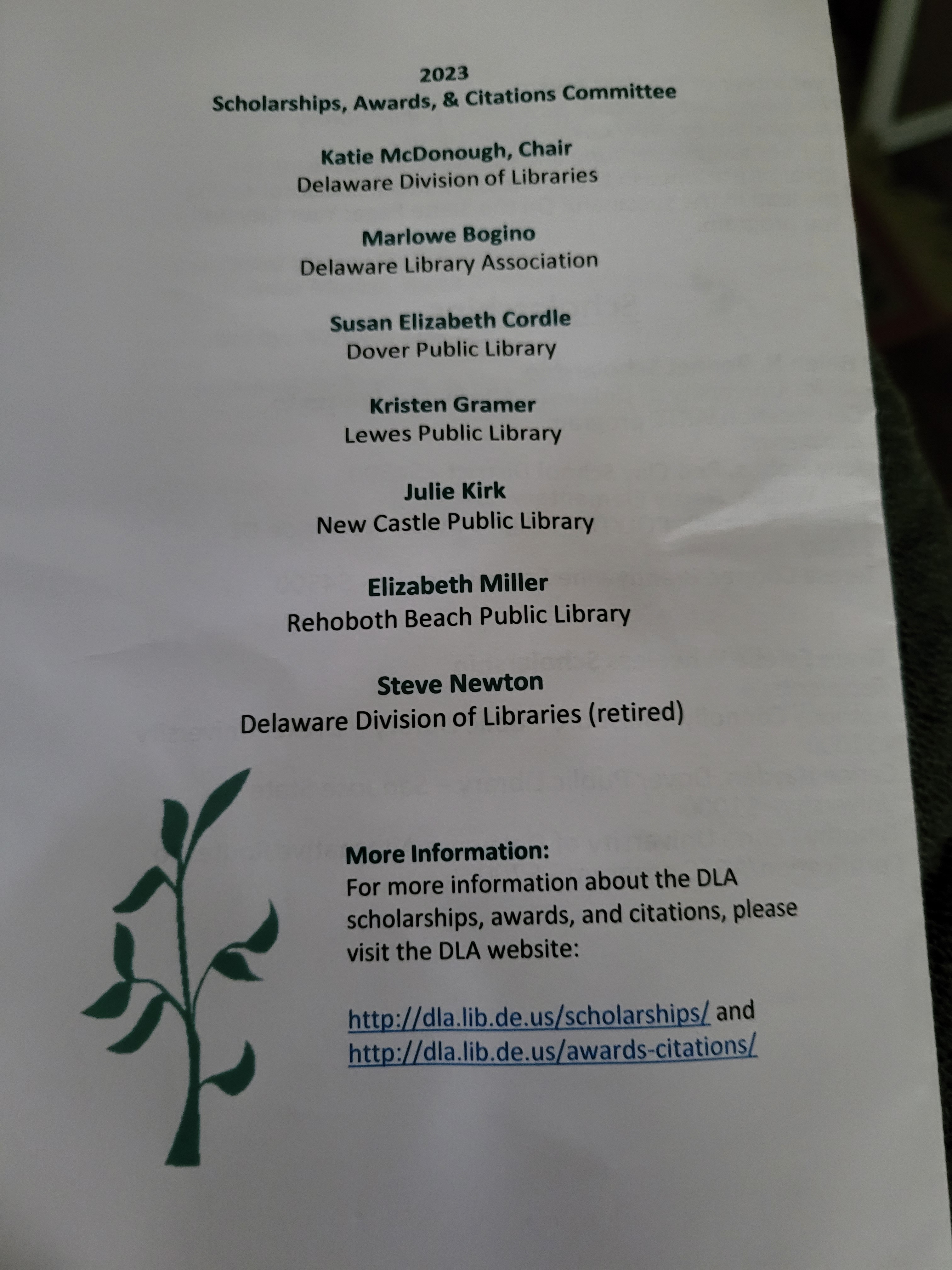
As we take a break before posting more workshops from the MLA/DLA Conference, we wanted to congratulate recipients of honors that represent the best of librarianship in 2023:
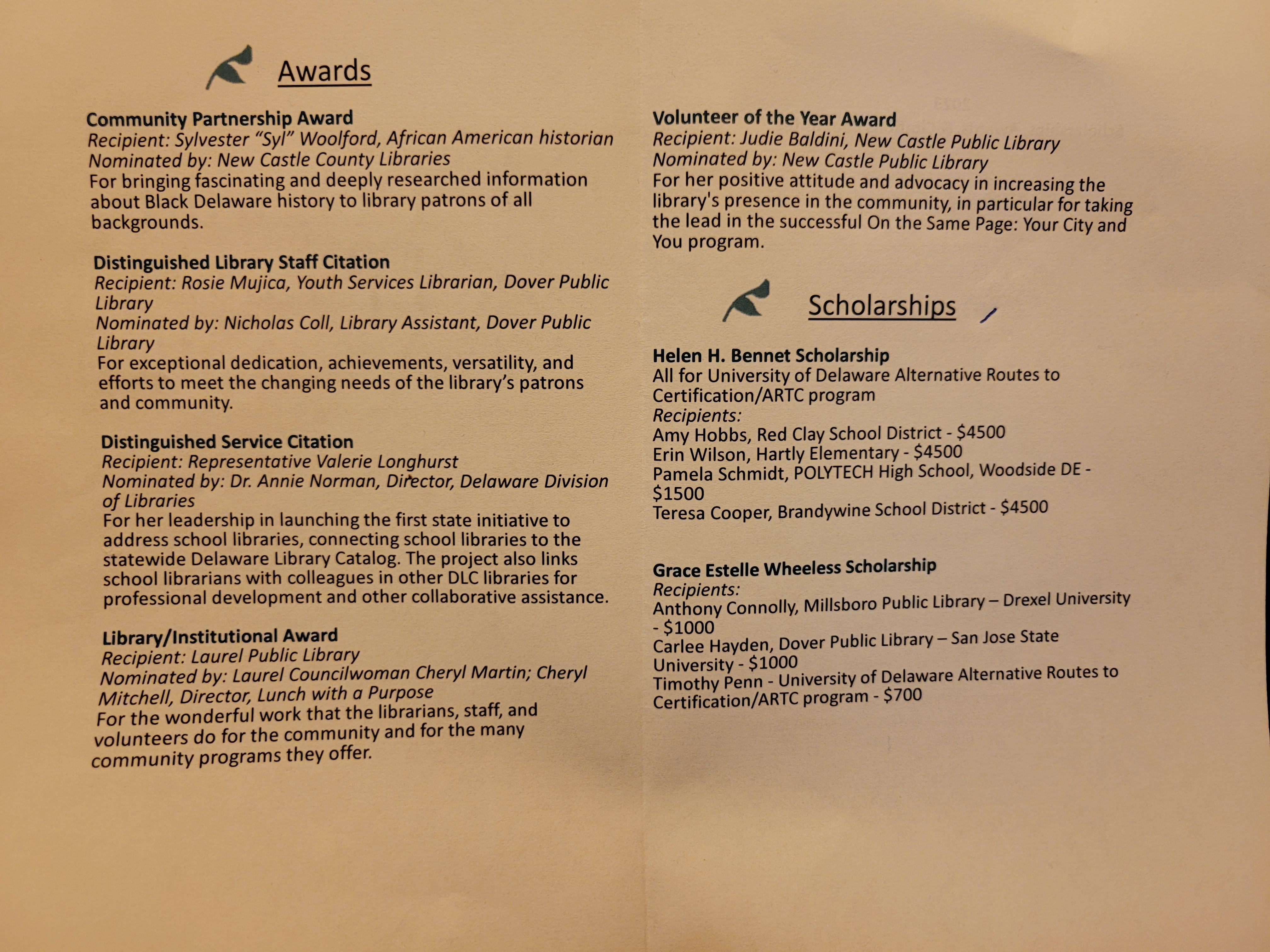
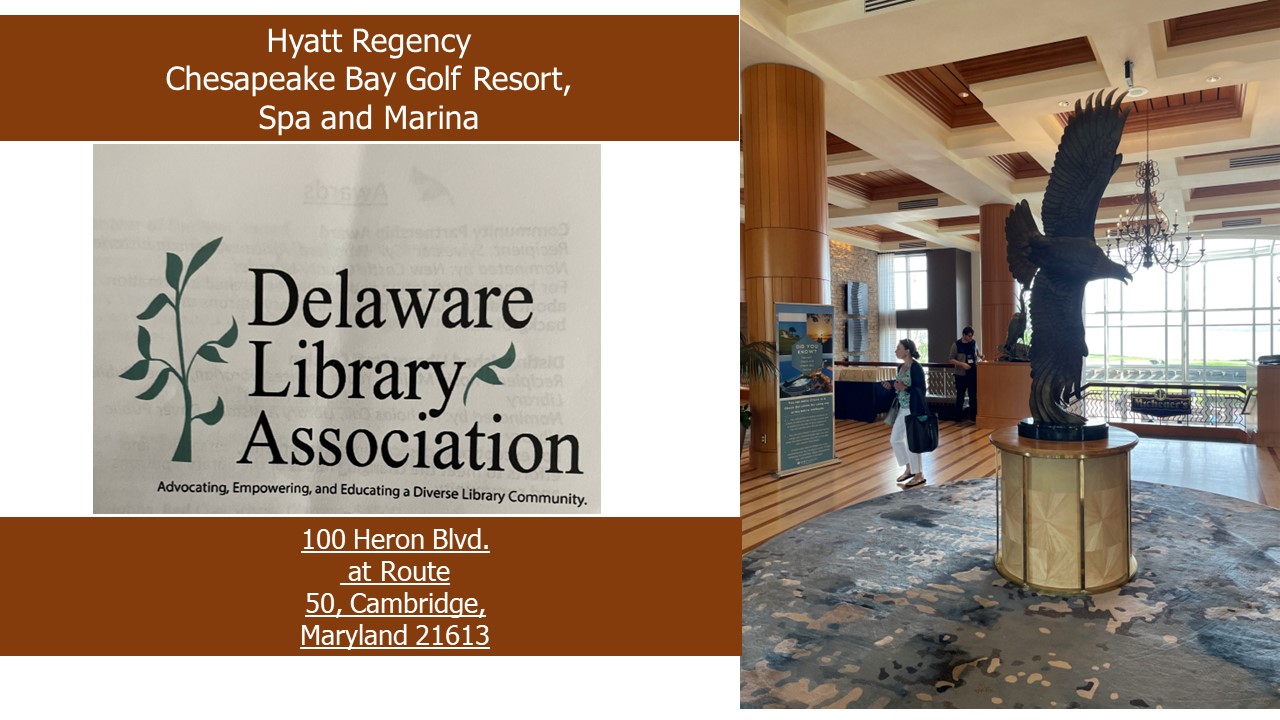
(Since we have the program pictured below – we will let you take it in without repeating what honors these recipients are receiving!) (Also check out the bottom of this page! -(https://dla.lib.de.us/divisions/pld/pld-showcase-showdown/)
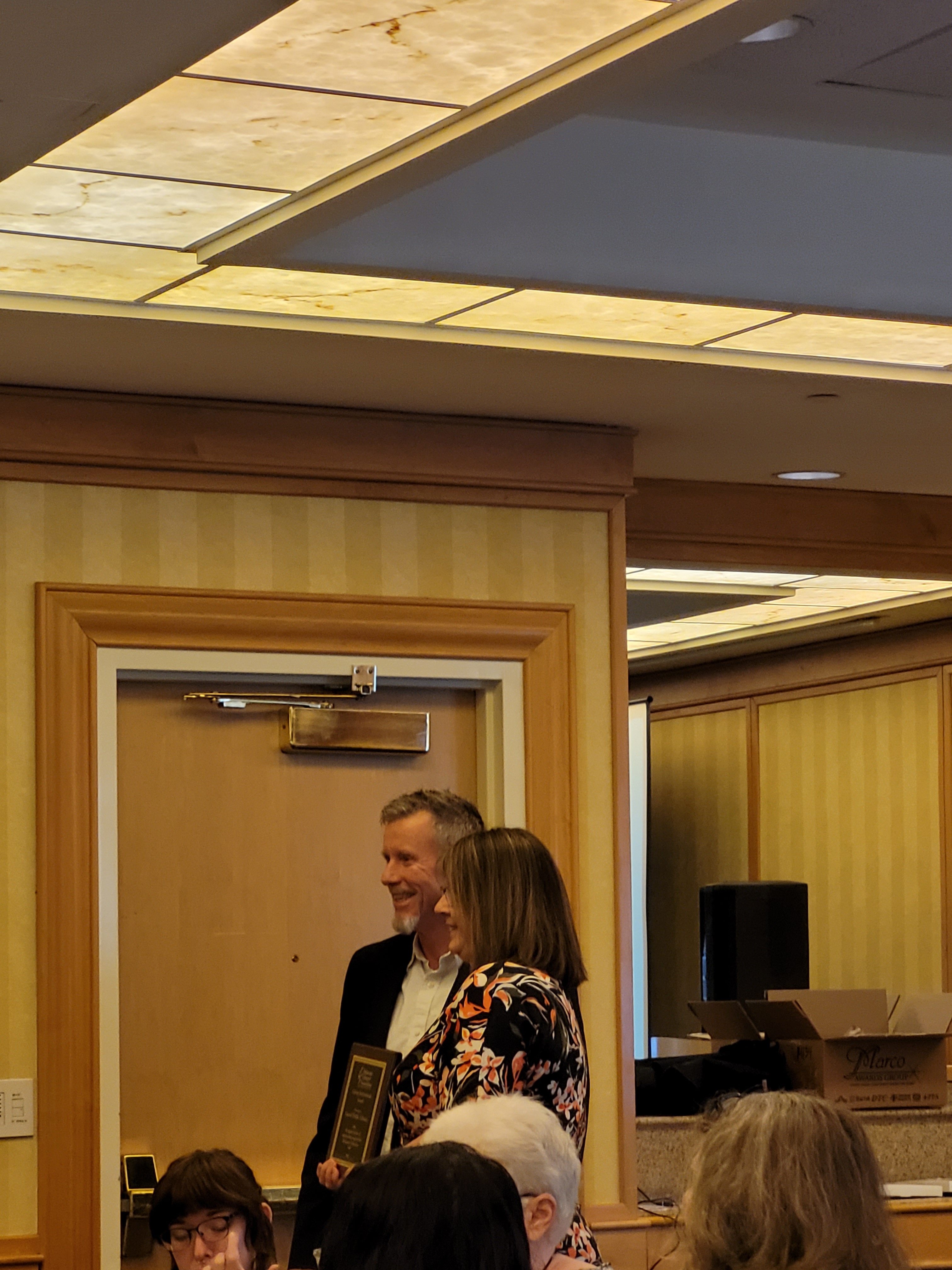
Community Partnership Award – Sylvester “Syl” Woolford (Thank you Christina Celona for introducing this award!)
Helen H. Bennet Scholarship – Helen H. Bennett was Supervisor of School Libraries in the Delaware Department of Public Instruction. Mrs. Bennett was dedicated to the development and advancement of school library services and school librarians. She established a scholarship endowment and left her estate to the Delaware Library Association to support the training of professional librarians.
The Grace Estelle Wheeless Scholarship – Grace Estelle Wheeless was a former president of the Delaware Library Association. The Grace Estelle Wheeless Scholarship was established in her honor, “…to aid Delaware students in library schools, or those who have completed college study but need assistance in earning their Master’s Degree.”
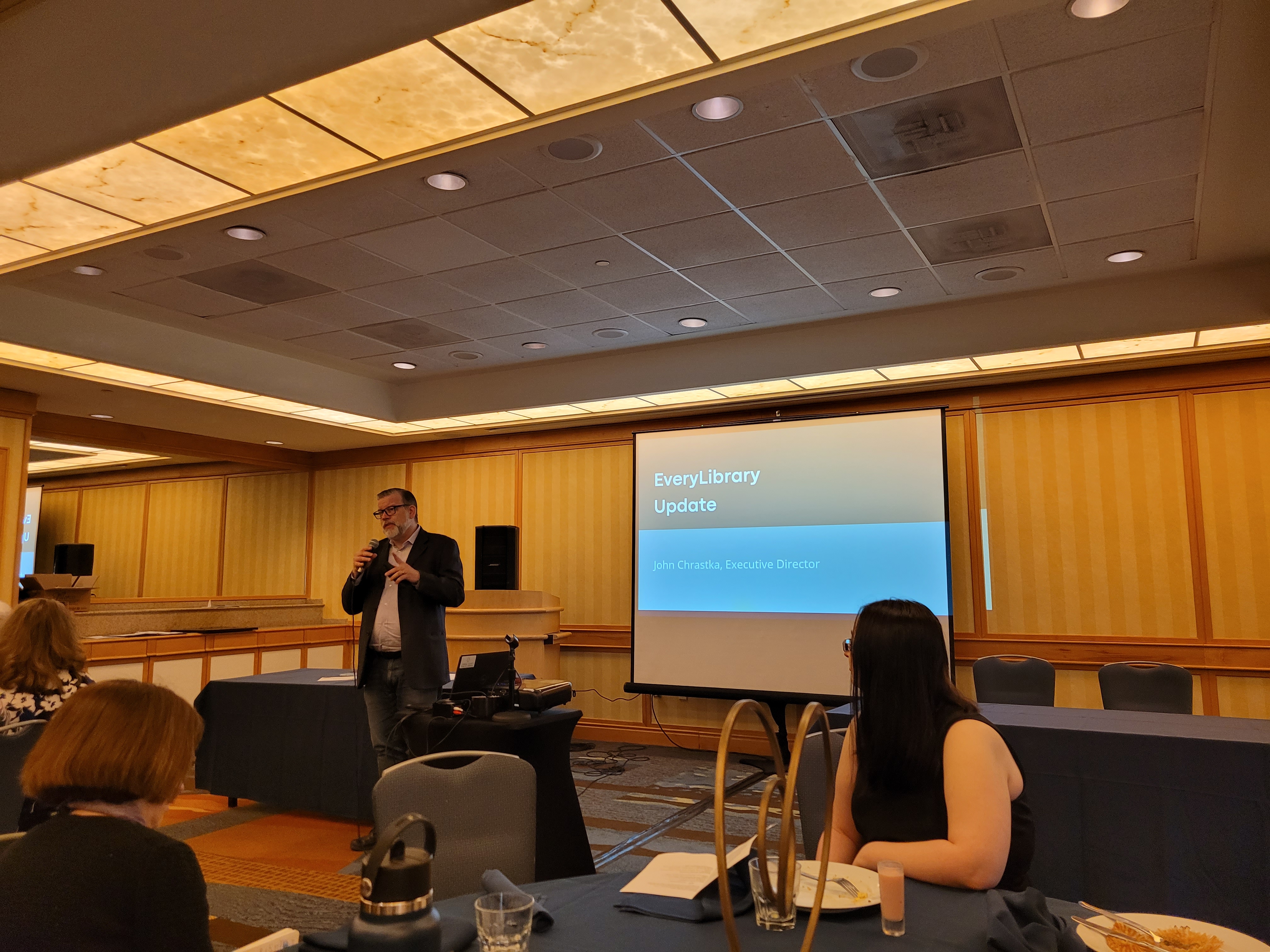
Rev. Dr. Howard G. Backus and Director Gail BruceSylvester “Syl” WoolfordCambridge Hyatt – MLA/DLA ConferenceDLA President Rachel Culver and incoming President Anne Hiller-ClarkRev. Dr. Howard G. Backus, Susan Elizabeth Cordle, and Gail Bruce celebrating Laurel Public Library!Updates from Dr. Norman, DE State Librarian and commemorating Senator LonghurstRev. Dr. Howard G. Bruce honoring Laurel Public Library’s recognition.Sylvester “Syl” WoolfordDLA President Rachel Culver and Susan Elizabeth Cordle making all run smoothly.Elizabeth Miller, from Rehoboth Beach Public Library introducing Rosie Mujica.John Chrastka from EveryLibrary.org and updates of Librarian Climates
Andrew Russell – Explained the production and process of audiobook creation.
The Readers’ Advisory Interest Group, in collaboration with the Maryland State Library for the Blind and Print Disabled, will: (1) illustrate the importance of audiobooks in libraries;
(2) demonstrate how libraries may become more aware of the services provided by the Maryland State Library for the Blind and Print Disabled; and
(3) distinguish between various appeal factors in audiobooks for better readers’ advisory interactions and conversations with patrons.
The panel of experts and research presented was SUPERB – and from the beginning, the difference between text to text speech technologies (not human voice) versus audiobooks was established. Also, the point was made that there exists no single term for all spoken recordings. And yet, one of the biggest myths is that “listening” to a book is not reading. I LOVED the fact that when you consider the point of view of someone that does not have vision to physically read a book visually as another does, this point becomes “clearer” in principle.
In fact, some of the benefits of audiobooks through science tests to show the reduction of pain and anxiety despite that many have considered audiobooks not reading, or inferior to print and that this form cannot substitute print. Some consider an audio book “cheating” when it comes to reading. 100% false.
In reality, there is no difference to listening compared to reading a book. It was pointed out there is bias in literature about how well people read AND what people read. An important fact is that when you consider audio reading 2nd rate, then you also consider the person taking part in audio reading second rate, and that is not the case when you look at the benefits of audio reading and their impact on comparable comprehension.
Looking in history, there has been privilege associated with the ability to consume literature base don geographic, language, and literary considerations. Combined with the Western love of literature, it is easy to see how much print is romanticized and valued above all other forms.
It was pointed out that when we consider books we consider:
pleasure of characters
setting
dialogue
drama
an impulse to what happens next
The strength of an audiobook can bring the above to life, as well as a level of intensity a print book cannot reach. The element of sound brings new meaning to setting, conflict, and so much more. With audiobooks also being an issue of diversity of inclusion, and 43 million adults in the U.S. considered at the low literary level, (see this study in 2020 showing levels at 54% being at a 6th grade level), the power of audio books to:
provide an education mechanism, appeal to different sensory modalities, not to isolate readers, and intensify reader’s surroundings is very much real.
The book Lanny is a perfect example of how difficult it might be for readers to process the order of reading in print, differentiating the tones of different dialogue as is indicated to the advanced reader though italics and other physical cues, and with the audiobook, many of this is differentiated to the audio listener and is able to present this to the listener, where in print a reader could easily struggle.
When considering children and audiobooks the following characteristics play a vital role when it comes to reading: promoting family literacy, the ability to test driving another genre that might not be as interesting diving into a book / print, promoting personal growth of a read, literary techniques exemplified such as in the book Ready, Player One, and the ability to connect with new authors in a different way than others do. All of these are additions and bonuses to promoting literacy, the same as any print book would.
Why are audio books important? The ability to help language learners, assist individuals with a special need, the ability to draw in new readers, and the ability to adjust varying speeds to appeal to the abilities of readers are all additional, spectacular benefits of audiobooks.
Questions regarding which audiobooks are best for ESL learners also can be found in several places (podcasts too!)
It was interesting to hear from Andrew Russell the technical process that goes into creating an audiobook (and the length of time needed to create a quality audiobook is more understood when you dive into the meticulous process of doing so).
PLEASE check the bottom for some amazing studies and the works that help to support so much knowledge about audiobooks and their benefits.
I did like that limitations were presented such as those of pacing, audiobooks sometimes being a difficult entry point for some people with learning disabilities, and the voice of the reader may impose some difficulties for the listener.
It was AWESOME that a reader’s advisory was listed and that this was emphasized:
Audiobooks are NOT simply recreation, they ARE reading. This is reading, just like all forms of reading that empower all readers. The important point made, listening patrons might not be looking for read-a-likes as you do in print, but looking for “feel-a-likes” as audio taps into a new sensory of realization for readers and yes, readers, not just listeners!
The one thing to consider is the following awards given to audio books and with this many Awards, it is impossible to deny the power and impact of audiobooks on readers!:
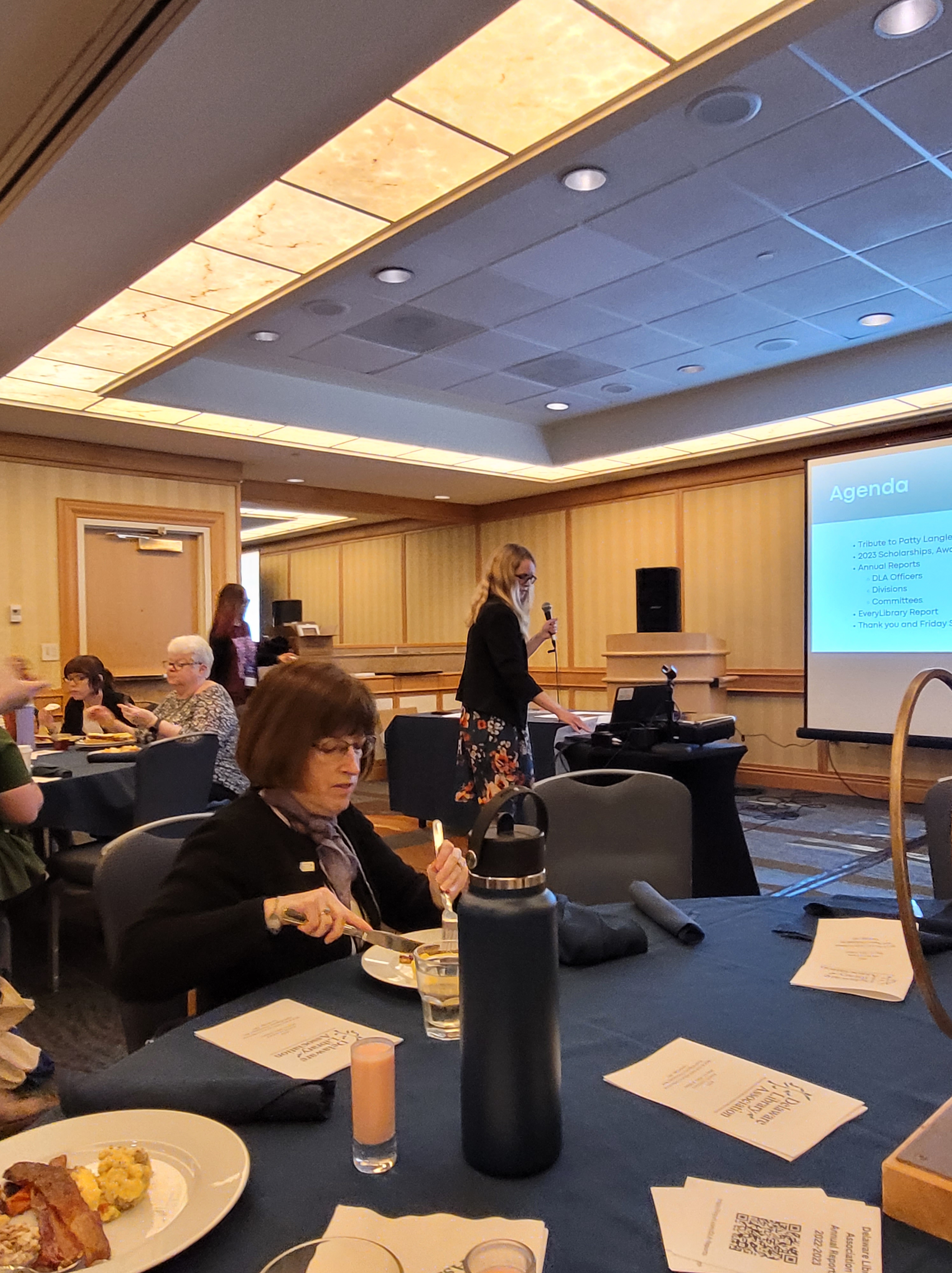
(Disclaimer, before this session which was at 9:30 AM on Thursday, we had our DLA Executive Breakfast and reporting meeting – I will definitely being sharing that as soon as I put a few final detailed touches on that post!)
Photos Courtesy of Tom Gavin.
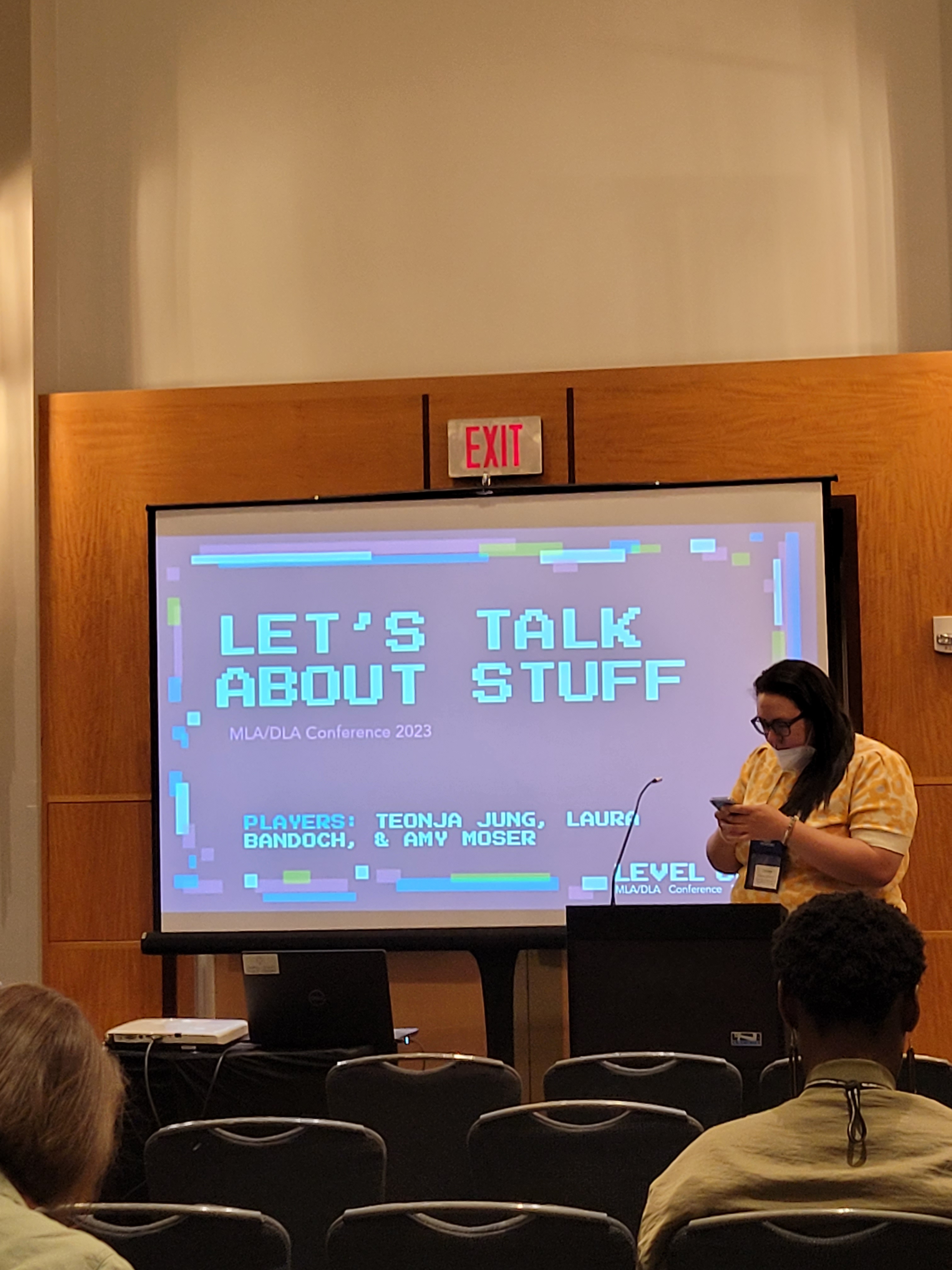
The session I attended, Let’s Talk About Stuff, Thursday was a perfect blend of sharing the latest going-ons among public and school libraries. Like what?
Then Frederick County Public Libraries talked about utilizing Life Sized Jenga in communities when visiting and also displays. How they began to experiment with attaching photos of library staff under books that were being reviewed to resemble a book store feel and personable review of books. In that vein the conversation was brought up about books that are taken off after being “new” were converted into other spaces on the library to make other types of displays, as those “new” books come off displays for “new” books.
Again, I thought of the plan I had to assign a student their own shelf to help, throughout the year – to come up with new ideas to promote, weed, and familiarize people with the books on those shelves, to give new perspectives to shelves of books in the library. I like this idea alot as I think many different ways would be thought of to have shelves, and what is on them represented in different ways.
It was mentioned that Library IQ was utilized to help generate stats for the libraries, and the fact that libraries were providing lunches for individuals so that this also brings patrons into the library and is a way to connect them with summer reading programs and getting them into this early before summer starts.
Another mention was the need for hot-spots to keep students connected over the summer, and I mentioned how some rural areas, and even in towns in DE, hot spots do not help and how frustrating that is. I brought up the various programs that Delaware has regarding the consortium schools currently and how public /school libraries can connect because of that. Additionally, we through out the idea of how to involve students more – and I asked how other libraries reach out to students and connect their public libraries to the school libraries.
Several ideas that people wanted to do or who already do, was to put on the idea of library lock-ins for promoting the library, events, and resources/ games for a chance to advertise the libraries services to youth, also involving home-schooled students in those events.
Going back to the issue of helping student connect, one library mentioned having routers to check out in place of hot spots, and I wondered if that might make a difference in connectivity at all if hot spots cannot help. One attendee mentioned his library has the issue of hotspots either disappearing and not being brought back, or a reset button being used that lifts all the restrictions for patrons (mainly younger ones) then having to be reprogrammed when coming back. Both of these were reasons that partucular library was moving towards not lending them anymore due to the negatives and time tied to them being greater than the benefits. Some attendees were able to offer some possible solutions to that issue as well, so the back and forth ideas, problems, and talk was ideal for this workshop.
Some of the libraries work with Bibliocommons and I can see how this connects all libraries together in the public library realm. Additionally, some libraries discussed a space they designated a Discovery Layer area just for Tween/tens etc that felt as if that was their space at their public library that help younger patrons be more at ease and likely to be part of other events at their public library.
A suggestion also give to me for making a tighter connection to students who can’t always travel to their public library was an idea called Battle of the Books. I didn’t know this was a THING, but I am intrigued – The competition possibility of this is interesting and a great project to promote literacy, love that! I am intrigued by the book lists and chance to delve into new books I never discovered before. Might be a project to get into 🙂
Another great suggestion was just getting students to keep records of a booklist, 1000 total in a year and as they make it higher they get object to mark their progress on a visual like a caterpillar being moved up to the next level of milkweed and then add a butterfly at the end of their goal. Another person mentioned having an ice cream festival to celebrate books read by students and then free books given out at the end of year event, and yes, we all agreed ice cream and books? A win.
It was nice to have a session with an easy back and forth feel and just to get to know what other libraries use, struggle with and suggest and get ideas back and forth. VERY important when libraries and libraries get together often to do this allows everyone to generate ideas that fit their needs. The workshop presenters below did a great job in letting everyone compile and hash out ideas and issues.
I being able to compare Delaware to Maryland, I cam et realize how far reaching counties were in Maryland and the challenges to connect with so many differences in populations and needs. I feel we are VERY lucky in Delaware due to the followng aspects:
The existence of UDLIB where the whole state has access.
The ability to join the State Consortium that will provide a stage and platform for more professional librarians to have a place and visible need, and the chance to bring public libraries and school libraries together to advocate for each other stronger. We have many successes despite the challenges we see everyday.
I do see the challenges we have in rural areas in DE similar to rural areas in Maryland with connectivity- I am wondering if renting routers would be better than renting hotspots to connectivity, and want to research that deeper.
It was great to have State Librarian Dr. Norman and Tom Gavin, and seeing Kaitlyn Jurewicz from Capital School District all in the same place as we were able to represent Delaware well with many of the topics that were being brought up.
An open discussion session in which attendees can share what’s happening in their libraries related to any area – circulation, technology, programming, new services, post COVID changes, supervising, etc. Attendees may submit any questions they have ahead of time so that they m