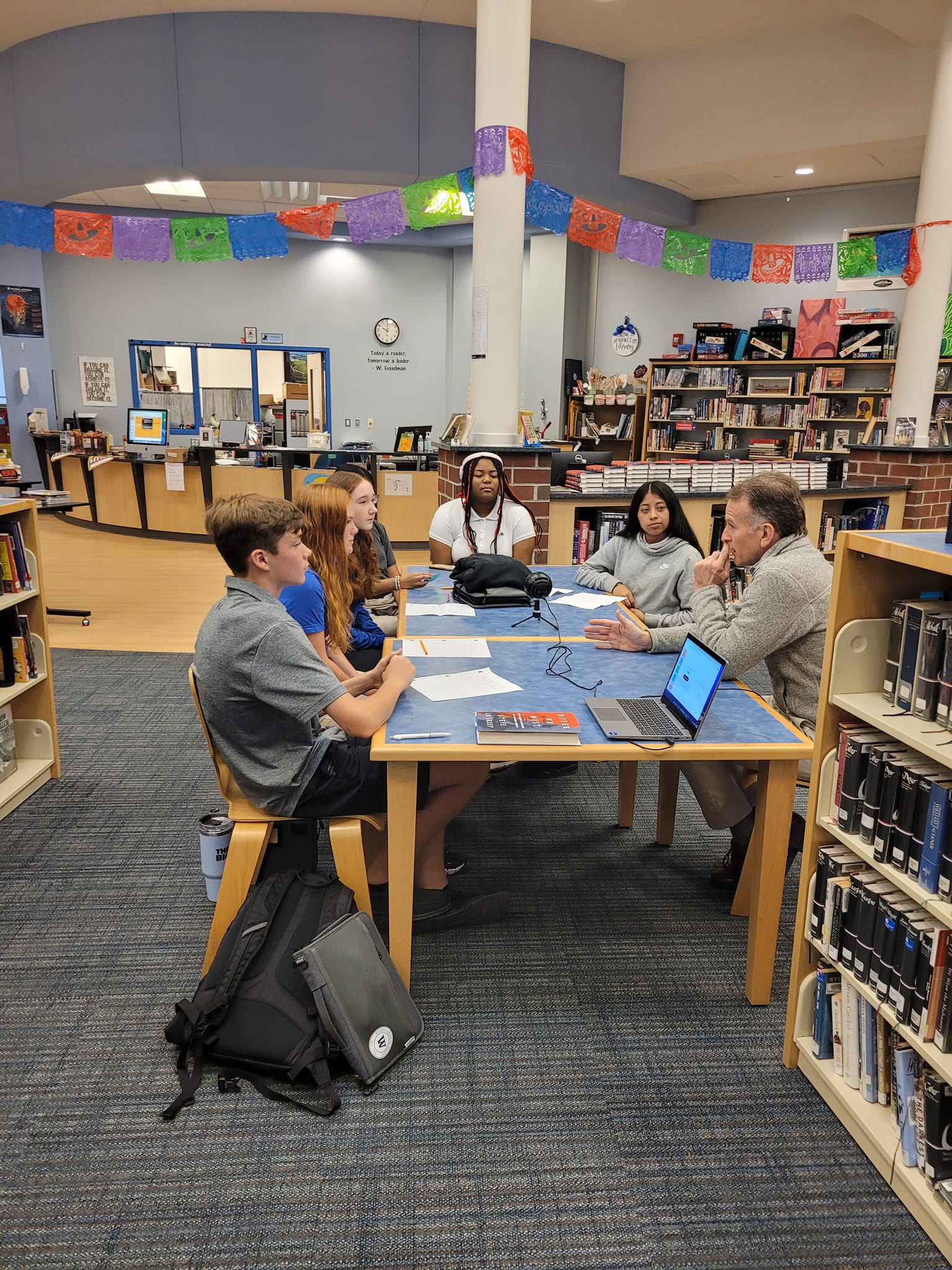
Perhaps one of the most misunderstood aspect of education become comics. Or graphic novels. Or maybe even Manga. Yet, the tendency when fear or misunderstanding is to take away rather than embrace the unknown. We are amazed at the connections made through this podcast and Woodbridge High student Olivia as she helps explore the knowns and unknowns of Graphic Novels with educator and author, Tim Smyth! You will love this episode!
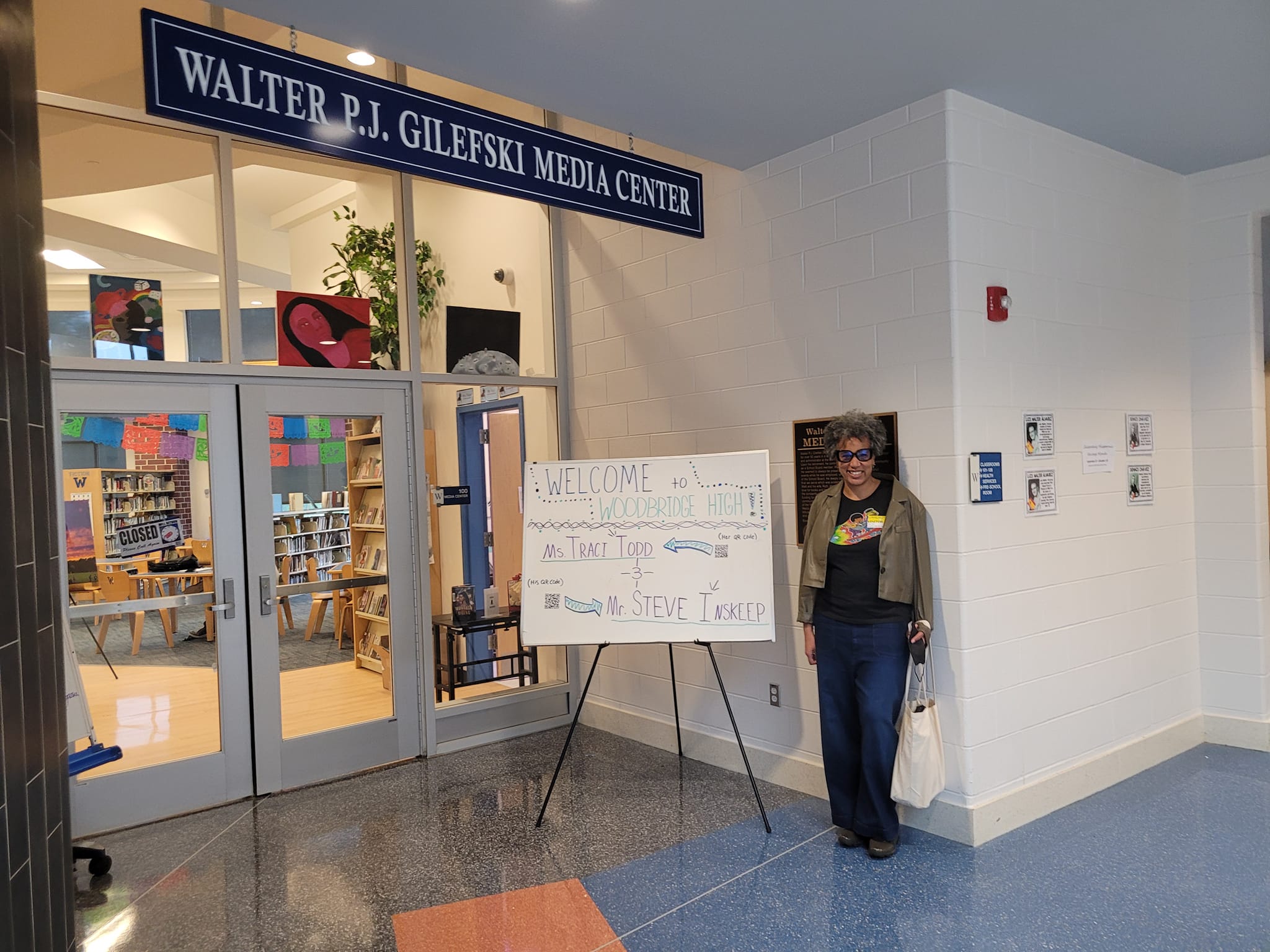
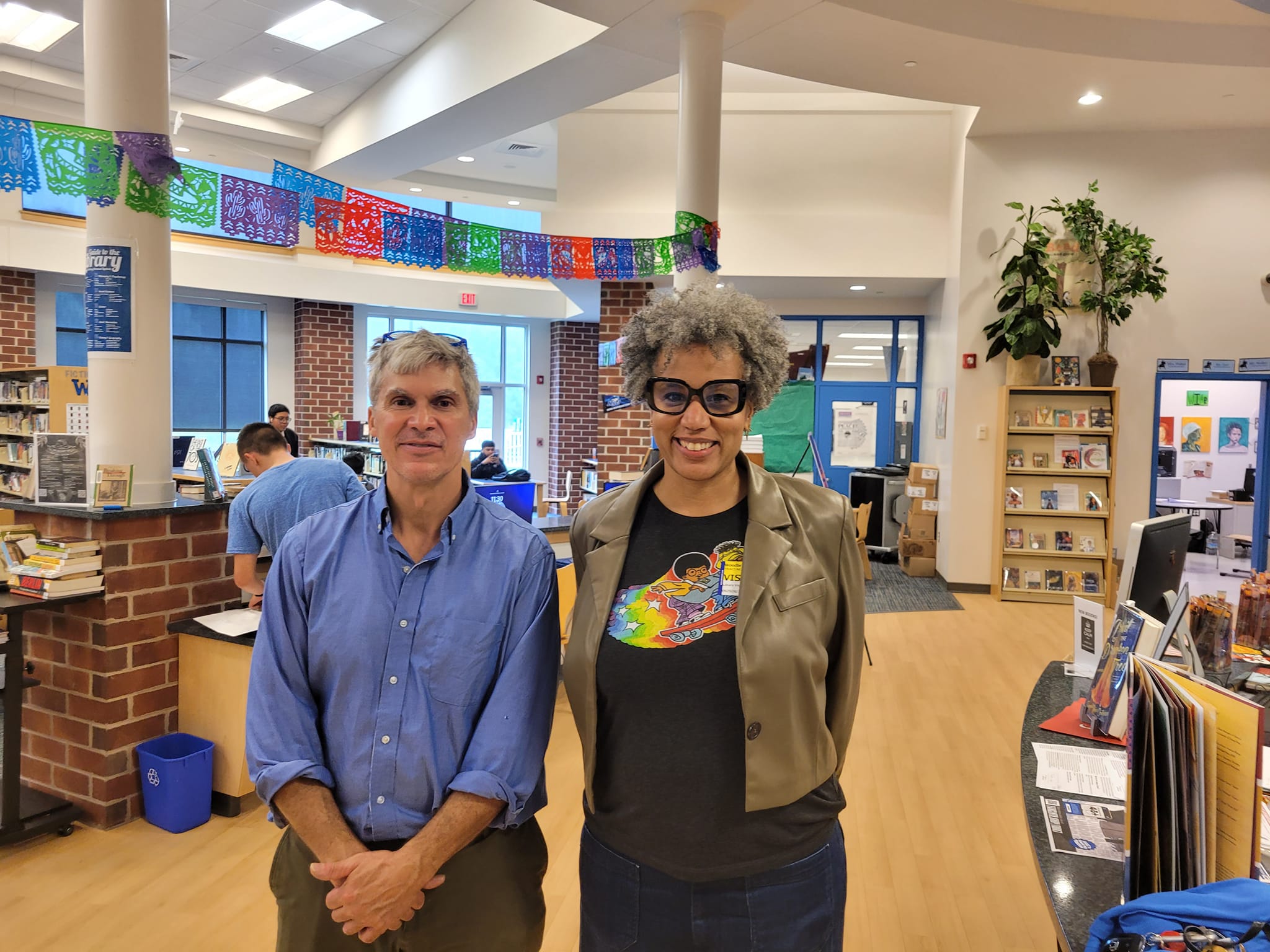
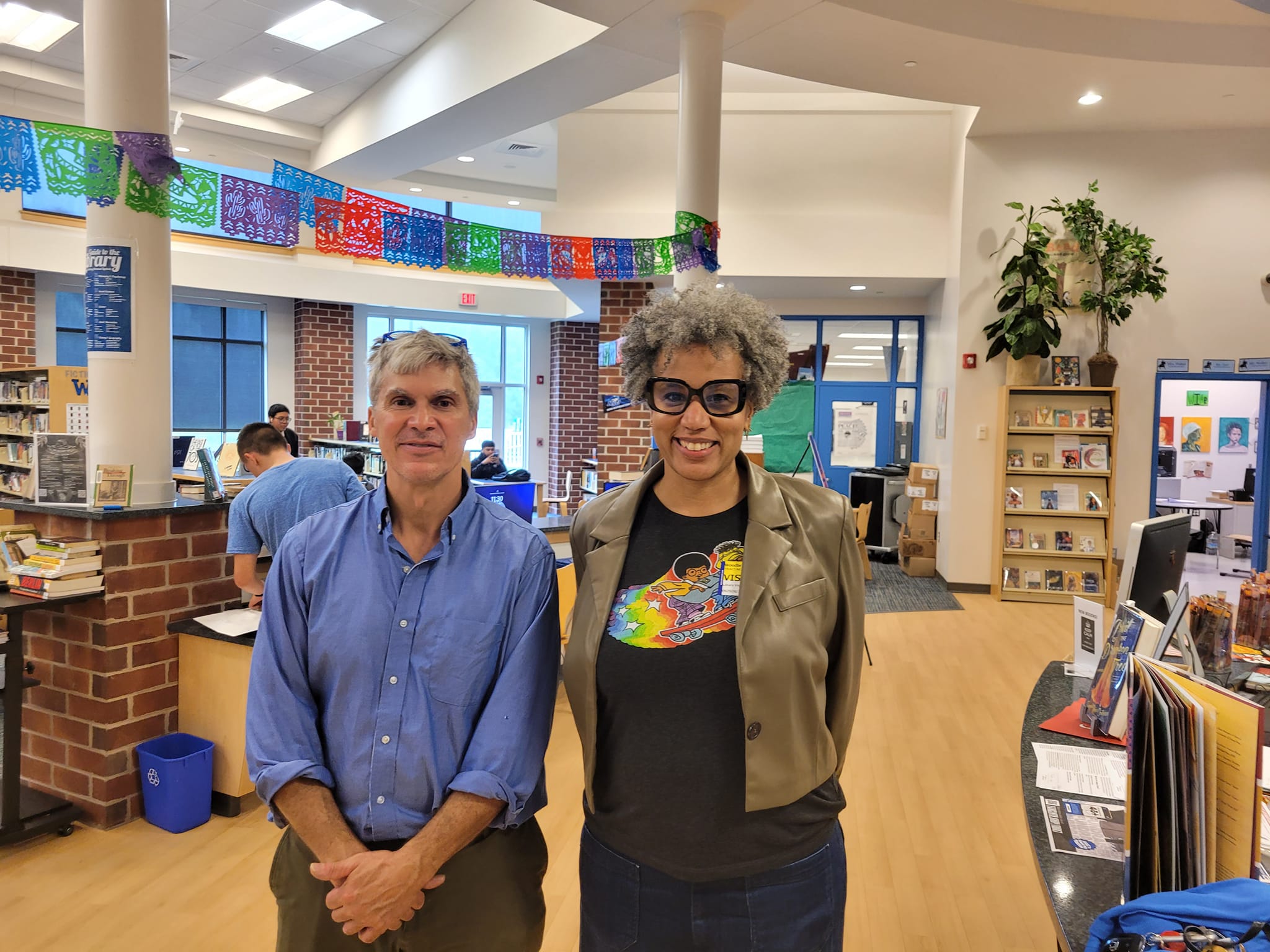
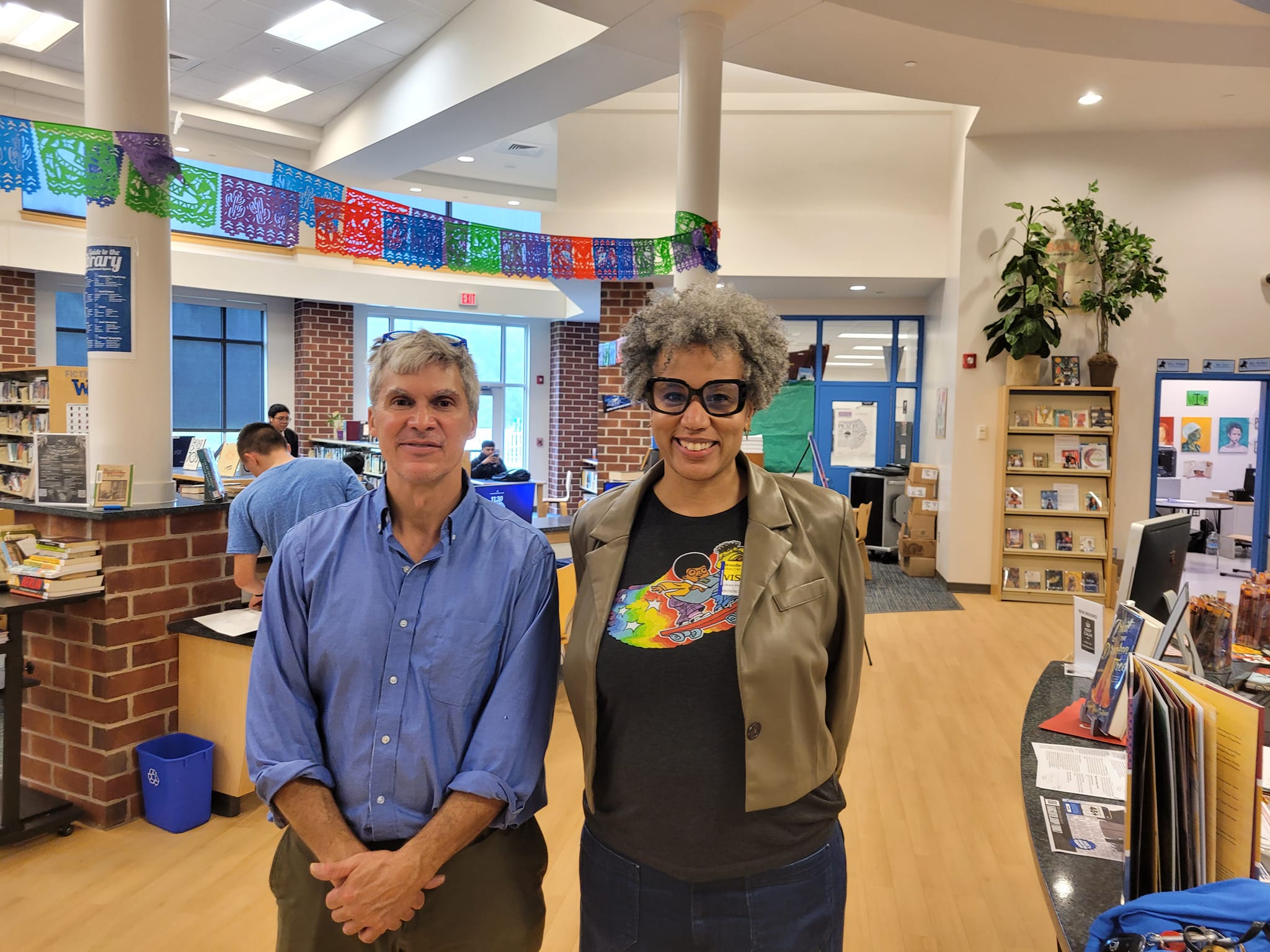
From the time relevant issue of Manga and illustrated books, to the process and technical ins and outs of writing, to simply inspiration and living a good life, Ms. Traci N. Todd provided gifts of wisdom and instruction that have led her down paths through Ezra Jack Keats and poet Robert Frost. With House Bill 198, there are so many niches that school librarians and libraries can offer that connect to black culture that have impacts on all of us today. From not taking for granted the naming of our elementary school Phillis Wheatley, to how our decisions today impact all races, this is an opportunity for all schools to find creative steps forward in enhancing the curriculum and inspiring youth. From clubs like Girls Who Code to Black Girls Who Dive recently represented at Coast Day in Lewes, school librarians and libraries need to thrive and provide gateways for opportunity for students, not merely textbook page turning assignments to cover a bill’s requirement. HB 198 should inspire our educational systems, not belabor it.
It is interesting as you experience the series of experiences the last few days the Walter P.J Gilefski Media Center has had the privilege to be involved with. When you include students voices and involvement from the very beginning, more positive results occur in all that happens after. I thought this after Manga had been pulled from a nearby school library district, as also thinking about how individuals other than youth are consulted when it comes to what is appropriate, when students can visit their own school libraries, who consults the youth when a decision is made about removing a librarian or library, and how areas are set up in new libraries with youth are not consulted. How much different would scenarios play out when youth’s voices are part of the planning, collection management, building, and staffing of facilities, individuals, and resources that directly motivate and promote literacy?
Too often enough, youth are the last group consulted or informed of decisions that involve them from day to day, from plans of new businesses and opportunities in communities, to school librarian and library access, to opinions and views on the layout of a media center, to the removal of the very resources that help lift an individual up in a moment of need. Voice. With Traci N. Todd’s visit, many of the students realized they can be, and should be, a part of their own futures and have a say and a direct impact on decisions they are often left out of.
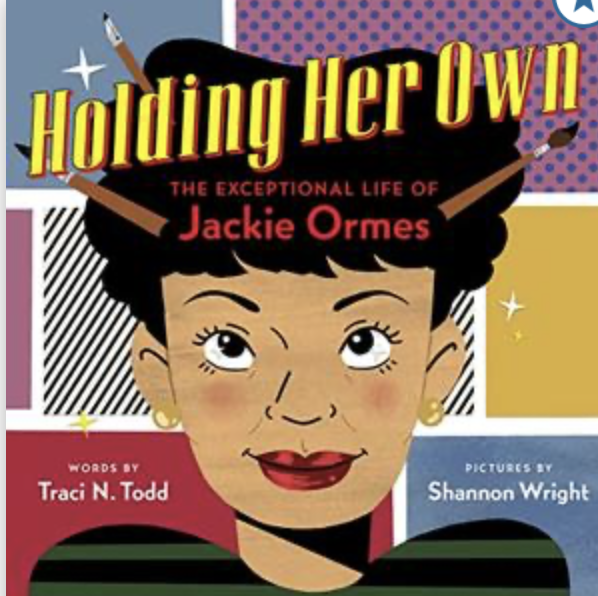
One of the best stories Ms. Traci N. Todd shared with her experience with Phillis Wheatley was the fact that when she told and shared that she had written her book, Holding Her Own – The Exceptional Life of Jackie Ormes by herself, elementary students applauded her and congratulated her. They congratulated her work she finished, just as Ms. Traci N. Todd was encouraging each of these young people to follow their dreams as well.
I felt we need to each do our own part to continue to support the fact that school libraries and librarians in the state of Delaware are always a staple of anyone’s education, and continue to bring connections inside and outside of the classroom for everyone to realize their potential. Working with independent books stores, community event planners, and more, much more in education is achieved and realized. Thank you Ms. Traci N. Todd for sharing so much for so many in one day and thank you Billion and Browseabout bookstores for putting piece of real life in so many student’s hands.
NPR has always been something I have been infatuated with mainly due to the fact that voice is so well represented. I have been always excited about recordings, music, editorials, documentaries, but more than anything all of the above that is captured with radio and voice. It soothes my nerves, it informs me, it often brings books to life, and in addition, I always felt there is a layer of learning not achieved through other mediums; radio has always intrigued me. NPR has ALWAYS filled the void of any information or interest I have had. Someone such as Inskeep and an institution such as Public Radio and NPR coming to our back yard, behind priceless.
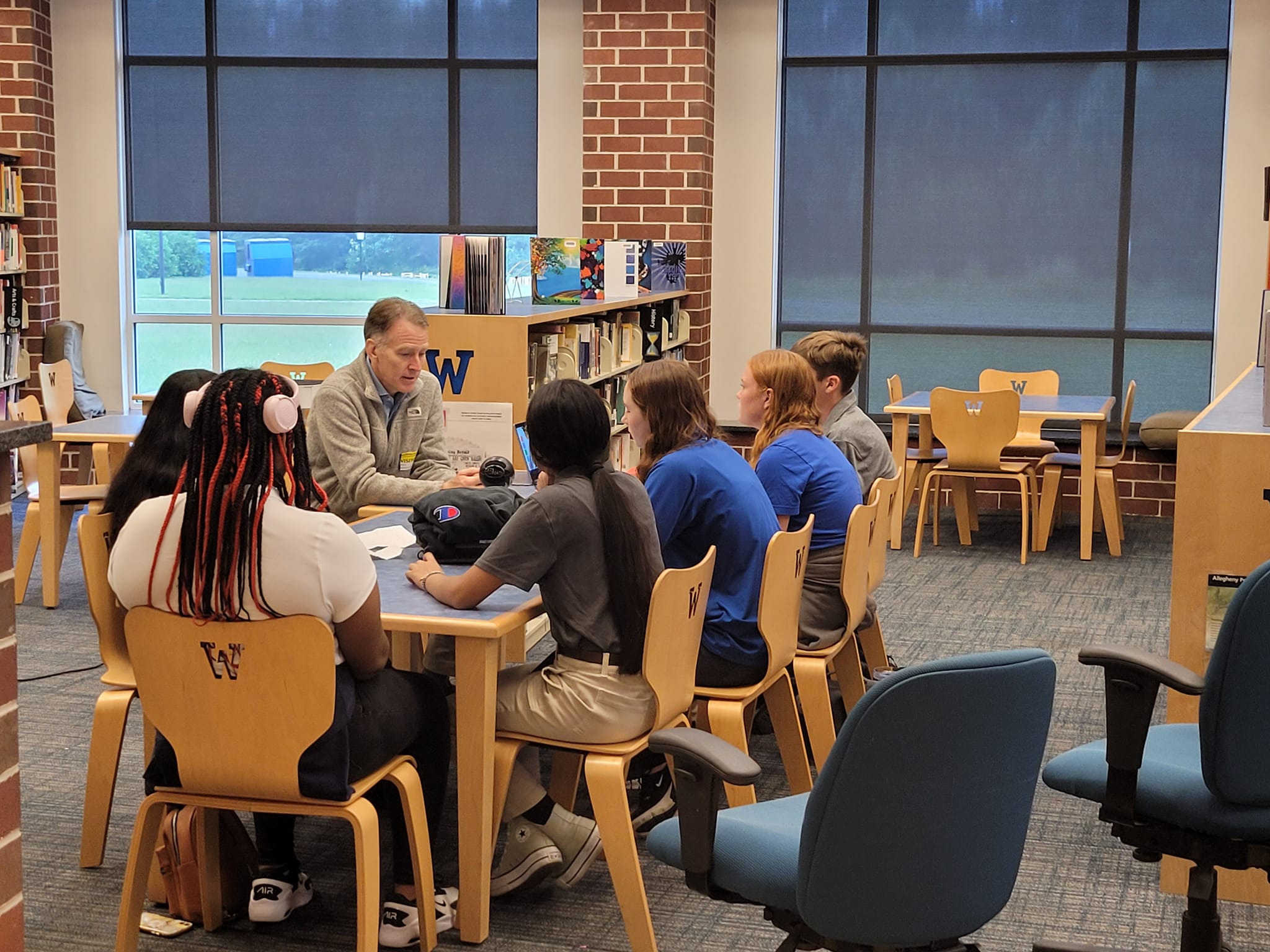
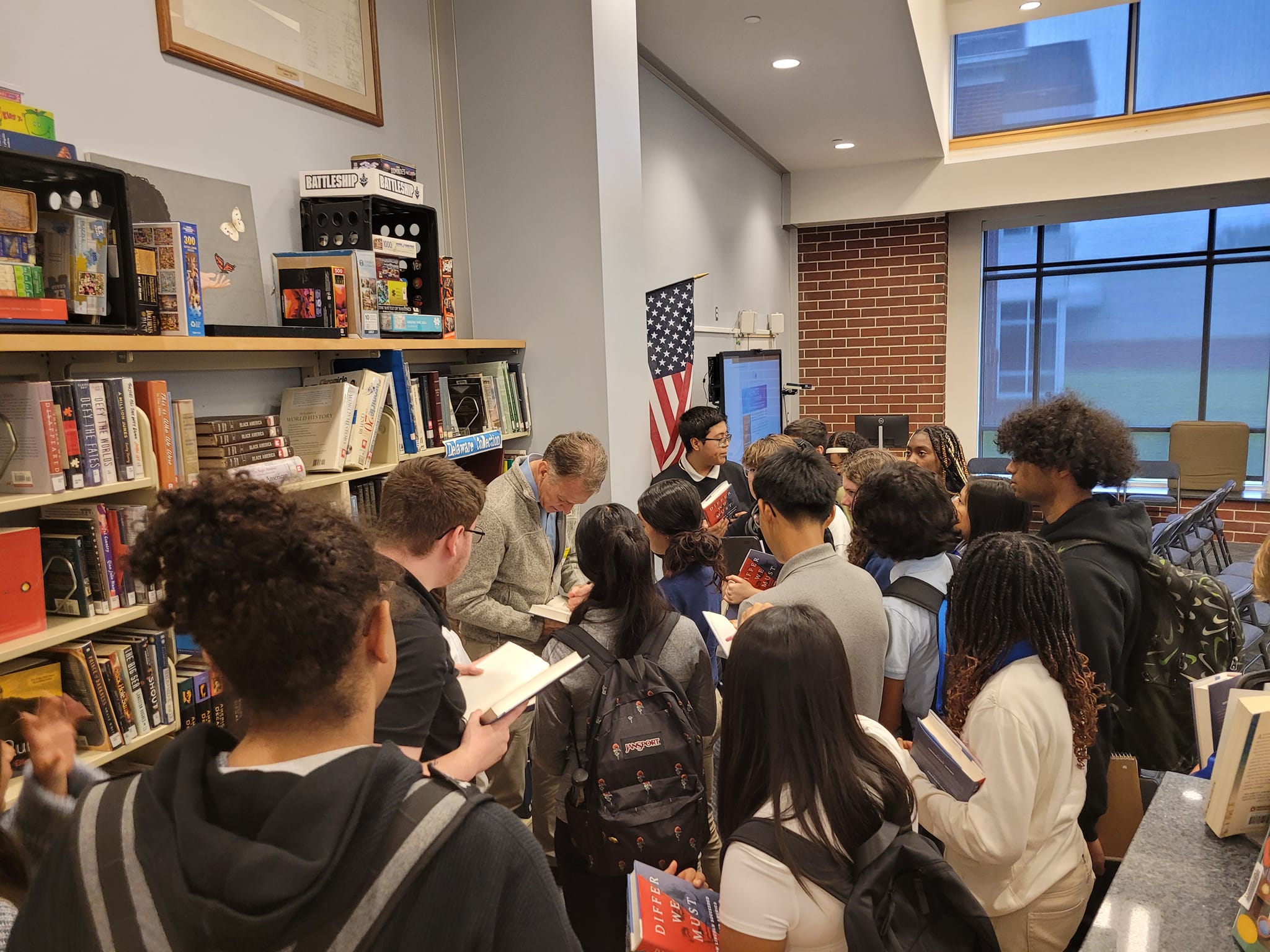
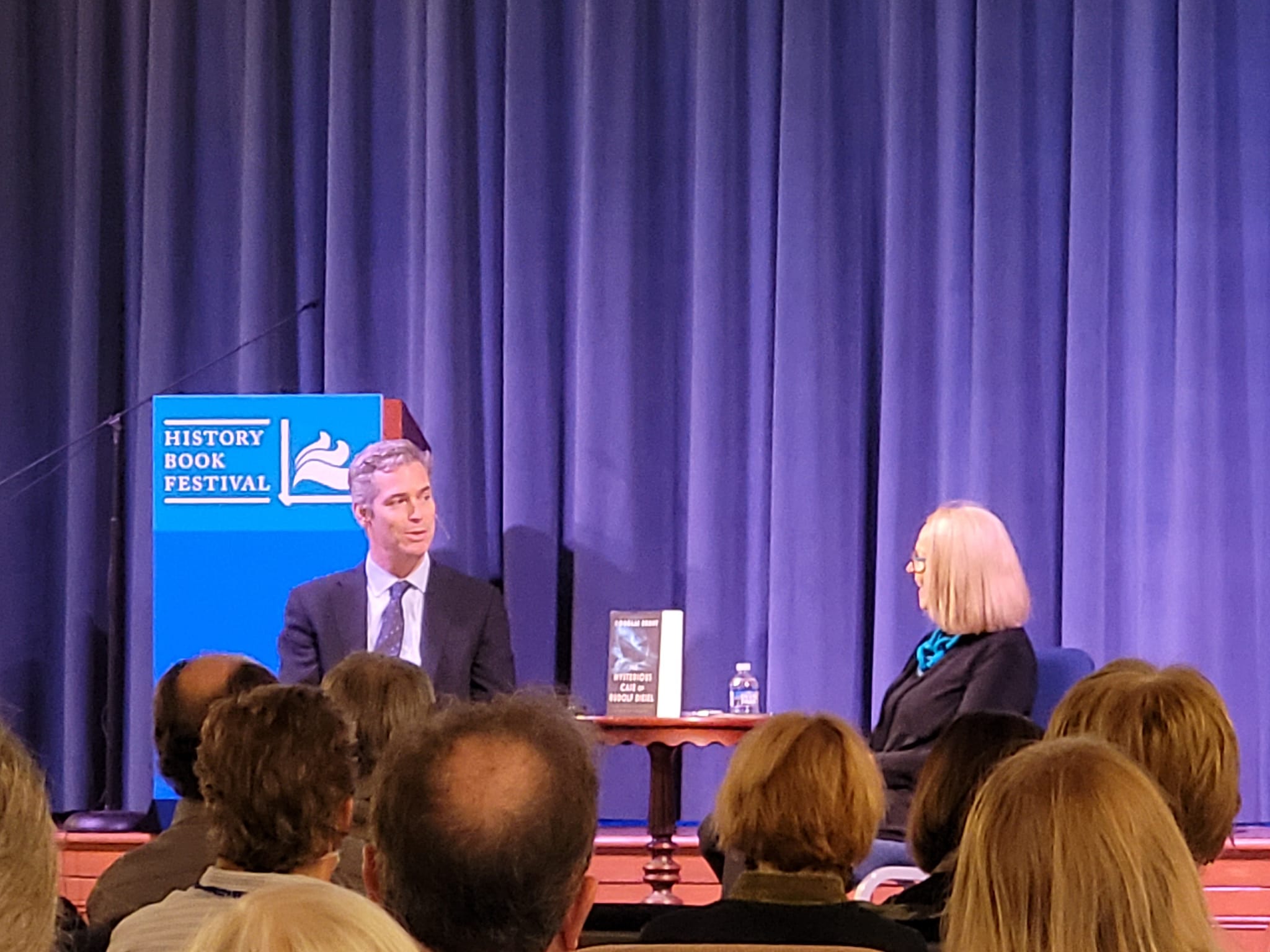
Thanks to the generosity and quick thinking of Biblion and Browseabout Books, all was set to receive Mr. Inskeep at Woodbridge High and for them to experience his throughs through books they would provide. I hoped it would create the ability of students not normally involved in a podcast to be so. Ironic I thought, students podcasting a master of podcasting. To me it added a level of involvement to youth that was yet another facet of the History Book Festival.
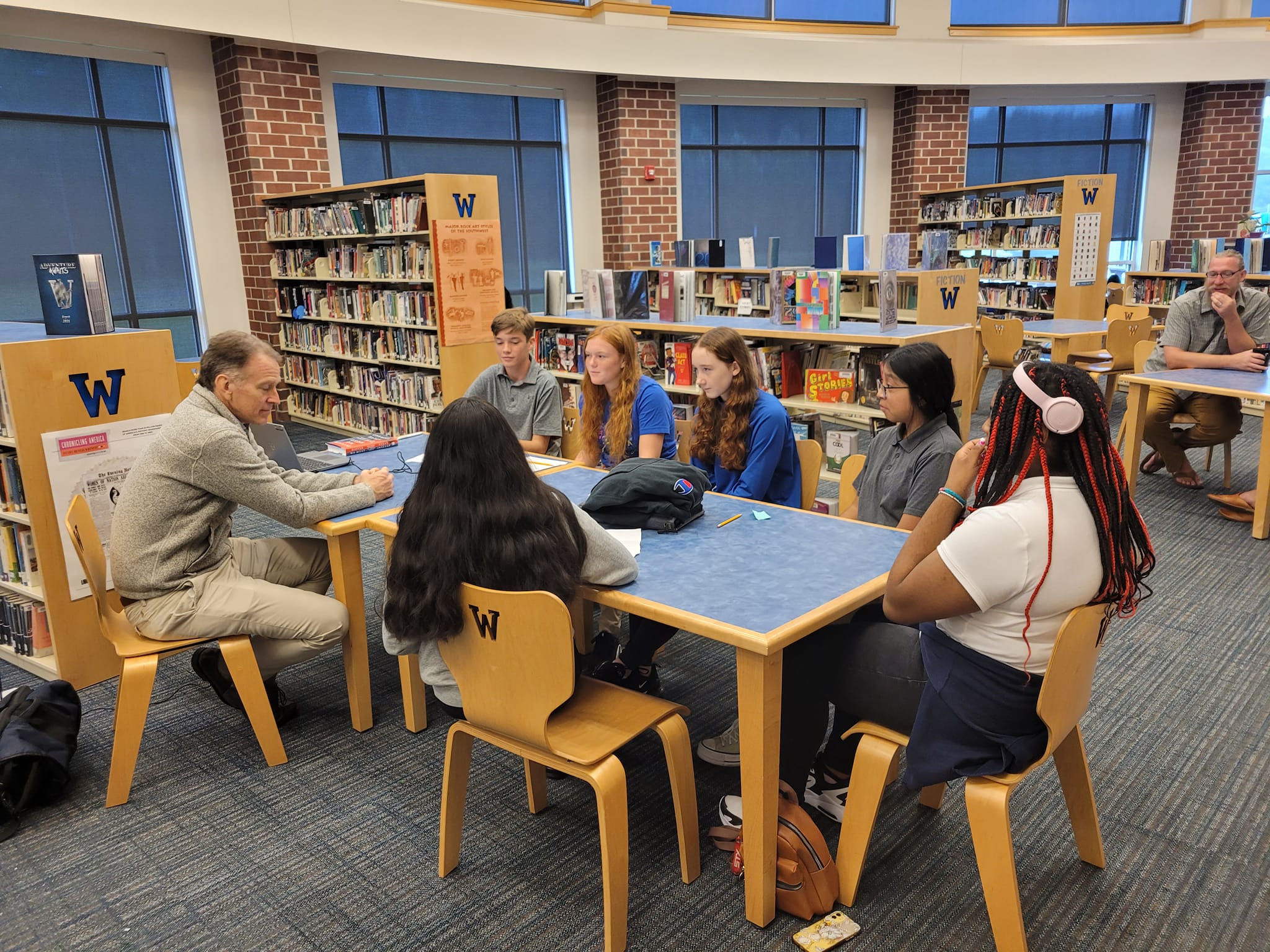
The students from Ms. McGill’s History class as well as Ms. Wagar’s yearbook class that prepared questions – their attention to detail in their questioning was without question. In the days preparing for Mr. Inskeep’s arrival, the review of open versus closed ended questioning, questions that had not been asked a hundred times, questions that brought into information that you might not find anywhere else previously, questions tied to his publication as well as to his experiences as a journalist, writer, podcaster, it took some research. I was proud beyond belief at the capability of a 9th grade class and then upperclassmen as they came armed with a extensive lit of inquiries, worthy of what any school library would expect representing a school of Information Science.
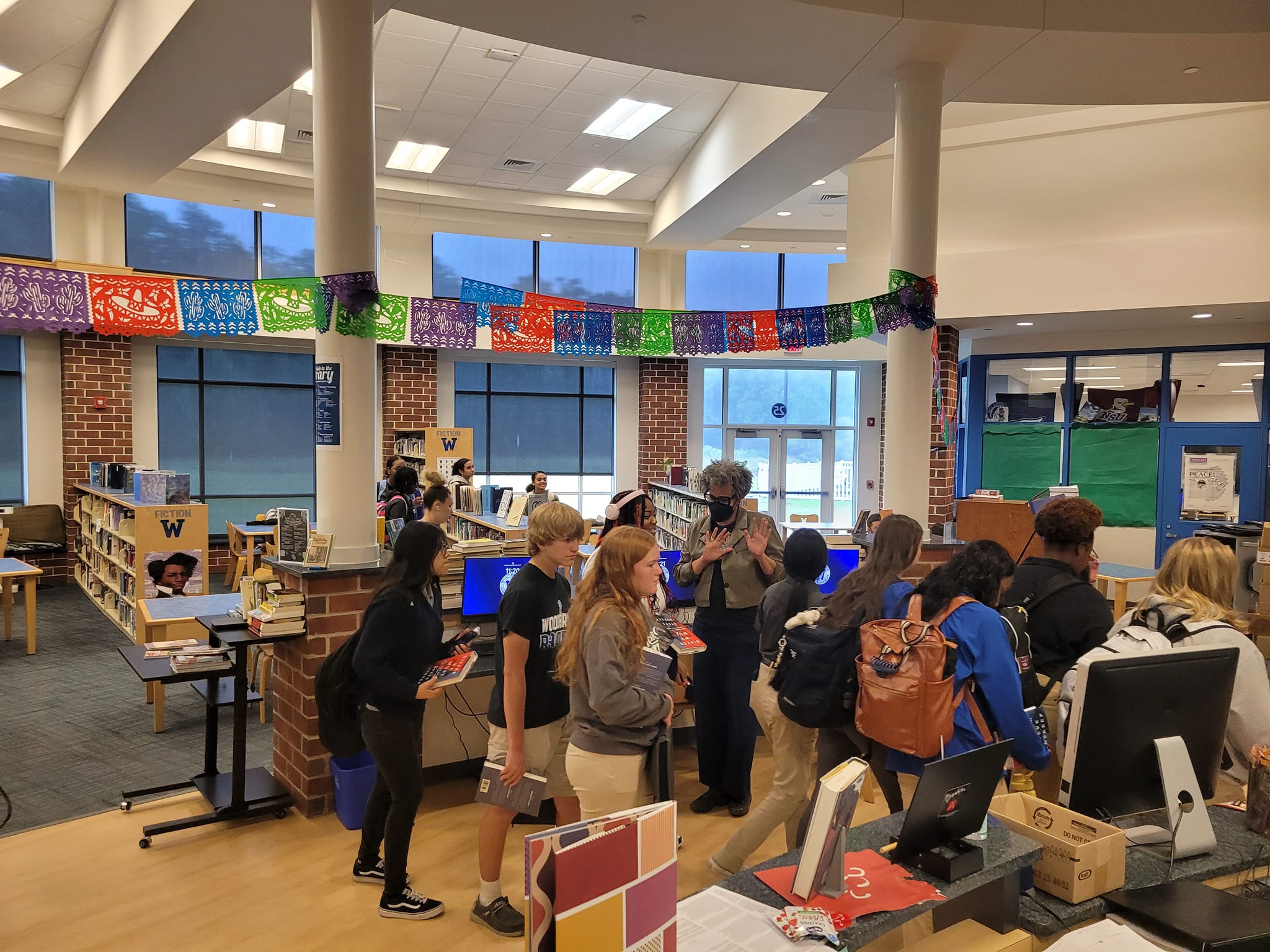
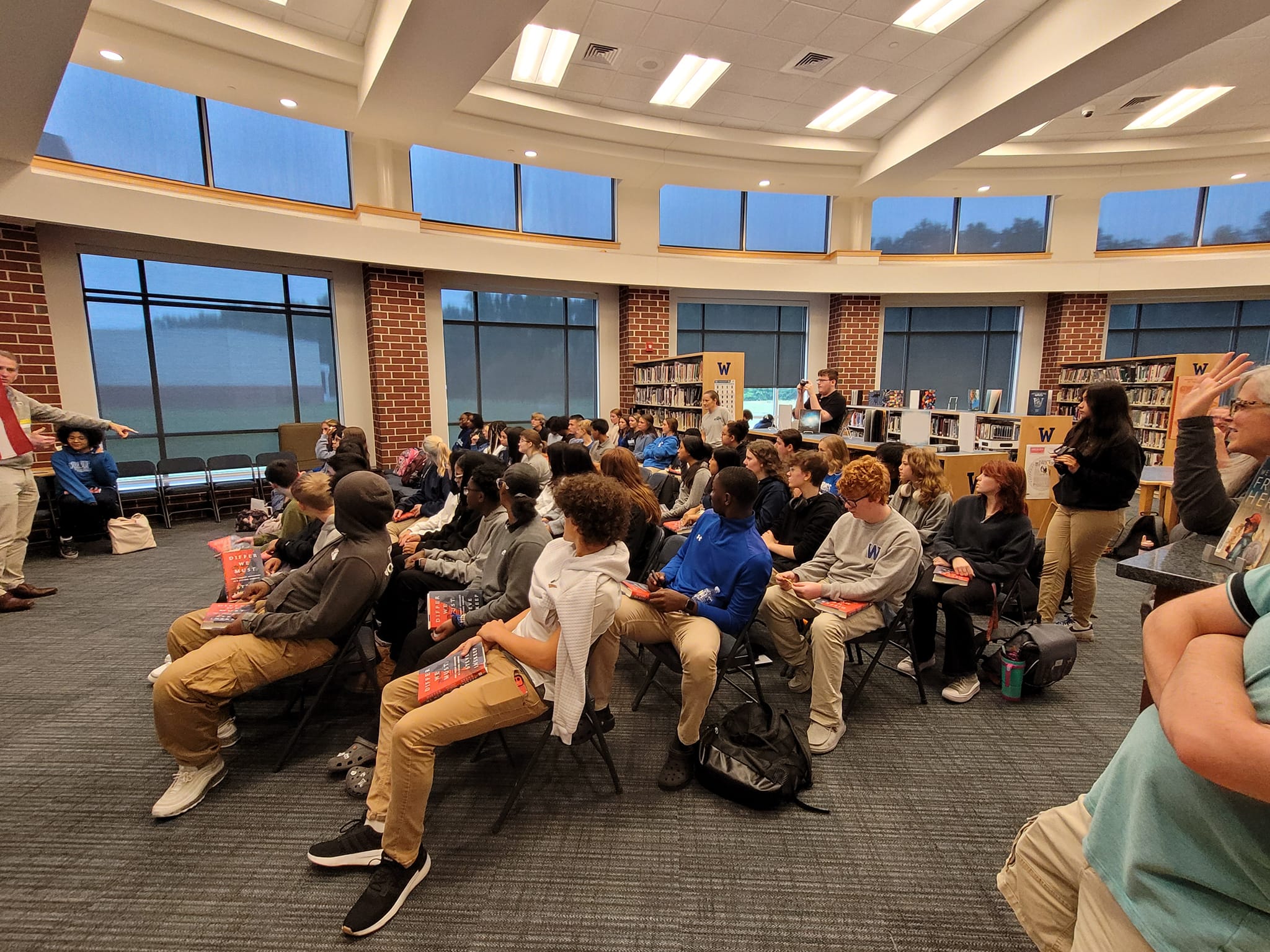
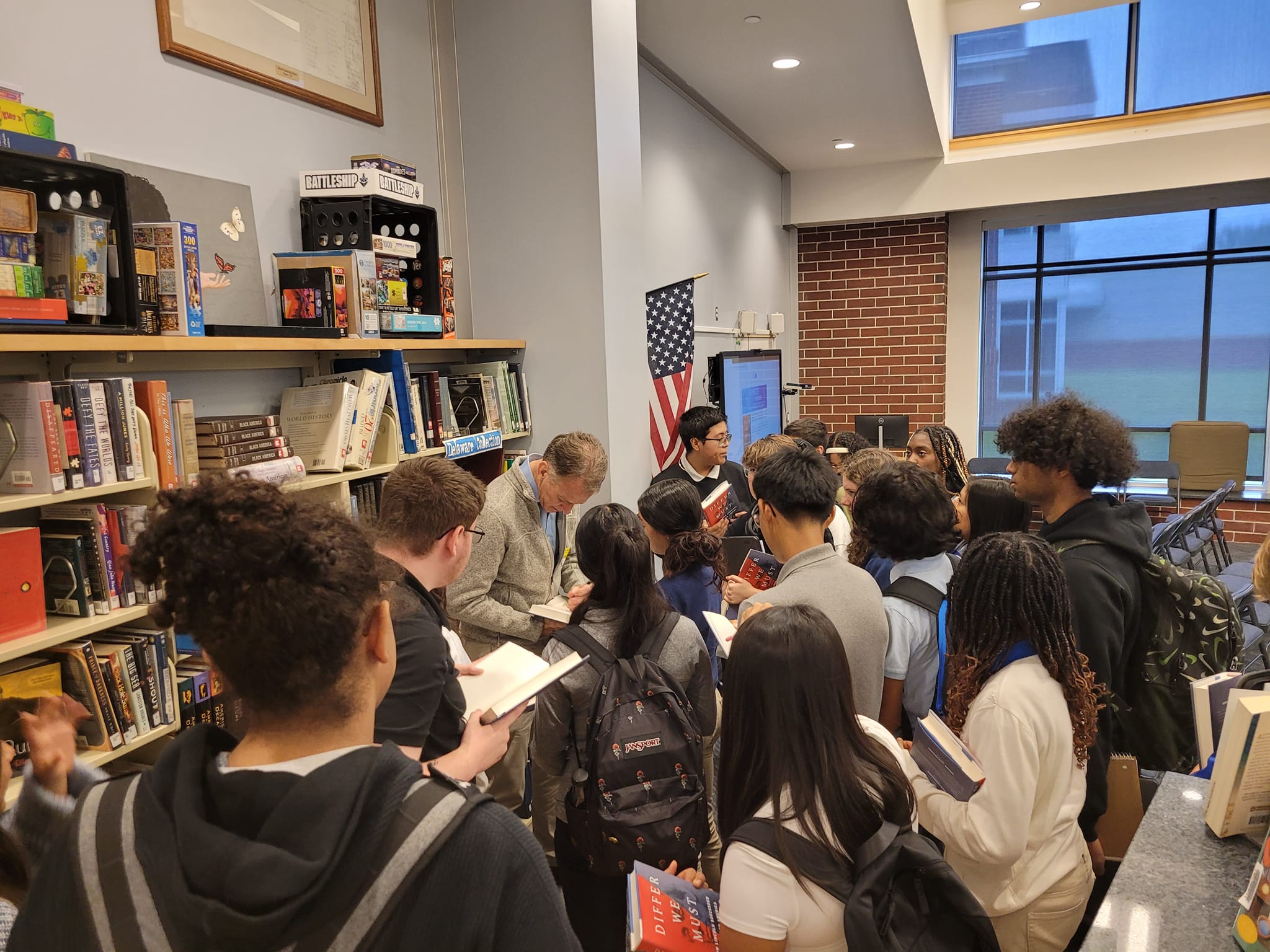
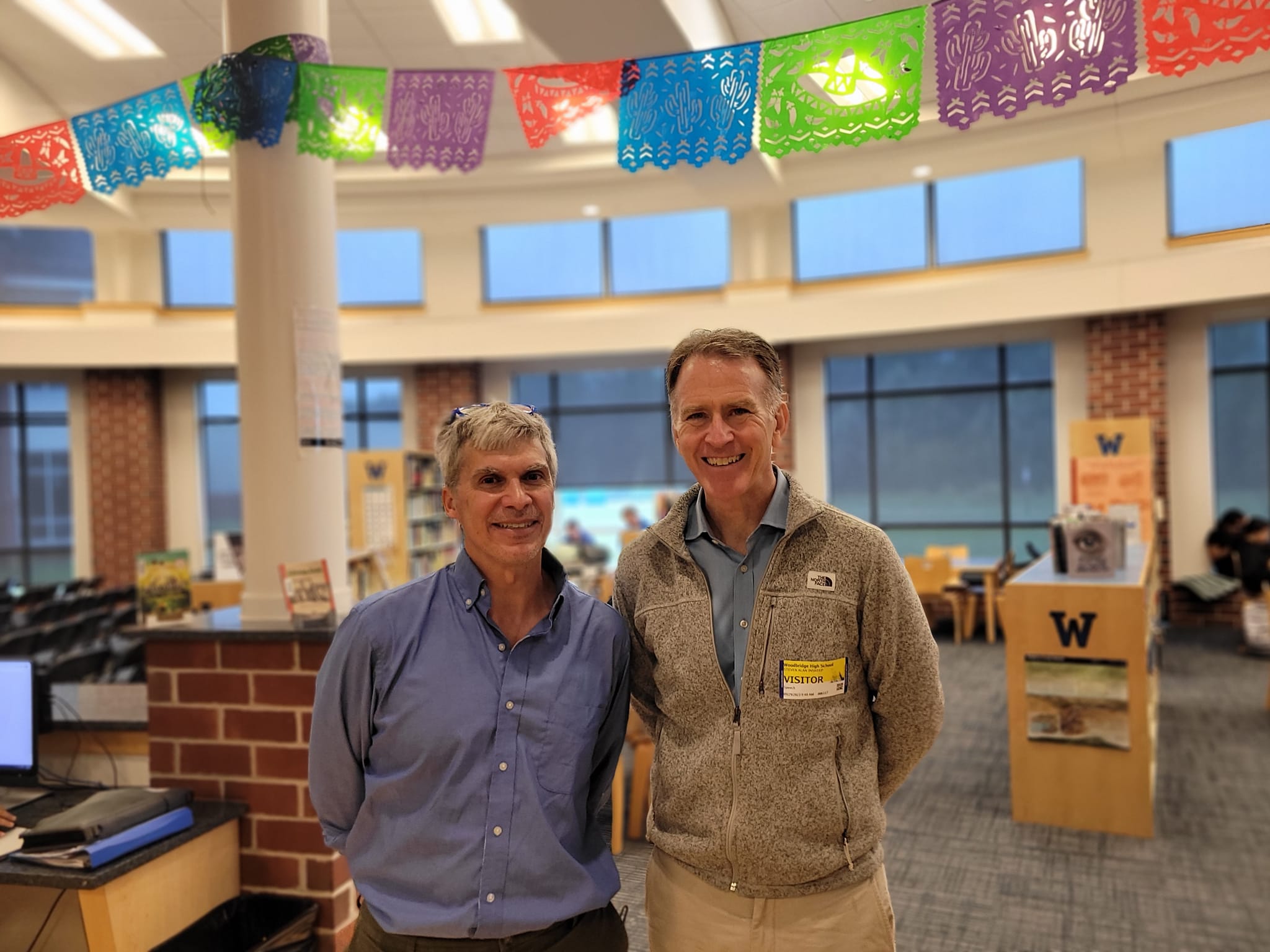
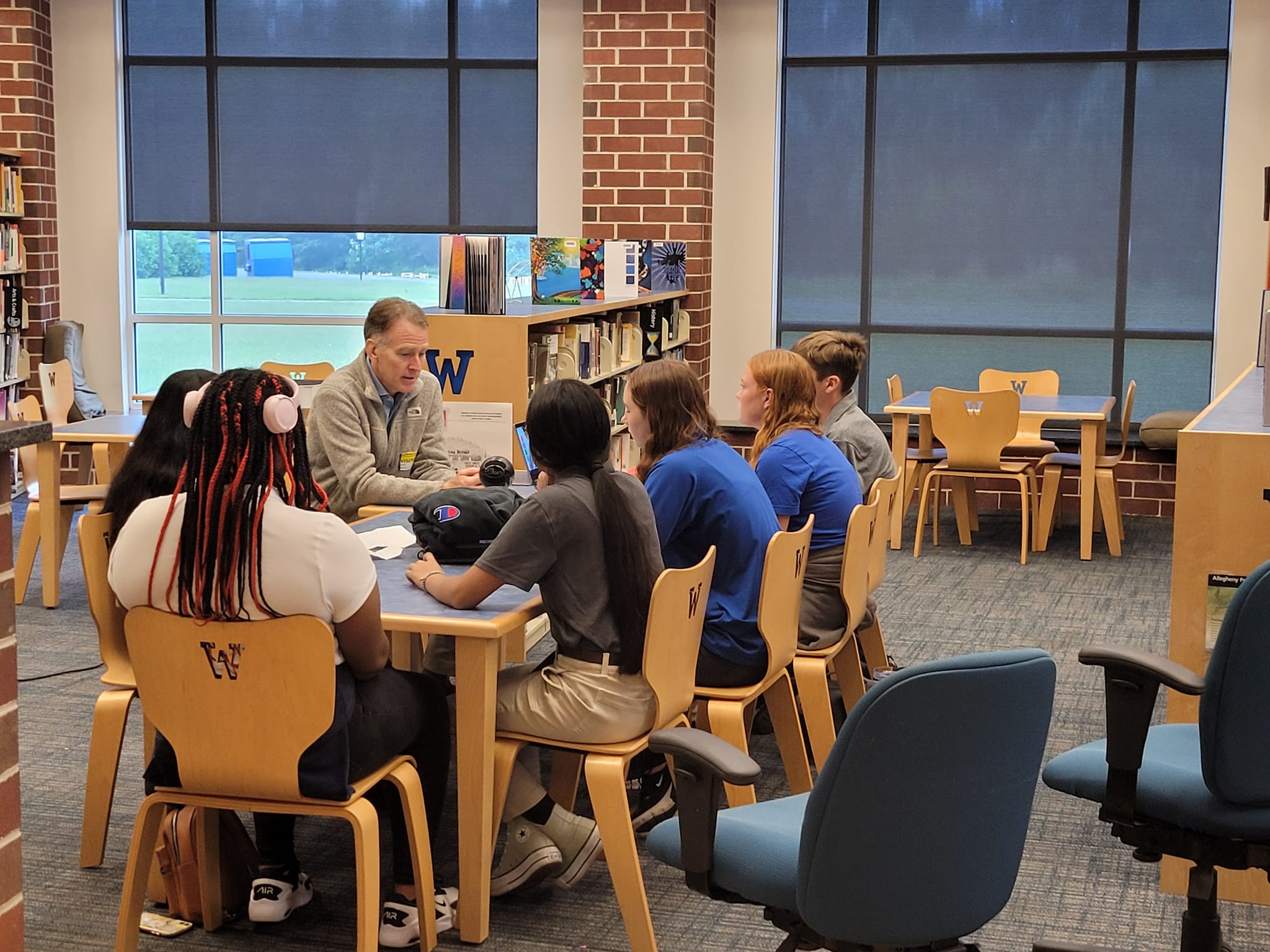
The day itself was phenomenal, meeting Mr. Inskeep was beyond surreal. Here was an individual that has been a part of my weekly schedule for years, represented a voice and look into the world that often had not been detailed as well as through his experiences, and he was literally in our library, sharing his experiences that I had always heard, but now was experiencing again in person. The students had this current of excited electricity you could feel through the podcast, as well as through their questioning and receiving of his insights as a large group. With over 70 attendees in the Walter P.J. Gilefski Media Center, it was interesting and thoughtful to see this happening in a library, named after someone who always sought information himself. It represented what school librarians and school libraries do represent and bring to a community population.
The graciousness, patience, and interest that Mr. Inskeep represented in discussing, questioning, and learning of student’s experiences also modeled the type of person he seemed to be on air. He wanted to know what students were involved in, how they saw the world, joked with them about lessons he had learned growing up, and continued to show his thankfulness for being with us, while we were just as excited of his willingness to be here.
Sometimes there are so many scheduled events, holidays, celebrations, etc. that occur, it is difficult to have them all stick in your memory. However, the more personal in nature events are, the more niches that are found to connect to all individuals in some way, the more those memories become permanent. In finding ways to meet students, and any population, halfway and connect with their interests and goals, be it their future, their employment interests, their experiences, hopes, dreams, talents, or abilities, and have a place to bring voice to any one of these, that is a defining moment.
School libraries have transformed over the years to implement that very potential, and not just hold countless experiences in print and digital resources, but also to open the door of individuals, guest speakers, audio books, connections to the community, local events, and connections to the world. It was all of this, wrapped up into one, that was able to come out with Mr. Steve Inskeep’s visit. His topic of Lincoln and working through divisiveness came at an appropriate time where populations can indeed find a place to agree to disagree, but to learn more about each other and break a chain of conflict, and learn how to come together to recognize how our differences can strengthen our nation and communities.
Few people think about the after impacts of such a visit and the followup. Editing, reviewing the information receiving, discussing, and applying.
These are sometimes the most crucial stages of an event, even though while in the middle of it seems to be the climax of an event. I like to see the follow also involve students when they reflect on the process that just came through.
How lucky are we to have students that can realize this and pass this on to others as well? Please take a moment to appreciate the partners that enable such an event like the History Book Festival and speakers to share their insights with our communities.
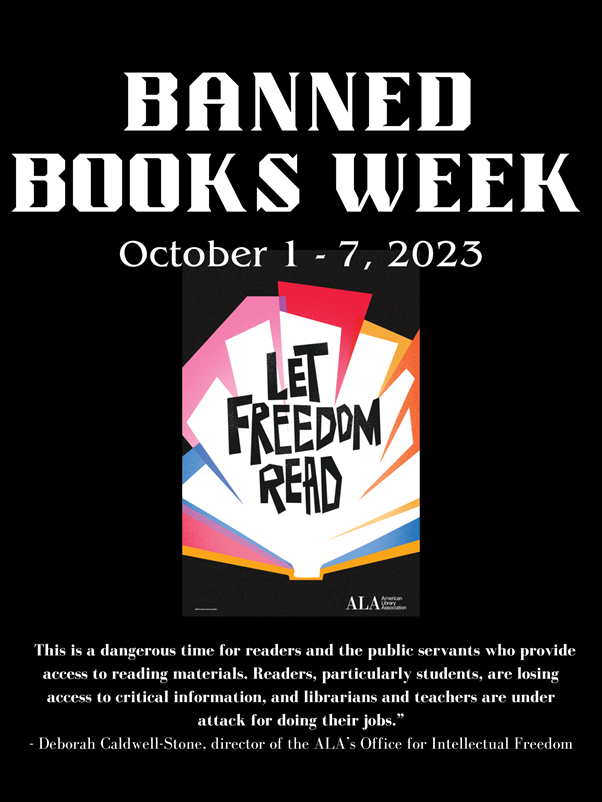
October 1st kicks off Banned Books Week and before you start seeing this as a holiday that is confrontational, take a few steps back and rethink how you view this week. While the connotation does present a us versus them mentality, a better view of this week should be considered.
Everything we experience in our lives, including events, shapes new understandings of others views. The following events/experiences have made a huge impact in connecting the ideal of literacy together:
Steve Inskeep visiting our High School – The power of meeting opponents half-way despite their views and stands.
Traci N. Todd visiting Phillis Wheatley – The ability to reach and educate students on aspiring, creative, artistic individuals they might not be aware of in history.
The Lewes History Book Festival – Presenting authors and topics that cause people to contemplate, be aware, and question. Mr. Tessein and the History Book Festival Board continue to reach out and grab interests of so many, often before they realize they will be drawn in. Priceless.
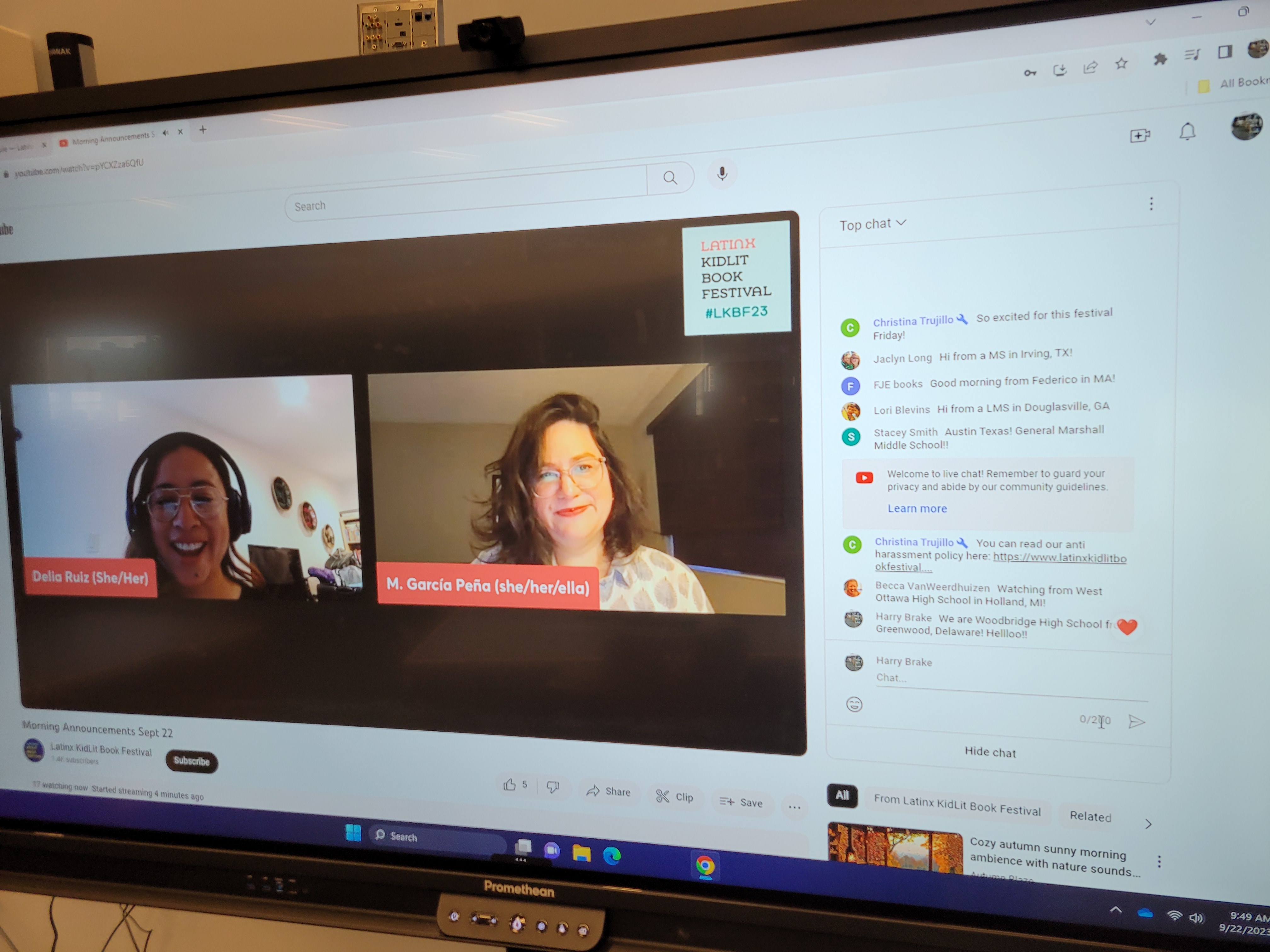
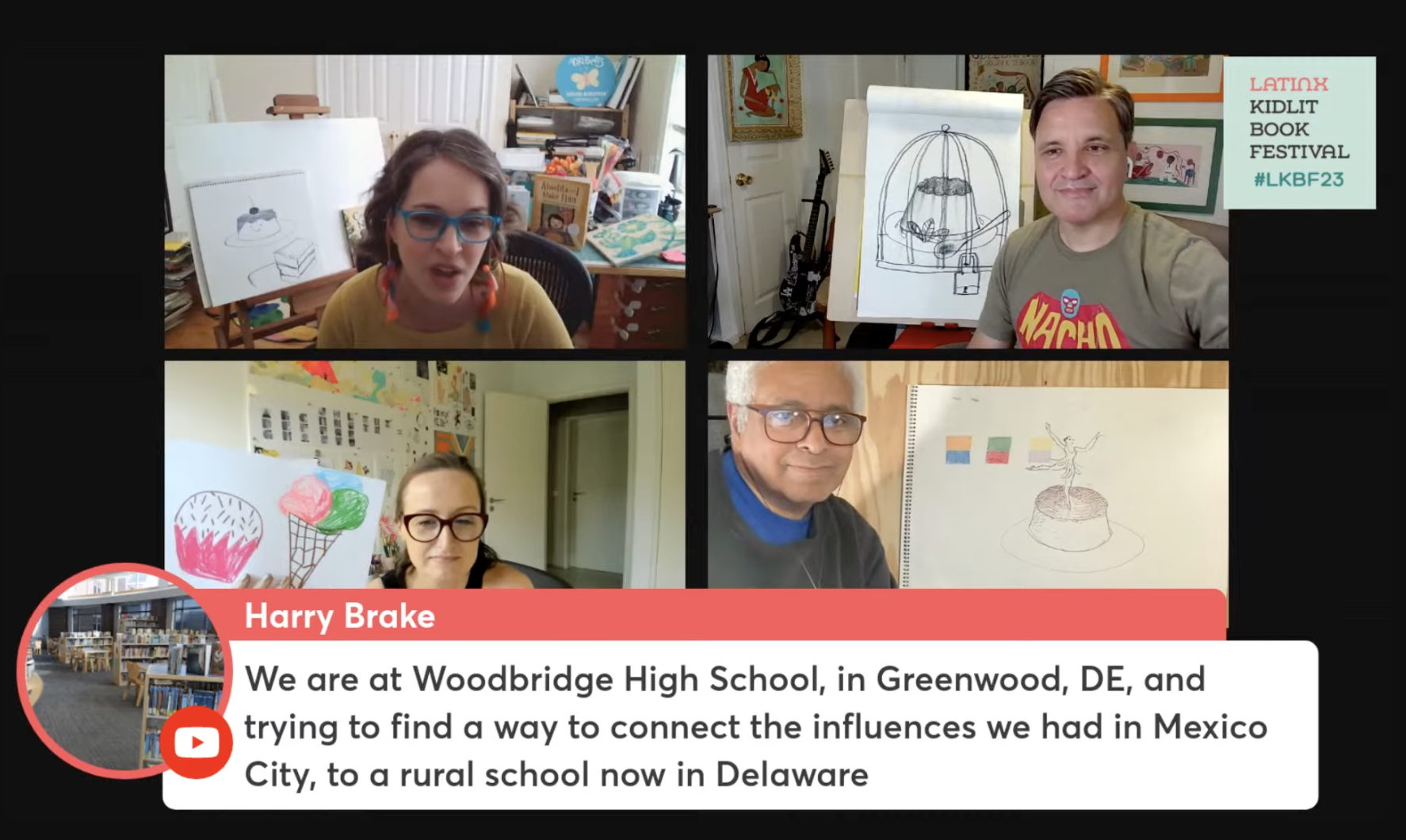
Latinx Kid Festival – Students able to communicate directly with Justin Sotomayor, key Latino illustrators and authors, and receiving and sharing advice every Friday during Hispanic Heritage Month.
The Delaware Humanities – Supporting avenues of education that inspire creativity, ingenuity, and opportunity.
Browseabout and Biblion bookstores – Bookstores that continue to represent their shelves and commitment to the community IN the community.
Everylibrary.org serving as an umbrella of what we want to achieve on a larger scale in librarianship, education, open-mindedness, and diversity in learning.
Banned Books Week – A chance to discover and learn what is out there that might cause fear in adults, and how children are drawn to view and bridge to connect youth and adults together on issues today.
Classes – students and teachers able to contribute via podcasting, attending, contributing, representing, Ms. Wagar, Ms. Shiley, Ms.McGill, Mr. Truitt, Ms. Kirkland, to name a few, are the first to enable such opportunities to occur and spread to others.
If you take all of the above, and combine them, you see a cornucopia of ways that all individuals involved can connect how literacy and diversity of approaches can indeed combine organizations, individuals, and institutions together for one very important cause – widening the scope of our minds, conversations, and experiences.
Mr. Inskeep and Ms. Traci N. Todd activated enthusiasm and history when it came to viewing what school can and should be like in learning about themselves and their place in history, as well as taking on diversity and embracing it, not fueling it.
Interwoven connections
The Lewes History book Festival, in coordinating Mr. Inskeep and Ms. Traci N. Todd, through Jen Mason, the shop owner of Biblion, and Browseabout Books as book suppliers and definitely community bookstores, rise to the occasion to allow experiences to come to our school. They supplied over 100, ONE HUNDRED, books to students involving them in the History Book Festival. The Delaware Humanities,,under the leadership of Michele Anstine, supports and underwrites events like the Lewes History Book Festival knowing we all have shared relationships to provide to our state, young, old, and future generations. We all have something to contribute and share and should have places to do so (be it a podcast, a school library, a public library, a festival, or in a coffee shop in our community). In between the upcoming Lewes History Book Festival, streaming in our school library every Friday has been the Latinx Kidlit Festival. Connections between ALL authors, ALL genres is so important, and even more so during a current physical festival in Lewes and the Hispanic Literary Festival during Hispanic Heritage Month, bringing ALL heritages together during MANY different events during many different days tis week and month. Our forward thinking Woodbridge administration leadership continues to recognize the role faculty, library media center, and schools play in encouraging thinking outside of the box and allowing diversity in learning to shape future learner. Professional Development Days enhanced thanks to Alyssa Moore, Susan Cordle, Thomas Gavin, the Delaware Department of Education, and DASL, in promoting our October 13th PD allow all librarians, administrators, Department of Education and more to weigh in on how to advocate for their librarian position and find avenues for enhancing/education the public of the exciting things taking place IN school librarian, and instilling certified librarians to work with public librarians in our state. Organizations such as EveryLibrary.org and Delaware Association of School Librarians continue to promote how as a state, we can interact with other states in sharing ideas, ways to meet individuals that think contrary to our views, and provide opportunities for all to grow and bring out the truer meaning and purpose of Banned Books Week.
Anyone can be adversarial at any moment. Is it the most productive path to addressing values? I would say no. Before addressing any number of issues you might differ on with anyone, BEFORE you attach a negative connotation to the title Banned Books Week, think about what opportunity exists starting today, until October 7th, that you can learn and apply EVERY DAY. The above list of priceless events occurring in and out of our libraries, communities, and schools is only a one week look at what is possible ALL year to individuals willing to come together, in the most divisive of times, and bring levels of positive motion forward we can all contribute to, and benefit from. I hope you also will make a determined effort to find out how you can also continue to bring literacy of all sorts to everyone around you, as we move forward this next week and month with some exciting opportunities – that is what school libraries, public librarians, librarian advocates in all organizations, and parents and students can do when they come together – despite their views and stands.
Thank you to everyone involved who continue to show what can happen in and out of physical spaces to widen the views of our minds every day. Making connections and finding ways to tie us together, rather than separating us through action, speech, and literacy should be our goal. Examples of funding our nation to keep the government moving forward, meeting halfway on reducing disappearing school librarian and libraries, preventing disappearing open spaces and land, educating youth on how they can take environmental leadership roles, reducing detrimental impacts on our environment, and improving immigration challenges, ALL involve literacy. We have so many youth that can help solve these problems, along seasoned community members, to waste these opportunities could be our own downfall. Let’s try to make this week be one out of 52 that we can find ways to make positive change in the issues we might not see eye to eye on.
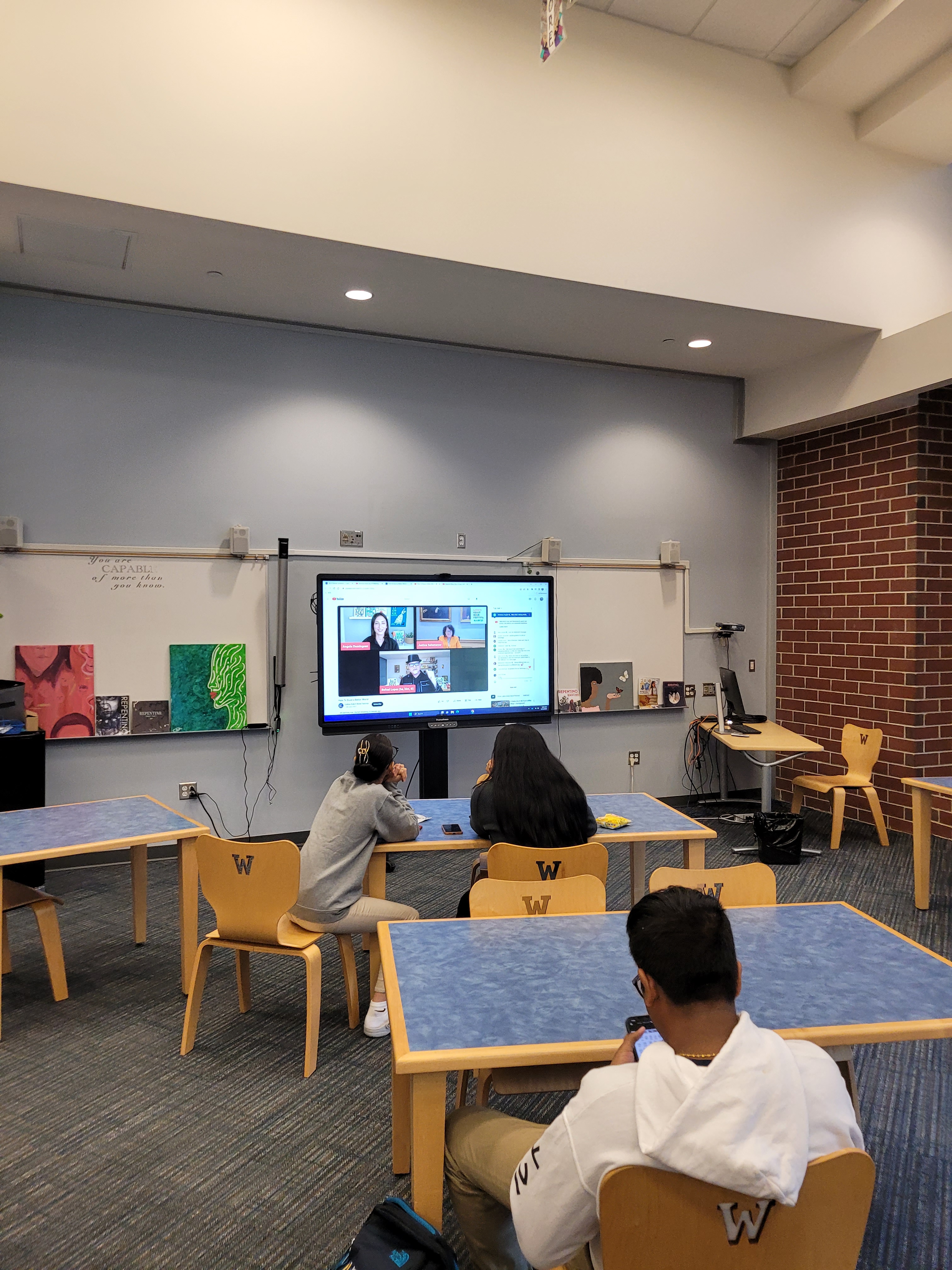
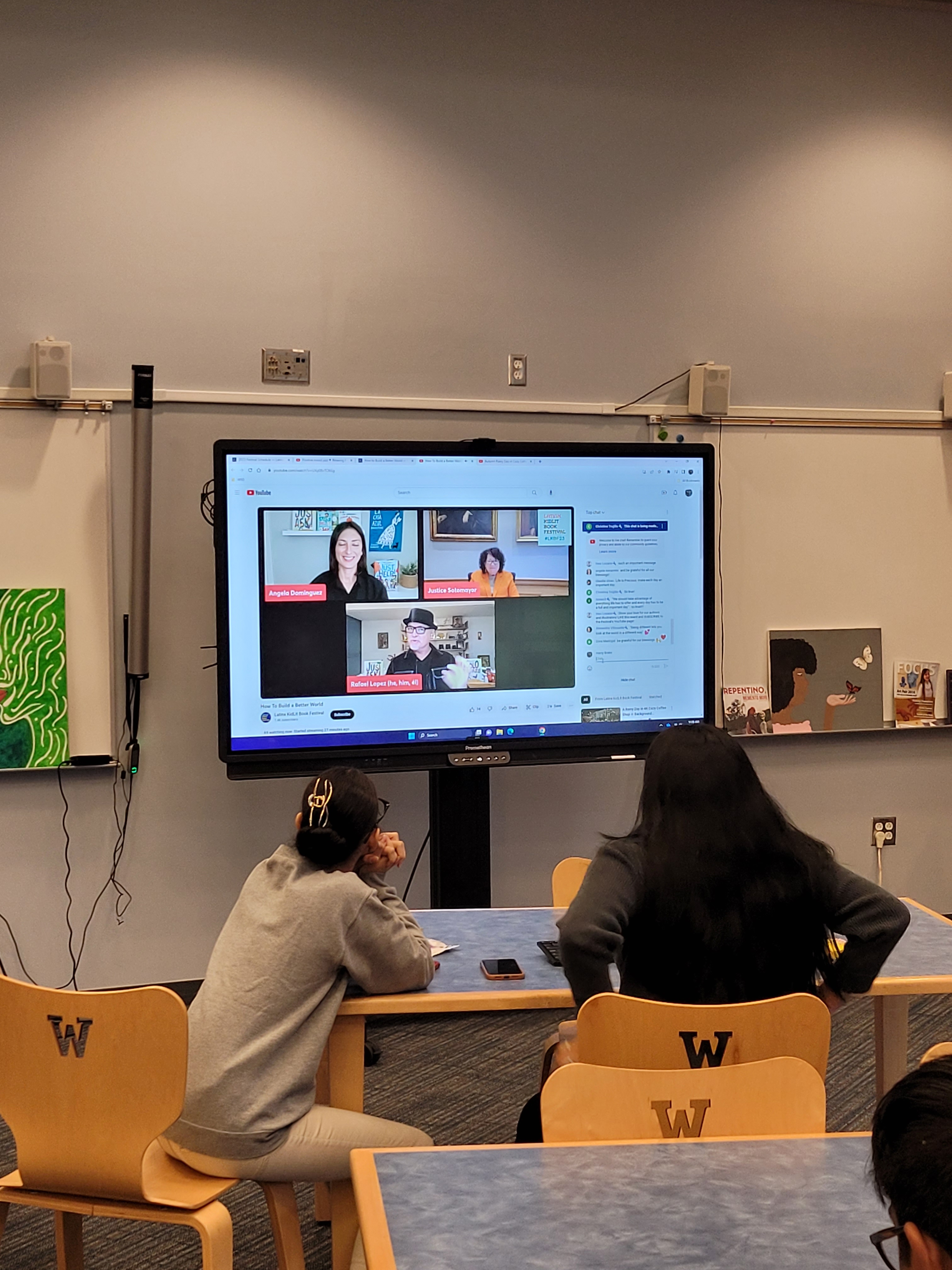
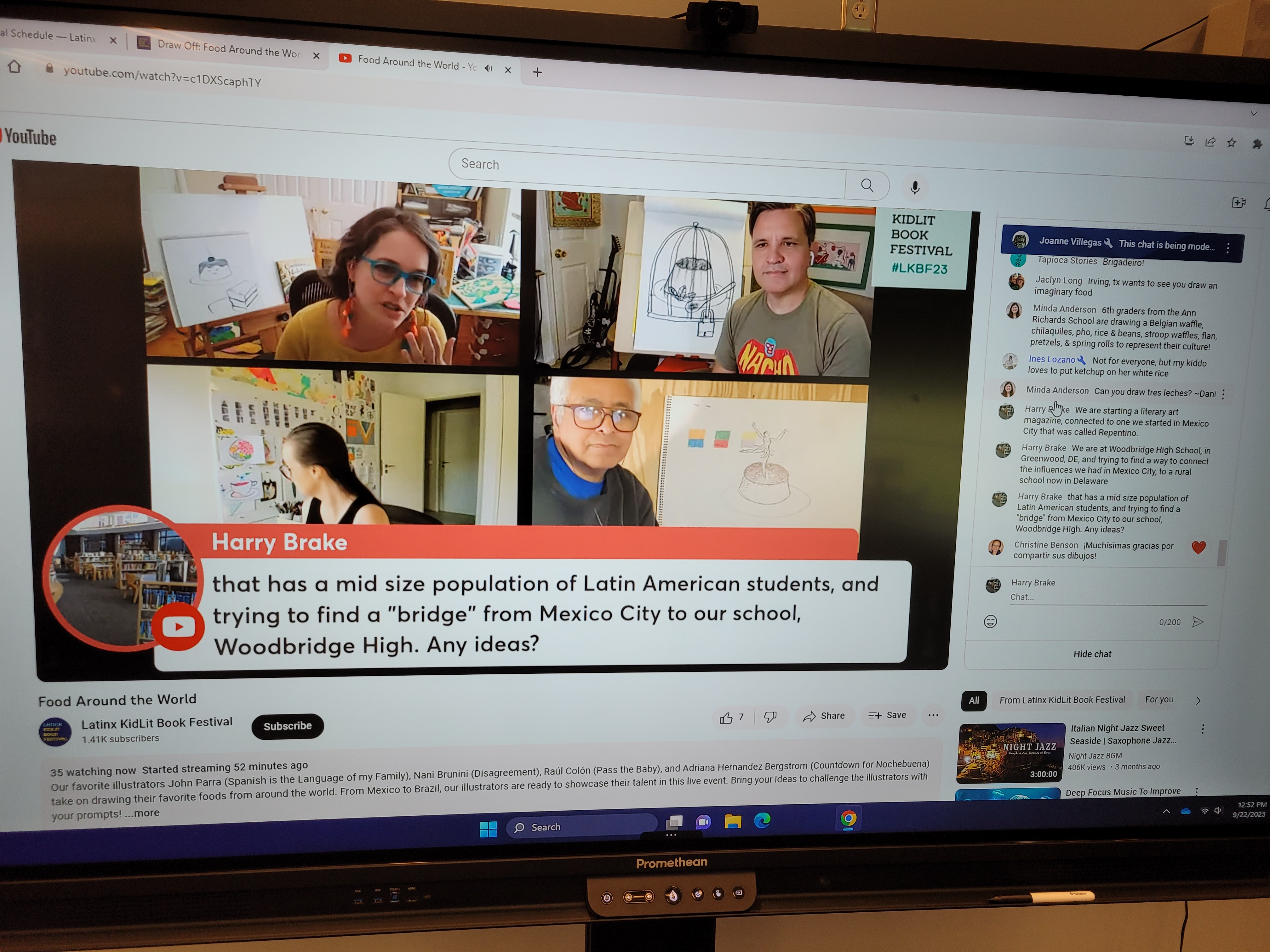
what are the chances that our school, and our students would get noticed in not just one, but TWO different sessions, and then a third later on?! What were the chances they’d talk to Justin Sotomayor?
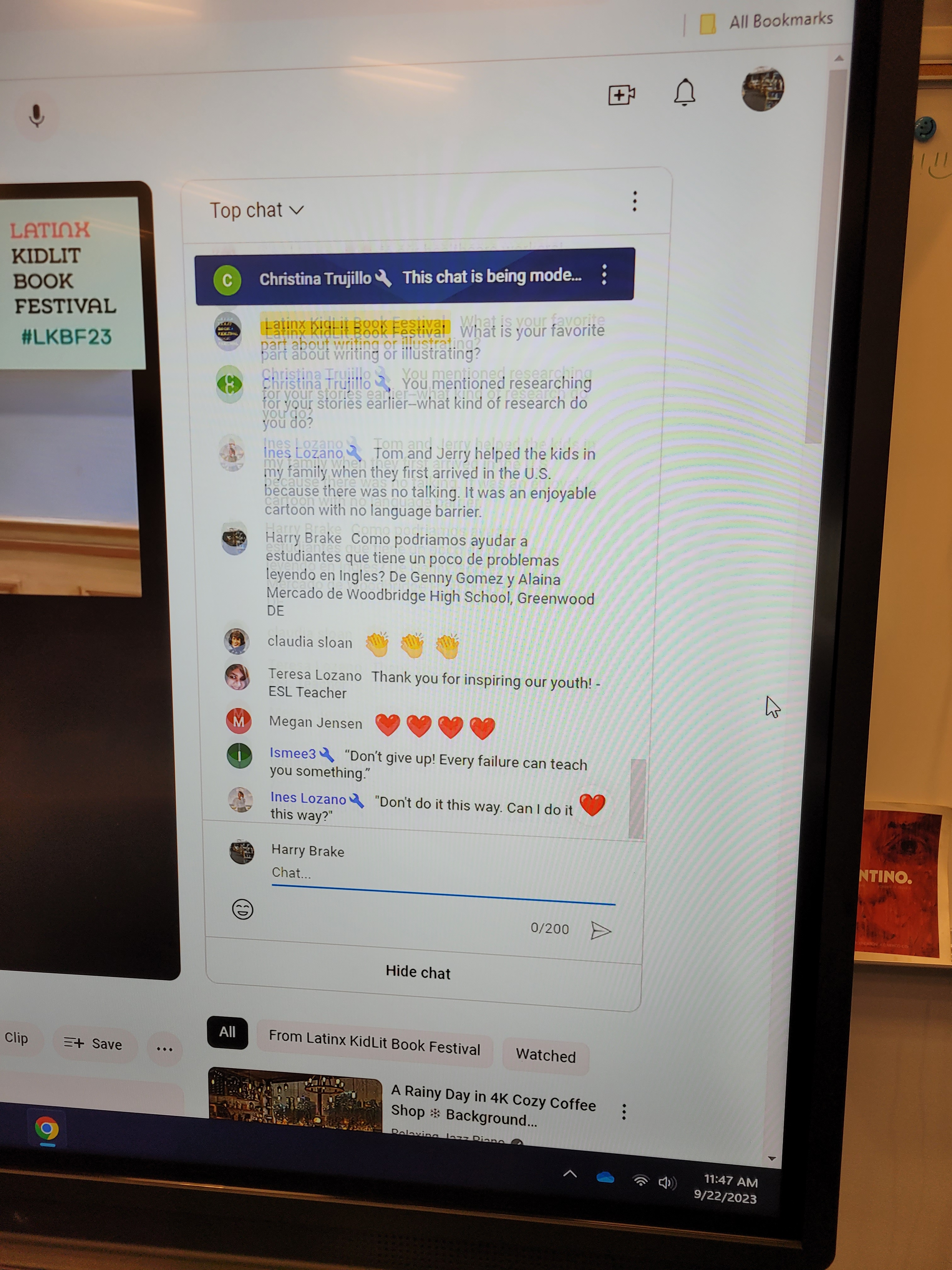
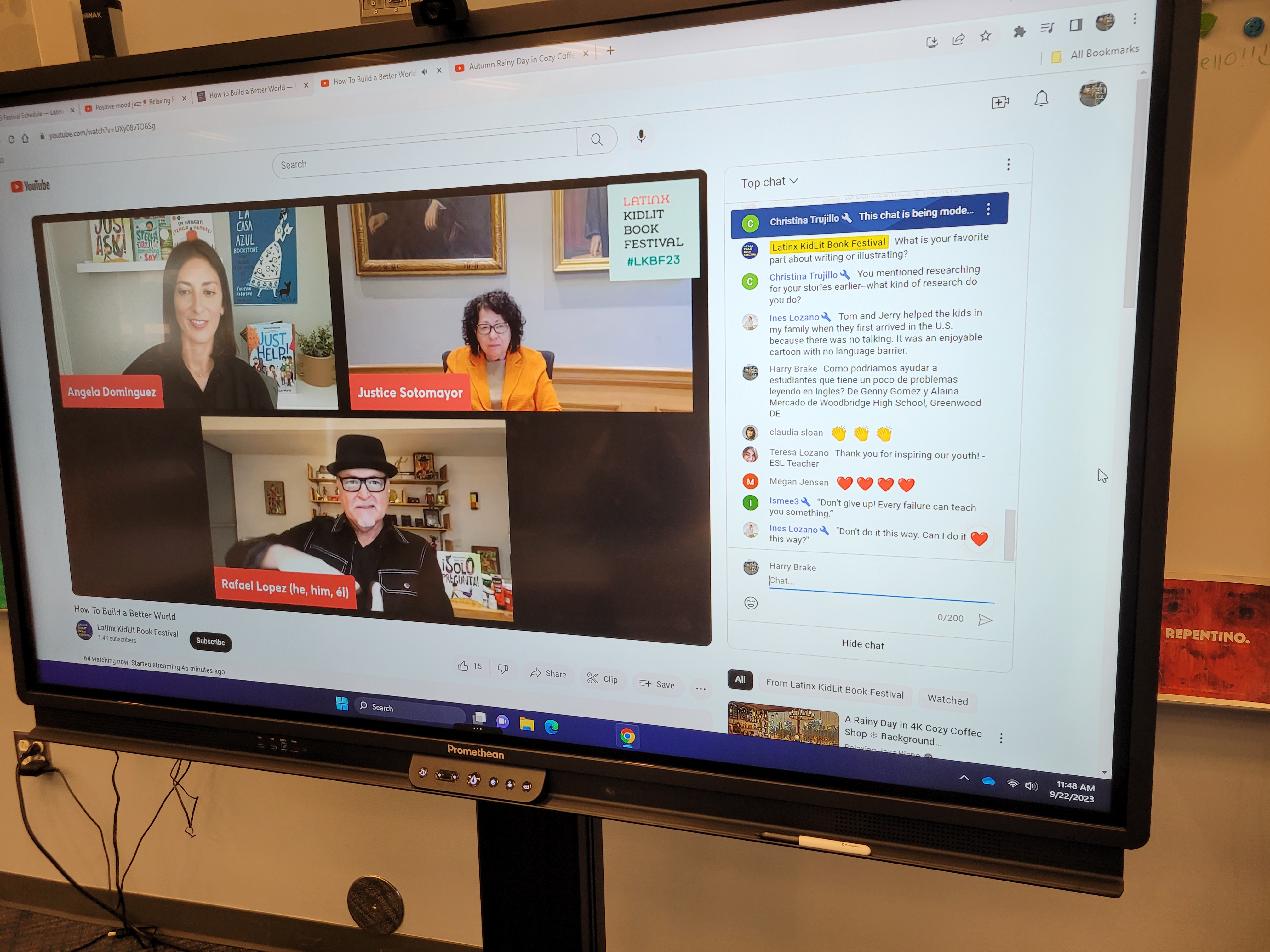
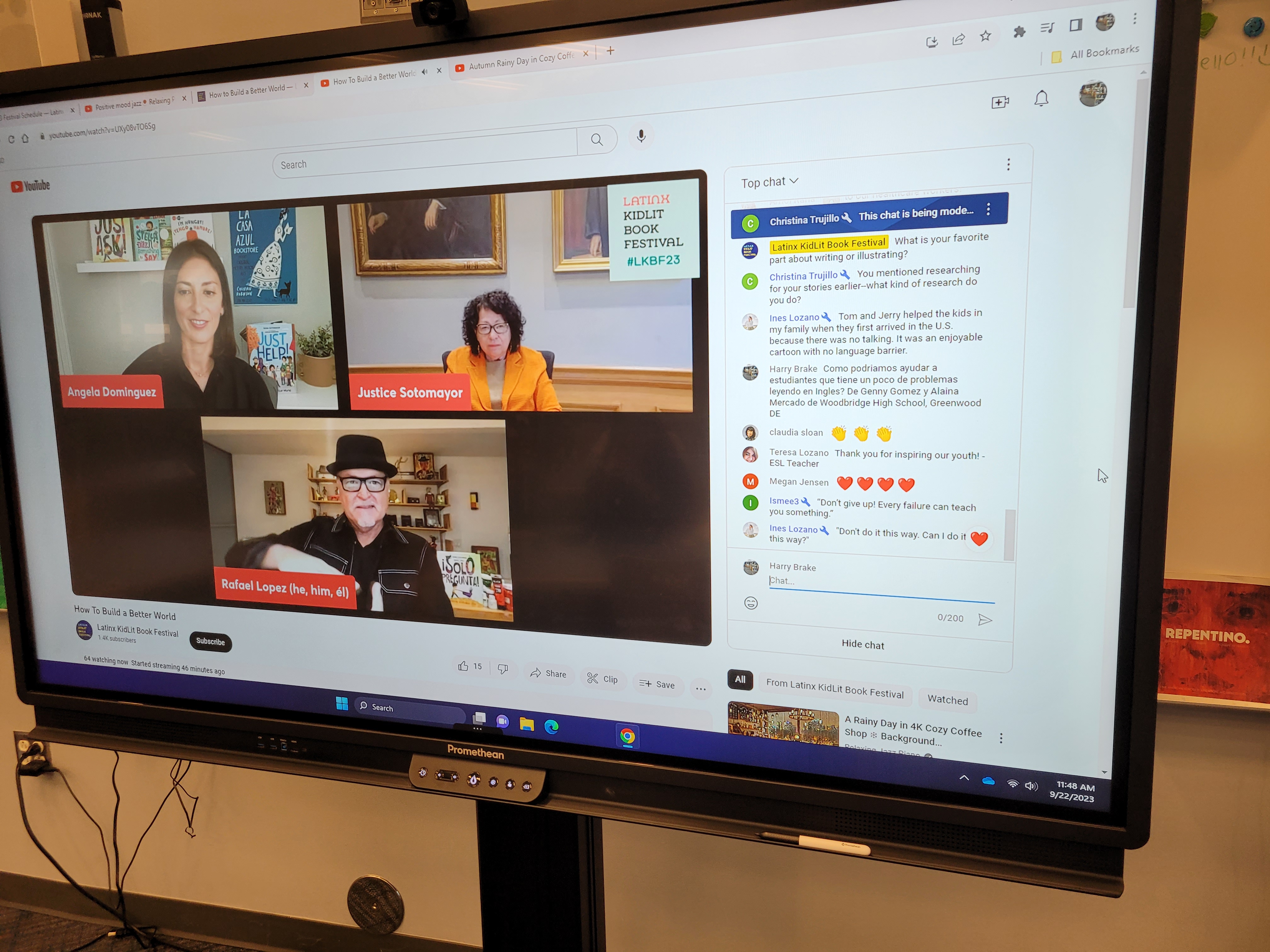
Turns out pretty darn good. From Justice Sotomayor THREE times back and forth with our students (Alaina and Jenny) to even another session later and WHS recognized again! I opened up the streamed sessions today, Alaina and Genny willingly took over my account, and they were amazing representatives for Woodbridge High School’s Walter P.J. Gilefski Library Media Center! I was able to represent WHS once in an author session, and then these young ladies turned around and had conversations with Justice Sotomayor – and made a name for themselves as well as our high school!
Lesson? Certified Library Media Specialists impact students lives in MANY ways. They learn from students and students guide opportunities when given a chance. Librarians certification is a stand out for students. Schools without certified librarians are often running on minimal potential. Excitement of students being exposed to opportunities in school libraries is contagious. Does your school value and make room for a certified librarian and a “third space” for youth? If not, let’s start asking more questions and opening more doors for our students to allow this to occur.
Exciting Exciting day – and I knew we hit the jackpot when our two students ran around screaming from their excitement. This is high School, this is an our library, this is what is possible.
Priceless.
Alaina and Genny started small and the momentum kept building – check out the recordings from today’s Latinx Festival:
Check out the amazing conversation (42:57 and 51:31 in the recording!). Justice Sotomayor told us, “Don’t Give Up”- No accomplishment ever happens without failures along the way.” Then going on to encouraging us to build our friends up when they are trying to meet their goals. Justice Sotomayor was amazing and inspiring for us today and what we need to do for our friends.
Alaina and Genny were glued to the conversation. 🙂 It was my name on the account, but it was ALL these two ladies and their questions. SO PROUD of them!
LOVED Rafael Gomez’s advice to focus on the small pile of successes versus the large pile of failures. 🙂
I kept thinking about this lesson, what happens when school do not take initiatives to allow their libraries or librarians to take opportunities to connects aspects of the whole school together? The library plays as important a role as the history department, the band, the art department, the English department and all departments, and without a library as a hub, to hep connect everyone, there is so much loss of opportunity.
We could have every well not participated in today’s Latinx Festival – and look what Alaina and Genny would have missed. Opportunities are missing in our schools without certified librarians and the opportunities that CAN happen are just – beyond words when you see youth get so excited and tap into some amazing opportunities. Today was definitely that still has me reeling- way to go Alaina and Genny!
The start of the Library of Congress 2023 Book Festival featured the most welcome appearance of Carla Hayden – who everytime I see, I think of this amazing event thanks to her devotion of the largest Book Festival in the country. This event kicked of Friday night with some heart-stopping statistics presented by co-chair David Rubenstein:
44% of Americans did not use a single book last year
The U.S. is 150th in the world, in literacy.
130 million individuals cannot read a book to their children.
21% of all adults are functional illiterate, not able to read past the 4th grade level.
85% individuals in juvenile delinquency are functional illiterate.
2/3 of those in prison are functional illiterate.
Mr. Rubenstein noted that the Library of Congress is not called the “National Tweeting Festival”, for a reason, this gives a chance, in being free, to expose people to literacy, a book, an author to inspire them to want to go back and read a book to their children. The torch of literacy to be passed is a worthy one and is often a role of the school librarian that many fail to recognize, in a time now where book bans and challenges take more importance that a certified librarian being present and able to facilitate literacy.
It was noteworthy that Laura Bush, in lieu of the 250th anniversary of the United States, asked if there was a Book Festival in Washington D.C., as she knew of hers in her home state of Texas. (Ironically, I was a recipient of the Barbara Bush initiative to recruit more librarians, and the rest is history!) At the time there was not, and it was interesting that the next year there WAS one, the first being right on the mall – and the humor here came from the grass. Over time, the National Park Service were concerned that the grass was not growing due to the #’s of people attending the festival, not giving the grass a chance to go, so being asked to leave turned out to be a blessing, as the Book Festival ended at the Conference Center and thanks to Carla Hayden – the Book Festival is an amazing event.
Out of the amazing authors made up of Angeline Boulley, David Grann,R.K. Russell, Beverly Gage, and Luis Alberto Urrea, one story stood out the most for this moment in time, as sometimes some stories, characters do, and that for me this night was Angeline Boulley, author of the Firestarter’s Daughter. Coming off an amazing Eastern shore discovery of Indigenous voices, the amazing indigenous voice Boulley started- has spread. She is published in 22 other countries, and said a very profound statement, she writes to represent indigenous voices, and edits to protect her culture. Stating that it is so vital to have stories for us (indigenous voices), not just by indigenous voices.
It still amazes me how many events , topics, themes appear within close proximity of each other, that often seems too coincidental. It is up to us to make the connections of those somewhat separate, but connected topics and synthesize meaning from them. It is even more important to have the ability to recognize that school librarians have the ability to connect somewhat unrelated topics, and show how they indeed, are related and connected to each other. We need more to realize this!
Following the previous post, of the first day of the Indigenous Culture and Training, the onsite visit to Chicone Village, known as Handsell, in Vienna, MD was literally a breath of fresh air.
Touring the Village site, with the 17th Century Native Living Historian Drew Shuptar-rayvis is something that by NOT being there can NOT be replicated. Adding to the list of what are local heritage sites I was largely unaware of, the resources of oral stories and education certainly are tied to place.
When I first graduated from high school, I knew the right location to attend at a college would just be the way the location, that particular college would reach out to me and call to me, and it did. We had this discussion about how people view land, a sense of home, and how certain locations can do the same thing. Chicone and Handsell, the very same. The fields, the history that many are unaware of, the heritage of Indigenous presence is more than any history books have attempted to address and being there in the moment was something that can truly only happen when you are there.
I think Handsell and Chicone, well I KNOW it is more than meets the eye, we had the privilege of hearing accounts based on extensive research, information that normally can only be obtained and seen in a museum and often doctored and lying outside the borders of reality. Not so on this day. If anything, solidifying the fact that there is a history, and there are stories that are unknown and have gone unnoticed is even more reason to be curious.
In 1665, Thomas Taylor was granted 700 acres of Land called “Handsell” along the Nanticoke River in the location of Chicone Indian town. In 1704 this land was made part of an Indian reservation by an Act of the Maryland Assembly. In 1769 the properties were returned to the ownership of the English families who had possessed the land grants.
Handsell is one of the last remaining 18th c. brick dwelling houses in Dorchester Co. Originally a grand, two story Georgian home, a major event, possibly a fire at Handsell gutted much of the interior and weakened the rear exterior wall, causing a partial collapse of the structure.
After a fire (cause undetermined), Handsell was rebuilt to the one and one-half story structure we see today. The interior woodwork is all original to the period of the rebuild in 1837 by John Shehee, a local farmer.
This brick dwelling house exhibits a unique façade with a protruding pavilion and Flemish bond brickwork, indicating the builder’s knowledge of contemporary design trends.
Not only from the cultural artifacts that Drew brought, but experiencing the cool feel of the lean to “work shelter” and feeling the coolness in the dead heat of the day outside, alot of realizations are made. This is a location that lies outside of the traditional museum experience, one that pulls at you to dig deeper and learn more about things that have been untold and that carry more meaning. This certainly was a good start to what we were discovering about the lands we walk on the Eastern Shore.
Tuesday, along with completing an amazing 6 week run of Upward Bound Workstudy student started the first Maryland Indigenous workshop that I was graciously accepted into.
As stated by Maria A. Day, Senior Director of Special Collections, Conservation, & Library ServicesCo-Director, Indigenous Peoples’ Program Maryland State Archives,
“This was possible due to the partnership with the Maryland State Department of Education and Maryland State Arts Council, but the sole sponsorship is through the Archives, where Drew, Autumn, Megan and I work. The generous grant that has made this work possible comes from the Maryland Heritage Areas Authority.”
Also, thank you Lenny Truitt for presenting this to me – it was an exciting endeavor to apply for, yet, even moreso a stirring eye opener.
Summer has not really, well, been summer, I have been in full throttle since the week following the end of high school and there is much I am falling behind on I wish I had more time to work on, the pressure of a hamster wheel on turbo is there BUT
I also take time to reflect on these actions and the results on what comes out of these involvements, are they fruitless or energy spent that is just “busy work.”
Just the opposite.
In the next few weeks you will see over 40+ projects students took on over a 6 week period, connecting to environmental organizations all over the state, and in Maryland – I believe there are ties to the Indigenous workshop and workstudy students from Upward Bound. Keep abreast of the 40+ projects students enrolled in as we literally roll out these one by one over the next few weeks- https://harrybrake.com/nanticoke-river-watershed-conservancy-project-page/
Tying the environment to individuals that normally do not LIKE the outdoors was a challenge and YET, they did some amazing things. The Indigenous workshop I am involved in now has helped tie things together even more.
Without giving much away, there is some that needs to be more present in our communities. From Day one, I have found the topics of Indigenous representation an underserved one. From writing a graduate thesis on the topic:
and through all this, I am amazed at the information I am learning, which means to me, learning is not just about how many degrees you obtain, how much PD you grab into, but how you internalize information that has been all around you and not realizing the value and impact cultures and information can have on your life every singe day. Learning new information can be absolutely invigorating, despite the most grueling hours out in per week, if it connects deep inside you. This is what the Maryland Indigenous workshop has provided from the Edward H Nabb Research Institute.
Without giving too much information away from the first day, it is necessary to let you know how important this information is. I will be sharing more as I experience the richness of this workshop.
Written in February of 2022, this grant has set up a vehicle with the State Art’s Council, and tons of amazing Indigenous groups, interpreters, and experts to add to the Maryland state curriculum. Models of possible lessons that can be implemented in classes that bring content alive are worked through by all the attendees, and the resources, WOW, the resources – from the Mayis database, to questioning the credibility of lessons being taught that align with reality of the country ( hot topics of today in education), to meeting with Renee Gokey, part of the National Museum of American Indian Museum, to the NK360 treasure of information, to being lucky enough to have Drew Shuptar-Ravis with us every day as an Algonkian living historian, there is so much that has been around me and. I have not noticed with full eyes.
The first day traveling to the Chicone Village, a small amazing look at how project based learning can tie us closer to our immediate community. There. is so much we do not take advantage of in learning about our community, and this only heightens that fact.
Before my eyes, in emails from the University of Delaware, I had missed the land acknowledgement act, which is. a topic of this series of programs currently we are in as well – here is an example:
“**The University of Delaware, a land grant institution, is located on land that was and continues to be vital to the web of life of the Nanticoke and Lenni-Lenape people. We express gratitude and honor the people who have inhabited, cultivated, and nourished this land for thousands of years, even after their attempted forced removal during the colonial era and early federal period. The University of Delaware also financially benefitted from the expropriation of Indigenous territories in the region colonially known as Montana. View the full Living Land Acknowledgement.**.
I do remember this being. a key piece of the Humanities Conference in LA, and this always stuck with me- their land acknowledgement is:
The point is, there is so much information that is enlightening, new, and able. to connect youth, future librarians, historians, Humanities, Indigenous groups, and community together, Land Acknowledgements are ONE small section of an example to show this; despite sometimes feeling as we have 100 projects happening in our lives, latching on to the chances to improve the communities around us is not a cyclical hamster wheel – but taking education and information that surrounds us and involving more members. of our community, is an asset to all. of us.
Being on. schedule that has been…challenging the last few weeks has been just that at times, but the possibilities that involve the past, present, and future are eve\n more exciting
(“Yesterday, Today, Tomorrow”, translated from the Algonquin language) is the perfect way to state how all. is connected and all is valuable, and in the last few weeks, the countless youth of Upward Bound, the opportunities to talk with indigenous experts in our own state and neighboring states, and finishing a way forward, as well as through the past and present to connect these valuable insights –
One pervading asset has come through and is emphasized, challenge the narrative when facts and details do not line up, just because an institution, museum, or organization exists does not mean the information, 100% of it, is accurate. It is up to us to be aware of the living experts resources, and know how to determine the histories of individuals that truly, factually, make up our country. This takes visits, interviews, time to contemplate and reflect and more – there is nothing wrong with questioning the narrative to find a deeper truth. A trait we need in times that allow any detail. to be considered truthful, but that always needs a healthy examination.
As a member of the Delaware Humanities, the Delaware Association of School Librarians, as a Librarian Media Specialist, Education and Volunteer Coordinator for the Nanticoke River Watershed Conservancy, and an Upward Bound instructor, what can I bring to those networks to strengthen the narrative for often underepresented individuals? More importantly, what can we do together to create some great networks that benefit our community? My guess, and an educated one, is alot!
It has been almost NINE months since the Humanities Conference in Los Angeles, can you believe it? And YET, there once again is a remnant and reminder of an amazing event that occurred reoccurring in a different form this summer in Delaware.
Let’s discuss the magic of utilizing the book, The Best We Could Do as a focus of our Upward Bound summer session in Georgetown, DE. The beginning pages were a conversation between author Thi Bui and author Viet Than Nguyen. Sound familiar? It should thanks to the Humanities Conference in Los Angeles!
The Capps Lecture below was a magical night of insight into conversations that would come up become, unbeknownst to myself and students almost a year LATER!
The fact that the author, Viet Thanh Nguyen had stated from that lecture he was “Made in America, (born in Vietnam)”, as he experience the status of being a refugee as a young child, held the audience in flux from his insights that night.
The same has occurred this summer as we dived into a life that many cannot imagine from our study of this book, as well as the parallels to being in the “margins” as indicated from the conversation in the beginning pages of this book, compared to the content of this lecture almost a year ago.
The backdrop that Nguyen gave us from this lecture, being the 90’s UCLA, experiencing Berkeley, USC (where he dropped out) and THEN!, then 20 years later writing
“Nguyen was a Vietnamese refugee who came to America when he was four. In his talk – the annual Capps Lecture at the NHC – he spoke of art’s unique power to promote understanding of cultures that readers may know nothing about. When he was younger, he often idealized the lives of people in far-off New York while wondering if anyone would ever want to hear the story of an immigrant who grew up in San Jose – not realizing he would one day have the power to share that story with millions of people.
-“What I ultimately learned was the importance of the story itself,” Nguyen said.
-“When I was a little boy in the San Jose Public Library, I never read about someone like me in those books.
The people who were writing these books probably never thought a Vietnamese refugee boy would read them.”
“Should they have thought about that?” Nguyen continued. “I don’t think so. When I write my books, I don’t think about whether this book or this story will need to be translated or interpreted for someone who has no relationship to me or the Vietnamese people. My obligation is to tell the story with absolute honesty, artistry and truth.
“The story will reach all kinds of people, and I take great inspiration from that,” Nguyen said.
“As much as we want the story to be about us, we also need stories that are not about us.”
The night before, November 10, 2022, in Los Angeles, we were treated to a all female Mariachi group on the rooftop and it was amazing. On the roof of the Bonaventure Hotel seeing the LA skyline and taking in this groups talent, magic. It took me back to Mexico that threw me into the stereotypes, realizations, experiences, and culture that only the Humanities can guide you through. We are experiencing the same this summer page by page, and everything ties together to transport us there.
Listening to NPR today, you might want to check out the podcast from Saturday’s weekend edition, by Miles Parks, titled, “A new picture book helps kids cope with grief.” I realized, this picture book called Cape, coincided with the very reason StuntBoy works so well, there are picture book, graphic novels, and yes, even anime that helps students cope with struggles of their own, parental conflicts, as well as dilemmas that impact their personalities, daily routines, and life in general. There are individuals that are not simply technology experts that help guide students to ways to find ointments for these issues. Sometimes in the form of books, a conversation, relating an experience, or a project that helps them redirect the frustrations they experience and find a safe place.
In a world where a majority of educational institutions look down on maintaining a certified librarian to implement these skills for the benefit if a student population, educating individuals on what exactly the role of a certified librarian is in a new age, and how they guide students towards having more confidence –
-certainly the expertise that certified librarians receive is not taken for granted by some, thanks goodness.
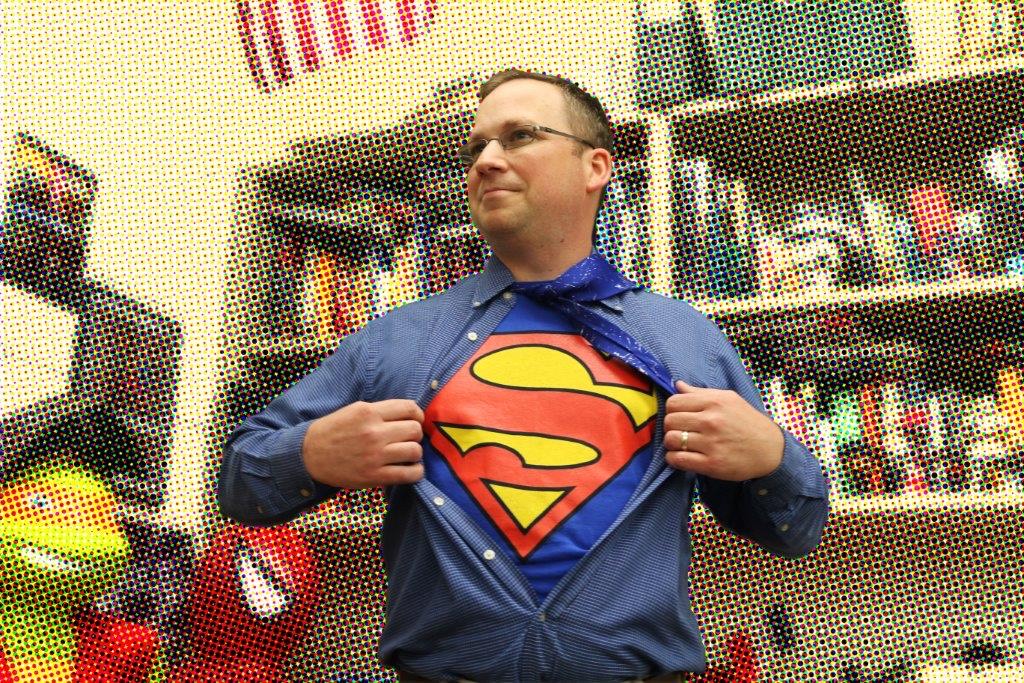
Maybe unintended consequences of Jason Reynold’s book, but from his conversation and his continuance to find ways to promote paths for youth to find their voice and confidence, he has paved the road for certified librarians to lead students as well. Now all we need is your voice to continue to ask for, insist, and help move our educational institutions towards making this a fact in every school. Especially for students as they navigate life with superpowers they did realize they contained.
All this from a graphic novel? Absolutely. Check it out and you will be rewarded with your own superpower of insight.