When I heard these words from an inspirational student at the beginning of the Lead and Learn DSEA conference, I knew that we were off to the right start.
In May, Kathy Dulis, asked, “DSEA is holding a two-day conference in July (July 29th and 30th) on the campus of the University of Delaware. Do you have any interest in facilitating a session on AI and the impact it has on academics?” I thought hmmm, I haven’t dabbled into AI details for a while, why not?
The next three months were full of conversations, meetings, inquiries, and discovery of AI. On a personal level and professional, an eye opening adventure began. Yet, the day of the conference, my eyes opened even wider.
As I made my way of the morning of the 29th, up to the John M. Clayton Hall, (a great venue!), I wondered, what about AI could I, would I, be able to present that would not have to change minds about AI, but just open minds? I mused about how AI has swooped onto the scene in buzz, yet how it has been with us for quite awhile and how we, as educators, learners, ourselves, and mentors, as well as students, would grapple with the questions and fears many had.
(Josh, the IT Specialist on hand, by the way, was AWESOME. All that anyone needed for the conference, he was lightning! Thanks Josh!)
It might sound insignificant, but having a formal land dedication was the reminder of how so often, key people have been forgotten and need to be part of our Delaware story.

Hearing President Stephanie Ingram reinforce the need for us to grow stronger, better, and have more foresight as educators fell in line with what we all felt we were feeling with the tumultuous path we are setting on in the present day. I felt very at ease and no nervousness as I made it in the nick of time to snag breakfast, and settled down to friendly conversation with attending members. When the Delaware State teacher of the Year, Shelby Borst came to the stage. I liked her stories of collaboration and teamwork with her experience at NASA Space Camp and then, she shared the stage to have two of her students also be part of the key note. I LOVED THIS!
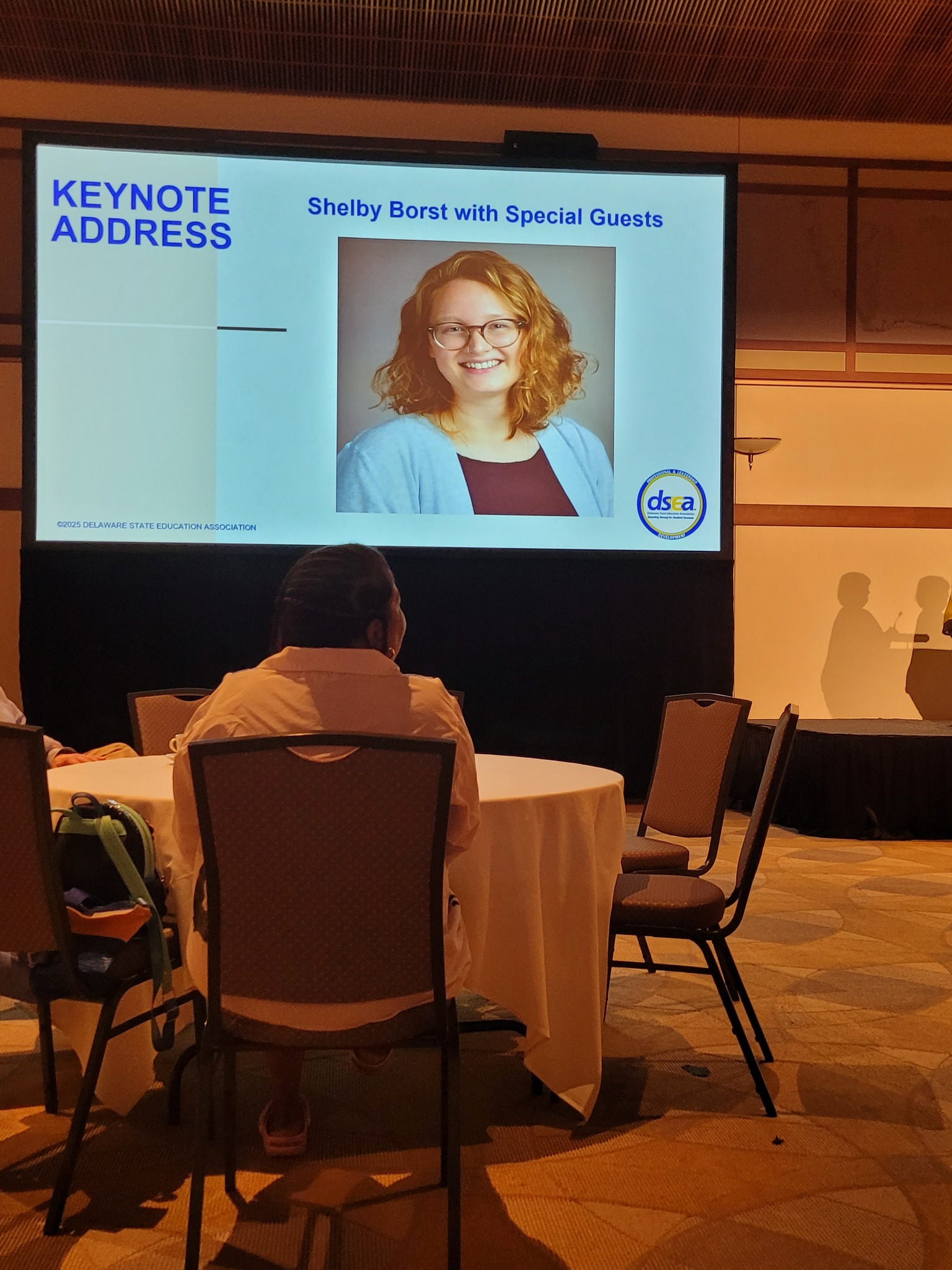


I always hoped to see more students be actively involved in conferences, legislation, advocacy, and more, and always have wanted to see this occur on a higher level. When Jael Avwomakpa and Drew Crute shared their heartfelt desires to be heard, to learn, to be taught in a way that inspired them, it inspired each of us. The attendees were hanging on their every word and I knew we were among the right group, these were our people. There are moments when students in leadership positions are nervous and sometimes it just feels like words. Other times, the words fly to your heart and make you realize the need and agreements that need to occur between educator and student, and this might not always be the way WE were taught. This was such a moment and set the tone for the day ten-fold.
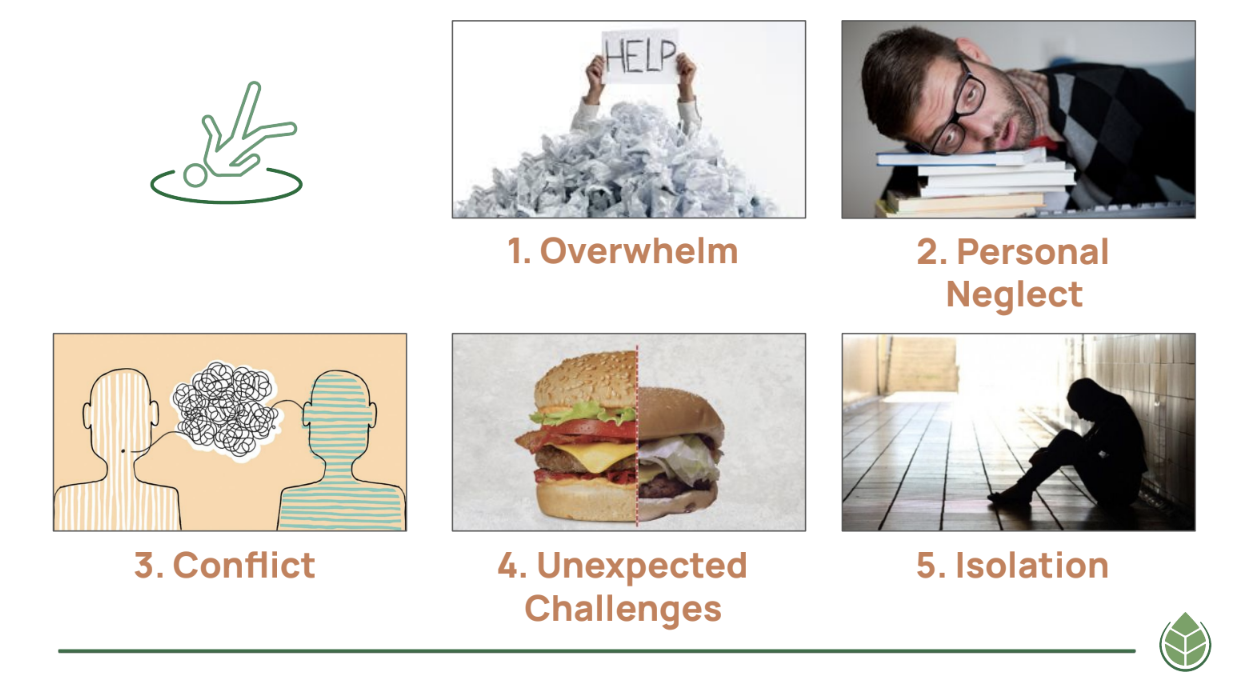
In attending the first session, The Five Pitfalls, so much resonated and put the attendees into a space of ease. Tyler Hester, Co-founder and CEO of Educators Thriving,

presented an array of resources, strategies and tools that hit directly at the need for taking care of ourselves as educators, taking care of others, and implementing strategies that bring everyone together in the learning circle, but in a safe and comfortable space where there is so much chaos that surrounds educators and learners every day. The workshops that provide instant comfort, resonate with our experiences, provide tools that can be immediate and impactful AND improve out passions in and out of the classroom? They are ones that stay with us way past the conference itself. This was such a session.
In working through routine areas that can shorten our lifespans as educators,
(and learners) while finding the positive spins that impact us and can launch our day in a better direction, we grew tightly together as a workshop audience in a short amount of time. We listened to each other, we provided feedback to each other, and on top of that, learned how to build resilience in ourselves as well as those that surround us. This is what many needed, need, and desire as part of their career experience.
Heading to my session on AI, a twinge of nervousness occurred, but evaporated quickly with the conversations of curiosity that occurred before the session.
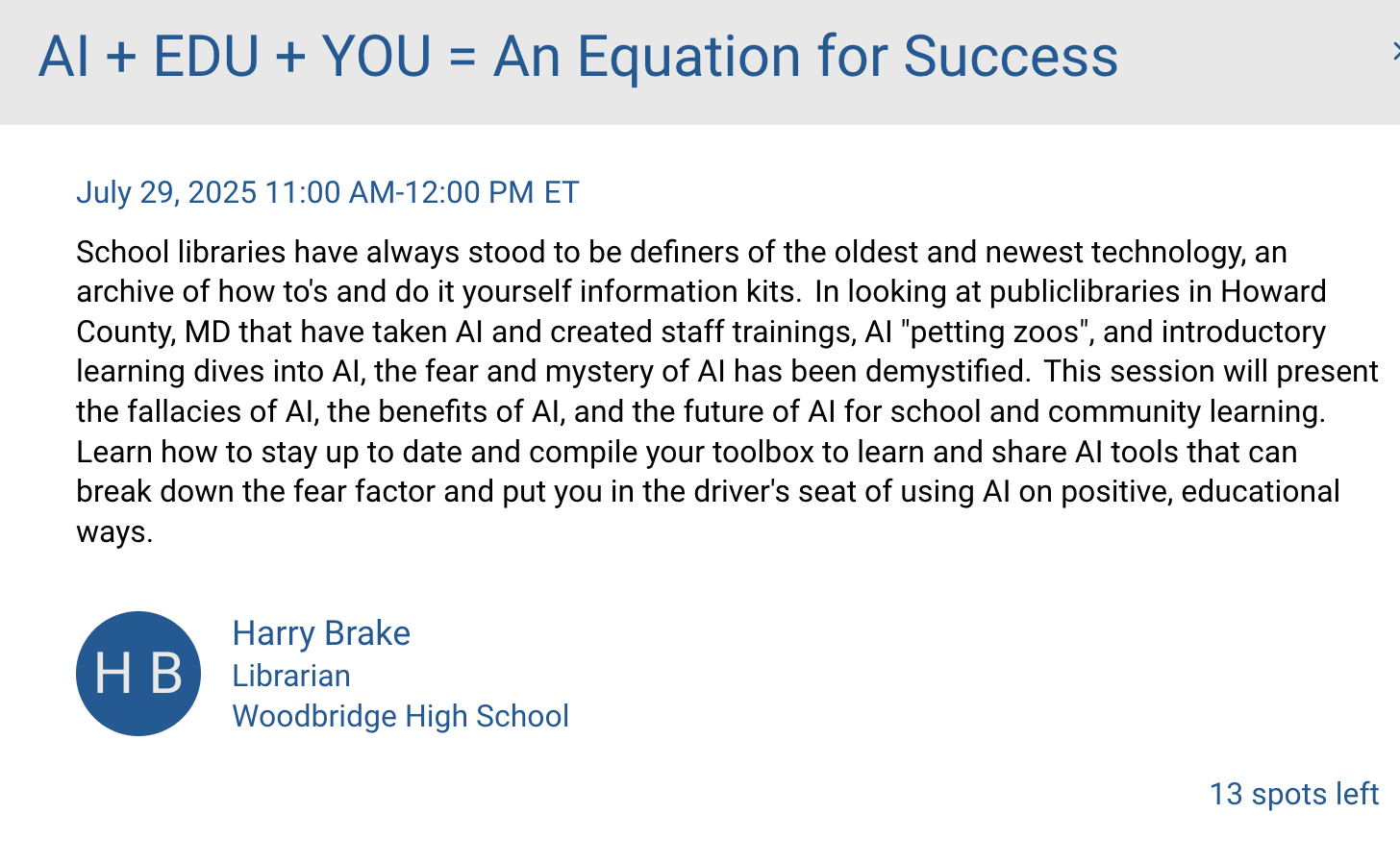
What I found through all the sessions I presented (and attended) was astounding. The stories of wanting to utilize AI for was to reach students, and other teachers, on a personal level seems like an oxymoron. Yet, the sharing and desires of all of us, being passed backed and forth, helping and suggesting each other through the process, enhanced the content I wanted to share. Making sure to let others see how students have interpreted the information, experiences, and provide insight into most of the information I had been obtaining was a cornerstone of what I had learned over the last three months. When students are the cornerstone of all learning, and part of the planning, implementation, and evaluating process of learning, amazing things begin to happen.
After my third presentation session, I had met some amazing educators, learned much more than I thought I knew coming into the session, and also had gathered alot of inquiries to follow us as a librarian. It seemed fitting as this what I strive to do and show what Library Media Specialists do on a diverse and intricate level. I was able to do this among some of the most interesting educators in Delaware!
Returning back to the closing of the day (HOW WAS THIS OVER ALREADY?) student Drew Crute’s poem reminded us there is a very thin separation between students and educators when it comes to the roles we can play in each other’s lives every day, especially when it becomes the style and format of educating each other. Obviously things need to change to support both educators and students for the long term, and today was an amazing microcosm of how this can occur, with students beside educators each step of the way.


 PAVEing a Blog
This sounds like an amazing experience! Students and teachers really do have so much they can learn from one another. I think AI as a technology changes the very landscape of education, but also it is an instrument for progressing education if only we let it root in a healthy classroom culture of dialogue and learning.
My favorite quote from Socrates: “Education is not the filling of a vessel, but the kindling of a flame.” We students have long been treated as vessels by the structure of the system, and I’m sure teachers have too. Maybe this is what both teachers and students need to break free of the paralyzing dread of being compartmentalized, to engage with one another in dynamic and energetic dialogue, to finally *see* each other. Ironic that it may take an artificial technology to prime the shift for this change.