Melisa Velasquez-Zunun. Sussex Central High School, 11th grade.
2024 RENEW essay contest 1st prize winner
Seeds of Hope
As I opened my eyes, a deep jade-green blur vanished as soon as it appeared. With golden thread-like plumage along its back, the feathers gleamed as it flew by. A once-in-a-lifetime spectacle appeared before me as I looked back and spotted the most regal bird I’ve ever seen: a Quetzal. Native to Guatemala, my native land, the Quetzal’s beauty can be identified by its long accentuating tail, gliding in the motions of an eloquent dance. However, my long-awaited dream of seeing this magnificent bird in person has, in fact, yet to become a reality. The Quetzal, the national bird of Guatemala, is one of many birds that make up the endangered species list worldwide.
What is the main reason for the continuous decrease in population?
Deforestation, which continues to lead to the loss of habitat for a plethora of living organisms.
This past summer, I and other young environmentalists worked with the Nanticoke River Watershed Conservancy to sprout a few seeds of hope within Delaware. While we worked at Chapel Branch Trail in Seaford, the board led us to the sacred Beech Tree within the trail, an expansive tree that stands higher than any creation built by humankind. Through its overarching foliage and prominent trunk, I learned that this tree would continue to protect us if we protected it first. I could feel the grooved edges and glossy leaves as we spent our summer days at the trail, and soon enough, the Beech Tree welcomed us with open arms. We developed a symbiotic relationship with the Beech Tree and exchanged our care for the tree’s protection. As our work continued into late July, we continued to speak with the Nanticoke River Watershed Conservancy Council Board. We learned that runoff waste continues to be one of the leading concerns of the conservancy. The Nanticoke River, through its 725,000-acre extension, reaches parts of Delaware, where a biodiverse ecosystem of flora & fauna resides. I and other younger environmentalists spent the summer working with the board on trail clean-ups while researching to inform our community about the potential dangers that runoff could lead to if nobody takes action.
In my own experience, I’ve witnessed this runoff affecting not only our native ecosystems but also our communities. Near the heart of Georgetown, I grew up surrounded by several chicken plants, of which my mom temporarily worked in one to support our family. At that time, we lived in a part of Georgetown where violence was whispered discretely between my parents, and I was often forced to admire nature from the windows, occasionally allowed to go out if accompanied by my parents. A wonder lingered within my heart, which yearned for the flora and the fauna I saw within my books. The bees, the evergreens, and the butterfly garden I dreamed of planting one day all looked so far yet close to me. I would daydream about the day I’d prance around the lush greeneries I read about and be one with nature. When my mom worked in this chicken plant, we once had the opportunity to eat lunch with her during her break, and my dad took me and my siblings to enjoy a meal as a family. However, I vividly recall this specific day, which remained stamped into my memory for years. All around the ditches by the plant, the yellow straw-like grass wilted. Looking up, I could see the faint but noticeable smoke leaving the plant. The smell was even more evident; the putrid chicken smell lingered from the plant into the nearby houses, a small community with a desolate park where no kid played. There was no butterfly garden in sight. There were no kids to play with and no seeds to plant.
Growing older, we moved to a region that didn’t pose as much risk as before, and I was finally allowed to go out as long as I told my mom before going to my local park. I spent a long time here, drawing the young native flowers barely budding every spring up until the present. I played with other kids, and as I grew older, I realized many other kids had similar aspirations to view a brighter, greener Delaware. Groups of people can make it happen, and change is possible if these groups work together to coordinate action. Even though chicken plants are economically advantageous to Delaware’s economy, environmental security should be balanced with economic prosperity. In regards to runoff, our rising sea levels due to our proximity to many bodies of water have also continued to increase the dangers of this runoff seeping into the daily water we consume. Our churning economic wheels should not be determined merely by what produces the most. Our communities should not face the consequences of larger companies and their waste. We cannot continue taking and taking without giving back, too. Without a balance, our communities, from those closest to me and you, will face the consequences of our actions. It may feel as though our voice is small among our current leaders. However, together, ACTION is needed to protect our communities. The environmental injustices I faced growing up have only continued to increase my desire to grow our community continuously. No matter what background, environmental justice advocacy is being able to express YOUR VOICE for a better tomorrow.
A Changing Tomorrow:
Standing before the Beech Tree and all its magnificent composure, I notice the budding branches with sprouting leaves.
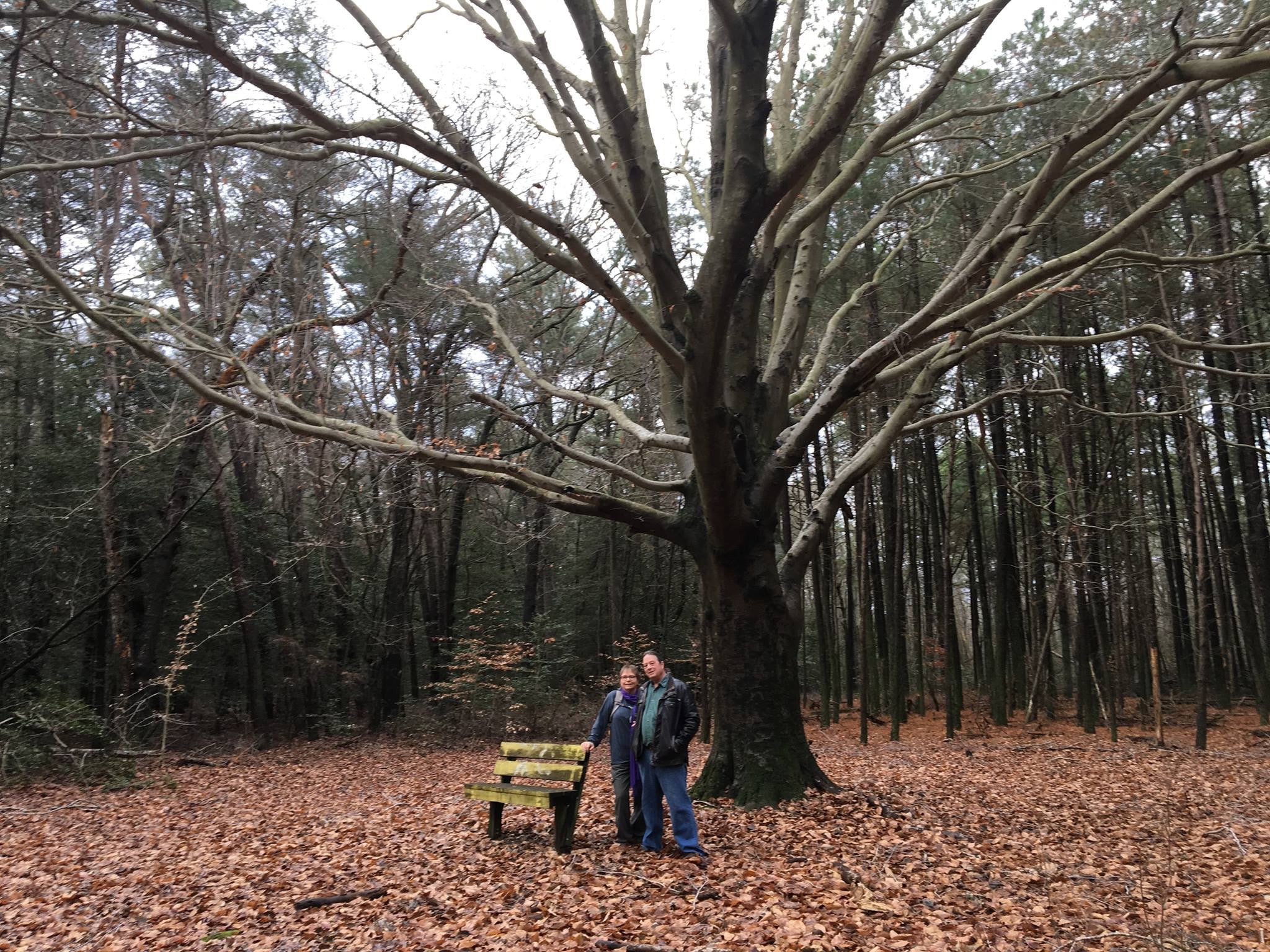

Beside me, my friends and I sit underneath the shade of the tree it provides as we relax for a moment and–-breathe. While attempting to capture the beauty of the present, I contemplate the movements that youth can bring into effect. Though we may be much like the budding branches on the limbs of the Beech Tree, we can advocate for our beliefs as the future of tomorrow. Upon closer look at these budding sprouts we planted this summer, we see that these seemingly small seeds contain the love and hope of many aspiring young environmentalists to preserve a land that has withstood the test of time and will continue to do so. Where there is still green, there is life. Where there is still life, there is hope.
I open my eyes again; it’ll be springtime soon enough. I can feel the supple green leaves flourishing along the Beech Tree branches with streaks of sunlight coming through. Besides these initial leaves, a rough bark symbolizes the sustained ups and downs the Beech Tree has faced since it first sprouted. The rough bark symbolizes the hardships but eventual victories you, me, and everyone else gained on their environmental advocacy journey. Whether it be found through producing art to uplift communities, coordinating clean-ups with local organizations, or educating others on the importance of environmental justice, I know that our action against environmental injustice can affect our community and native ecosystems exponentially. Slowly, we can combat the injustices within our community while rebuilding the habitat loss of many species, such as the Quetzal. While spotting this beautiful bird has always been a distant dream, I know one day I will view this bird as other young environmentalists continue fighting for environmental justice worldwide. My native roots are in Guatemala but are now too rooted within the Delawarean ecosystem as I stand hopeful by the Beech Tree. As the future generation, our roots are one no matter what background we come from, and our diverse roots accentuate our individual but united advocacies as we work towards building a stronger community. Through our extending branches, I can feel the exhilarating thoughts that transcend my mind as we, the youth, utilize our voices to communicate what we need most: ACTION.
~
With so many exciting things to celebrate, it is often difficult to remember we are graduating a class that worked and pushed through 2020 to know, there was a fight ahead to make through the challenges it took to be the class of 2024. I am so very proud of the students at my Woodbridge High School and it is bittersweet to see the challenges they rose to and overcame. They have the ability to achieve ANYTHING and all they need is the mindset. The push, The drive.
I am reminded of the difference between words, intent, and action. Melisa, an Upward Bound Student from Sussex Central who shared her wisdom, energy, and ideas in the past few years as a Nanticoke River Watershed Conservancy Upward Bound workstudy student, is taking no prisoners. Winning first in the ReNew Essay contest, first in her video project for the Sussex Preservation Coalition, recognized by the Delaware Center for the Inland Bays – and more to come – the feats are just building.
I am convinced of these thoughts as you read her winning essay-
- You can do things to be self-serving and help recognition on yourself or to receive recognition to have others see a path to other organizations that serve our community. I am proud to say Melisa is in the latter category
- People will see your awards as self-serving – BUT, not if you bring ways people can take action based on the stir you are causing. I ask and insist students that are willing to take on dreams to make them reality thanks the community around them for letting them rise to the challenges that have given them these opportunities. I am all for going for every single opportunity it means bringing recognition to the parts of our community that are needed- you can obtain anything if it means you are doing it for the right reason, bringing recognition to organizations and bringing results to the community around you, then you are on the right path. Use your ability and contacts to help advance others constantly.
- There is enough of “me me me!” and and “look at what I did”– and not enough of using your abilities to bring future ways to make positive change out of negative ones (for others). Dare people to keep up with you and what needs to be done for others.
- It is pretty easy to be mediocre, why settle for mediocre? Grab every single opportunity you can and in the process, people will either think this is for you or for the causes that need their support. Don’t worry about people that think you are being self-serving, they probably will not be the movers and shakers anyway. TAKE EVERY OPPORTUNITY to bring greatness to others and you will always be successful.
- There are plenty of people that like to take hate and churn up others. Use other’s hate to advance in what can be done for good. Take their hatred and negativity and push ahead even further ahead of them.
- It is easy to say YES! I will!- It is another to lead by EXAMPLE and ACTION.
- Use social media and use technology to further strategies to improve the world around us. Take advantage of those that do not have the drive or passion for realizing so much is possible if you constantly live int he moment.
- Make the best out of the worst that is dealt to you. There is much negativity- use each negative (there is much that comes to our doorsteps) to turn around and churn out an even better positive.
Go Melisa and also go Class of 2024- this is only the beginning and you re the movers ands shakers you decide to be! Success and possibility is not limited to one school district, not one community. It is a world possibility.
Norah McMurray Fink said it best; “Love reading/seeing kids care. THEY are the hope to make the Difference, to correct many injustices the Earth has somewhat endured.”


 PAVEing a Blog
Thanks for posting this winning essay! I enjoyed reading it!