
Tuesday, along with completing an amazing 6 week run of Upward Bound Workstudy student started the first Maryland Indigenous workshop that I was graciously accepted into.
As stated by Maria A. Day, Senior Director of Special Collections, Conservation, & Library ServicesCo-Director, Indigenous Peoples’ Program Maryland State Archives,
“This was possible due to the partnership with the Maryland State Department of Education and Maryland State Arts Council, but the sole sponsorship is through the Archives, where Drew, Autumn, Megan and I work. The generous grant that has made this work possible comes from the Maryland Heritage Areas Authority.”
Also, thank you Lenny Truitt for presenting this to me – it was an exciting endeavor to apply for, yet, even moreso a stirring eye opener.
Summer has not really, well, been summer, I have been in full throttle since the week following the end of high school and there is much I am falling behind on I wish I had more time to work on, the pressure of a hamster wheel on turbo is there BUT
I also take time to reflect on these actions and the results on what comes out of these involvements, are they fruitless or energy spent that is just “busy work.”
Just the opposite.
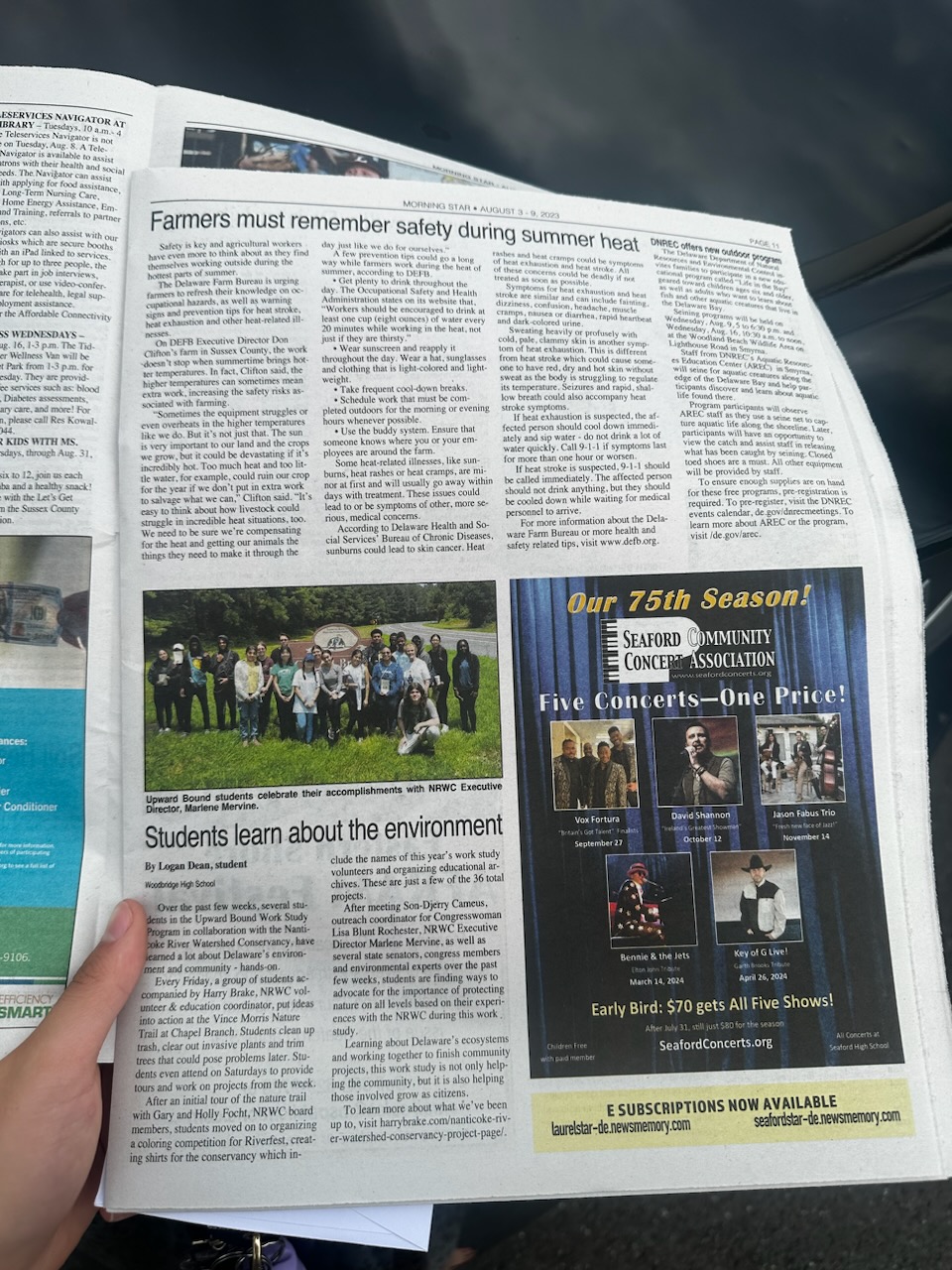
In the next few weeks you will see over 40+ projects students took on over a 6 week period, connecting to environmental organizations all over the state, and in Maryland – I believe there are ties to the Indigenous workshop and workstudy students from Upward Bound. Keep abreast of the 40+ projects students enrolled in as we literally roll out these one by one over the next few weeks- https://harrybrake.com/nanticoke-river-watershed-conservancy-project-page/
Tying the environment to individuals that normally do not LIKE the outdoors was a challenge and YET, they did some amazing things. The Indigenous workshop I am involved in now has helped tie things together even more.
Without giving much away, there is some that needs to be more present in our communities. From Day one, I have found the topics of Indigenous representation an underserved one. From writing a graduate thesis on the topic:

to creating lessons as part of the Smithsonian American Art Museum Summer Teacher program:
(The Clarice Smith American Art Education Initiative changed the way I looked at education thanks to the collections there)
We created several lessons then that were required as part of the institute as well as being exposed to Glen Mellin’s book Ritual Landscapes, I had an opportunity to receive some invaluable insight into so much more information-
and through all this, I am amazed at the information I am learning, which means to me, learning is not just about how many degrees you obtain, how much PD you grab into, but how you internalize information that has been all around you and not realizing the value and impact cultures and information can have on your life every singe day. Learning new information can be absolutely invigorating, despite the most grueling hours out in per week, if it connects deep inside you. This is what the Maryland Indigenous workshop has provided from the Edward H Nabb Research Institute.
Without giving too much information away from the first day, it is necessary to let you know how important this information is. I will be sharing more as I experience the richness of this workshop.
Written in February of 2022, this grant has set up a vehicle with the State Art’s Council, and tons of amazing Indigenous groups, interpreters, and experts to add to the Maryland state curriculum. Models of possible lessons that can be implemented in classes that bring content alive are worked through by all the attendees, and the resources, WOW, the resources – from the Mayis database, to questioning the credibility of lessons being taught that align with reality of the country ( hot topics of today in education), to meeting with Renee Gokey, part of the National Museum of American Indian Museum, to the NK360 treasure of information, to being lucky enough to have Drew Shuptar-Ravis with us every day as an Algonkian living historian, there is so much that has been around me and. I have not noticed with full eyes.
The first day traveling to the Chicone Village, a small amazing look at how project based learning can tie us closer to our immediate community. There. is so much we do not take advantage of in learning about our community, and this only heightens that fact.
Before my eyes, in emails from the University of Delaware, I had missed the land acknowledgement act, which is. a topic of this series of programs currently we are in as well – here is an example:
“**The University of Delaware, a land grant institution, is located on land that was and continues to be vital to the web of life of the Nanticoke and Lenni-Lenape people. We express gratitude and honor the people who have inhabited, cultivated, and nourished this land for thousands of years, even after their attempted forced removal during the colonial era and early federal period. The University of Delaware also financially benefitted from the expropriation of Indigenous territories in the region colonially known as Montana. View the full Living Land Acknowledgement.**.
I do remember this being. a key piece of the Humanities Conference in LA, and this always stuck with me- their land acknowledgement is:
and as I attend Florida State University I have noticed theirs.
The point is, there is so much information that is enlightening, new, and able. to connect youth, future librarians, historians, Humanities, Indigenous groups, and community together, Land Acknowledgements are ONE small section of an example to show this; despite sometimes feeling as we have 100 projects happening in our lives, latching on to the chances to improve the communities around us is not a cyclical hamster wheel – but taking education and information that surrounds us and involving more members. of our community, is an asset to all. of us.
Being on. schedule that has been…challenging the last few weeks has been just that at times, but the possibilities that involve the past, present, and future are eve\n more exciting
(“Yesterday, Today, Tomorrow”, translated from the Algonquin language) is the perfect way to state how all. is connected and all is valuable, and in the last few weeks, the countless youth of Upward Bound, the opportunities to talk with indigenous experts in our own state and neighboring states, and finishing a way forward, as well as through the past and present to connect these valuable insights –
One pervading asset has come through and is emphasized, challenge the narrative when facts and details do not line up, just because an institution, museum, or organization exists does not mean the information, 100% of it, is accurate. It is up to us to be aware of the living experts resources, and know how to determine the histories of individuals that truly, factually, make up our country. This takes visits, interviews, time to contemplate and reflect and more – there is nothing wrong with questioning the narrative to find a deeper truth. A trait we need in times that allow any detail. to be considered truthful, but that always needs a healthy examination.
As a member of the Delaware Humanities, the Delaware Association of School Librarians, as a Librarian Media Specialist, Education and Volunteer Coordinator for the Nanticoke River Watershed Conservancy, and an Upward Bound instructor, what can I bring to those networks to strengthen the narrative for often underepresented individuals? More importantly, what can we do together to create some great networks that benefit our community? My guess, and an educated one, is alot!


 PAVEing a Blog